Molasses has remarkable nutritional qualities as a natural source of energy. Rich in assimilable sugars, it is also recognised for its strong binding power and excellent palatability. These properties make it a widely used ingredient in the manufacture of compound feeds, liquid feeds, mash feeds, mineral feeds, and lick blocks. It is incorporated in many animal nutrition formulas and consumed by all species.
Beyond its nutritional qualities, molasses also has valuable physical and ecological properties in the industrial sector. It is particularly used in agglomeration processes (coal fines, steel mill residues…), water treatment and certain applications for soil remediation.
Use in fishing baits
Molasses is an ingredient of choice for fishing. It is simple to use and carries no risk of overdosing. It makes an excellent base for dips, boosters, and attractants. When diluted in water, it can also be used for moistening groundbaits: it enables flours to bind together, increasing the sweetening power and attractiveness of the bait.
Essential for the production of EM-Actives
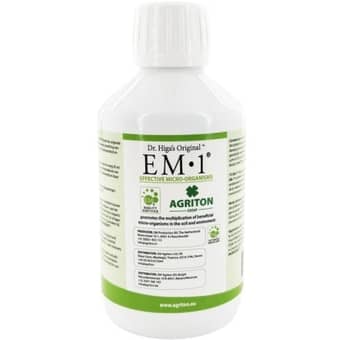
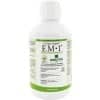
Molasses (A+) is a key element in producing EM-Actives (EM-A). It is a thick syrup derived from sugar refining, essential for activating the micro-organisms contained in EM-1®. Used in combination with EM-1®, it provides the sugars and nutrients necessary for the development and activation of the micro-organisms.
Once activated, these micro-organisms can be used to enrich soils, speed up composting, improve compost structure, promote plant health or participate in water treatment. EM-Actives are thus used in many domains: agriculture, gardening, soil management, and ecological practices.
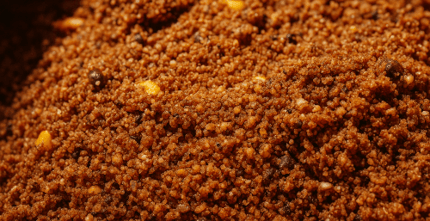
The molasses offered is a pure beet molasses, with no added glucose sugar or derivatives.
Pure product, without additives,
Viscosity at 20 °C: 2,000 to 6,000 cP,
Sugar content: 45 to 50% expressed as sucrose, compared with 43–48% for cane sugar. Hydrometric Brix: 75/80 Degrees.
With a density of 1.38, it has a dry matter content of around 72 to 74% and naturally contains potassium, sodium, sulphur and various trace elements.
Its average composition is as follows:
- Moisture: 26 to 28%
- Crude protein: 10%
- Crude fat: 0.2%
- Crude ash: 9.8%
- Density: 1.38
Minerals:
- Phosphorus: 0.2 g/kg
- Calcium: 1.0 g/kg
- Potassium: 39.2 g/kg
- Magnesium: 0.5 g/kg
- Sodium: 6.8 g/kg
- Sulphur: 4.2 g/kg
- Chlorine: 4.5 g/kg
Trace elements:
- Copper: 13 mg/kg
- Iron: 117 mg/kg
- Zinc: 17 mg/kg
- Manganese: 29 mg/kg
- Cobalt: 0.55 mg/kg
- Molybdenum: 0.26 mg/kg

























 United Kingdom. Calculate your delivery fees in your basket, we deliver to 41 countries.