Turn your organic kitchen waste into natural compost.
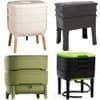
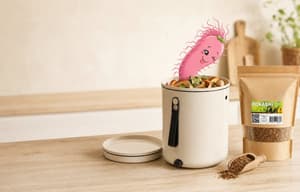
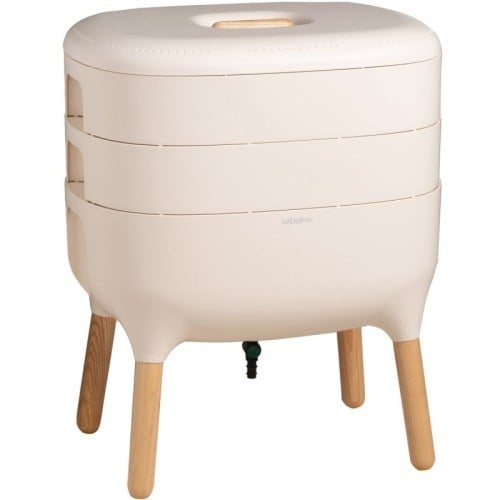
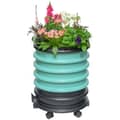
The Urbalive wormery is used to compost organic kitchen waste with the help of compost worms.
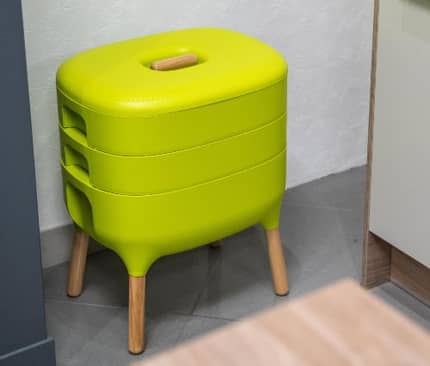
Unique, modern and stylish, Urbalive can be used at home, in schools or in the workplace. It turns your food scraps into useful resources, thus contributing to the preservation of the ecosystem.
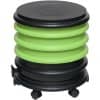
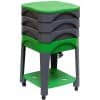
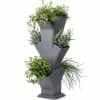
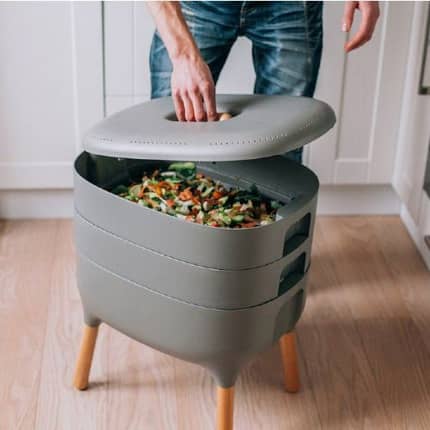
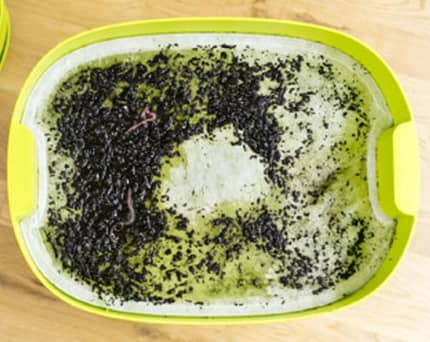
Its contemporary design includes 2 or 3 composting trays in which the worms transform the waste into vermicompost. The process also produces worm tea, which collects in a lower reservoir and is drawn off via a built-in tap.
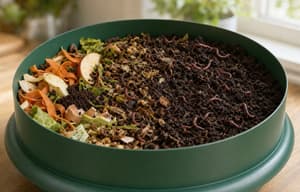
The vermicompost produced is naturally rich in enzymes and growth hormones. It improves soil fertility and efficiently feeds your garden, houseplants or vegetable patch.
Its modern design is by renowned Czech designer Jiří Pelcl, an international reference in contemporary design.
The Urbalive is a winner of the prestigious Red Dot Design Award, often considered the Oscar of design.
A creation which blends aesthetics, innovation and sustainability, right down to the smallest detail.
Comes complete with:
- 1 lid with wooden handle,
2 or 3 trays,
1 liquid collection tray with tap, - 1 anti-drowning filter for worms,
4 wooden legs,
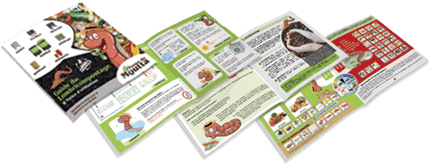
1 scoop, - 1 vermicomposting guide + assembly instructions in English.
Included: the complete guide to vermicomposting and a detailed 20-page user manual (size 21 cm x 21 cm, in English), to guide you step by step through looking after and using your wormery.
Benefits
Vermicompost with style, naturally and elegantly:
- Contemporary design that fits stylishly into any interior.
- Large capacity trays (14 litres) for efficient daily composting.
- Thick and robust plastic, built to last.
- Raised structure, ideal for easily placing a bottle under the tap.
- Replaceable filter in the liquid collection tray, preventing compost worms from falling into the worm tea and ensuring clean collection of the liquid without drowning the worms.
How it works:
As the lower trays fill up, a new tray is added and the stack rises by one level. The worms gradually migrate upwards, attracted by the fresh supply of waste, to feed on new organic matter. The vermicompost and worm tea are harvested from the lower levels of the wormery.
















 United Kingdom. Calculate your delivery costs in your basket; we deliver to 192 countries.






 Belgium
 Switzerland
 Germany
 Austria
 Italy
 Spain
 Holland
 Portugal
 Ireland
 Sweden
 Finland
 Denmark
 Greece
 Poland
 Rumania
 Czech Republic
 USA