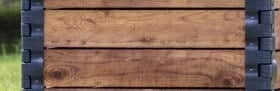
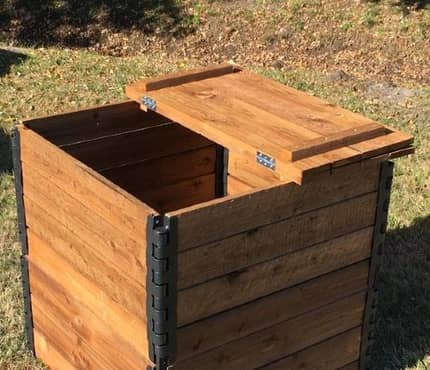
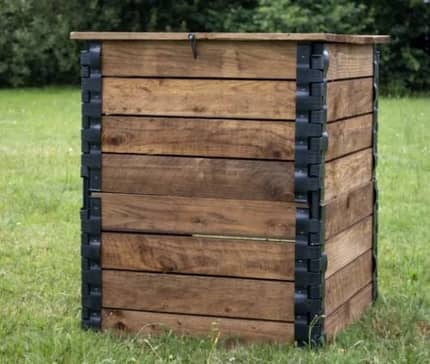
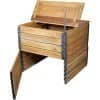
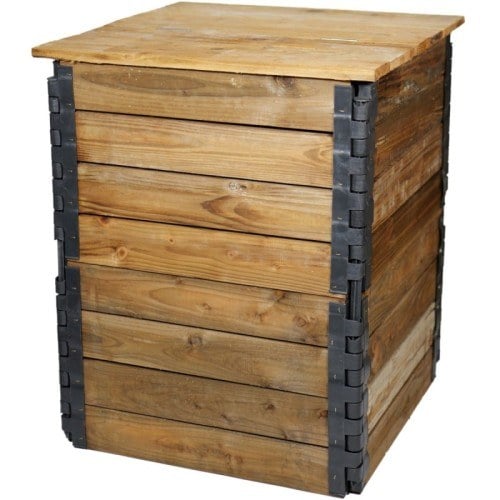
The wooden composter, available in either 305 or 603 liters capacity, is made from spruce wood sourced from protected French forests. 7-year guarantee.
Wood provides excellent thermal insulation, which helps to maintain a constant temperature inside the composter. This steady temperature encourages the optimal development of the microorganisms that decompose waste.
The small gaps between the boards ensure adequate aeration, preserving the compost’s biodiversity by allowing insects and other beneficial organisms to settle easily.
With proper maintenance, the composter can last for years. It breaks down naturally without polluting the environment. Its natural, aesthetic look allows it to blend harmoniously into your garden landscape.
Compost from a wooden composter is particularly rich in essential nutrients that promote plant growth. It improves soil structure by increasing water retention and supporting root development. Additionally, it enriches the soil with beneficial microorganisms that decompose organic matter, making nutrients more accessible to plants.
Delivered complete with:
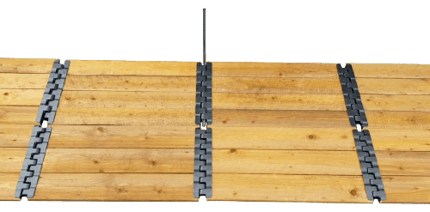
- 4 sides of 8 panels each,
- 4 rods made from recycled plastic,
- 1 two-part hinged lid,
- 1 assembly instruction manual.
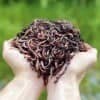
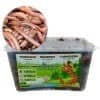
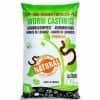
We also recommend adding 500 g to 1 kg of compost worms to your composter to reinvigorate your soil with earthworms – see the guide.
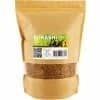
You can also add Bokashi activator to speed up the breakdown of waste and effectively reduce unpleasant odours.
Examples of compostable waste:
- Organic waste (vegetable peels, food scraps without fat, ...),
- Carbon-rich waste (cardboard, paper, tissues ...),
- Dead leaves,
- Wood chips,
- Wilted flowers.
Advantages
Natural and aesthetic, eco-friendly:
- 100% French manufacturing with PEFC certification,
- Natural aeration and insulation,
- Biodiversity preservation,
- Simple, quick, tool-free assembly,
- Easy compost extraction thanks to a practical opening system,
- Robust: thick, solid 18 mm panels,
- High-quality compost.
Principle and use:
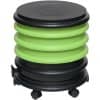
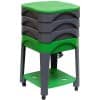
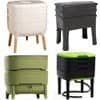
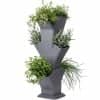
As the lower compartments fill up, you add a new tray and move up a level. The worms climb upwards, attracted by the new layer of waste and feeding on the fresh organic matter. Vermicompost and compost tea are harvested from the lower levels of the worm composter.
















 United Kingdom. Calculate your delivery fees in your basket, we deliver to 41 countries.