












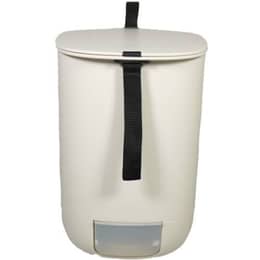
Urbalive Bokashi Composter
Capacity 10.6 litres, available singly or in a set of 2
£54.91 €65.83
Fast and odourless, compost worms eat your waste and turn it into worm casting for your plants.

From 2 to 4 trays, with an optional planter.

Up to 18 growing areas around a central wormery.

Terracotta with flower pot.

2 to 4 trays with a lower shelf.

Trays you add over time, for easy harvesting of vermicompost.

Turn your planters and flower beds into a wormery: WORMacotta, In-Ground.
 Practical guide

From the kitchen to the garden, your compost becomes simple, quick, and effective for everyone.
 Practical guide
 Practical guide
Live animals (worms and bait) and products to feed and care for pets and livestock.

Eisenia compost worms for your wormery or composter.

Ultra-fresh worms: compost worms, Dendros and Canadians from 100 g to 1 kg.

Natural solutions dedicated to the wellbeing of horses, ponies and donkeys.

Optimise the health and performance of your farm.

Mealworms, natural and nutritious supplements.
Enhance your home with our decorative items and care for your house in a natural and sustainable way.
Garden in an eco-friendly way that respects nature, for healthy and sustainable plants.
EM-based products designed to enrich soils, protect plants, support animal health, and make everyday well-being and maintenance easier.

Contains a blend of 80 families of beneficial microorganisms.

Revitalise, purify and improve water quality in all your applications.

Stimulate soil microbial activity and plant growth.

Cleanse and maintain your environment naturally.

For the wellbeing and health of pets, livestock and horses.

Enrich your body care or dietary routines with essential enzymes.
 Practical guidePractical guide

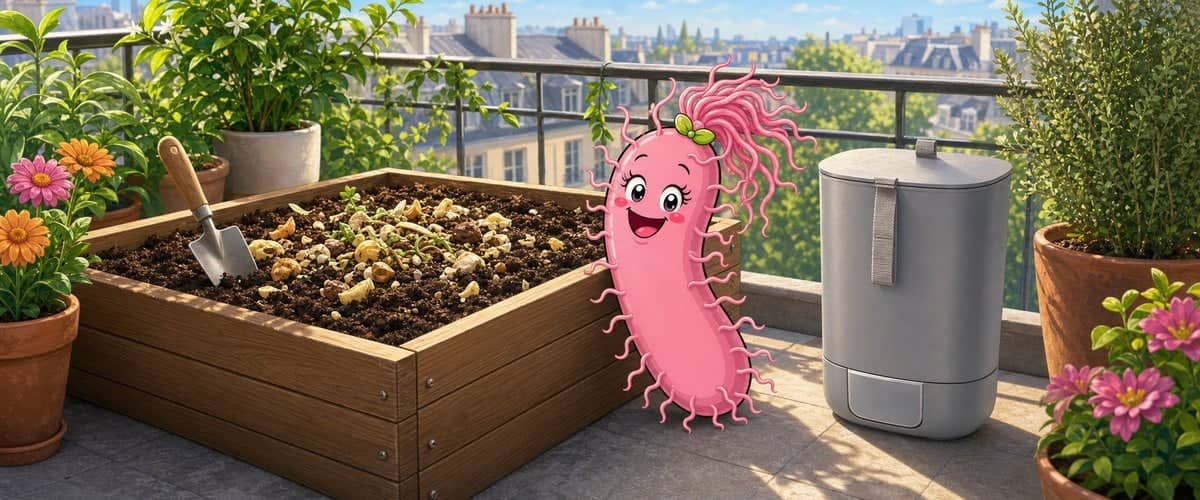
Bokashi has a big advantage for city dwellers: it fits under the sink and accepts almost all meal leftovers. But it also raises a question people often forget to ask before getting started: once the bucket has fermented, where do you put it if you don't have a garden?
The good news is that there are several solutions, from a large container of soil on the balcony to giving it to a gardener in your neighbourhood. This guide explains how to make your own soil in a flat, which proportions to use, and how to organise what comes next if you really have no space at all.
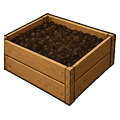 The “soil factory”: a container dedicated to turning bokashi into soil, on the balcony, in a cellar or in a utility room.
 The pot or planter: the bokashi goes at the bottom, under the soil, a few weeks before a plant is put in.
 The wormery: the worms finish the job, provided you add it in small doses.
 Giving it away or collection: a community garden, a neighbour who gardens, a shared composter that accepts it, or your local council's food waste collection.
The principle is simple: you mix the fermented bokashi with soil in a dedicated container and let soil life transform it. A few weeks later, the container is full of dark, rich soil, ready for your pots.
A plastic tub, a crate, a large bucket or a grow bag will do the job. Indoors, a volume of 10 to 20 litres is often enough and stays easy to move. Choose a wide, shallow container, which is easier to keep an eye on and to mix than a tall, narrow one. Indoors, it must not leak: no holes in the bottom. Outdoors, a few drainage holes stop rainwater from building up.
 Pour a layer of soil into the bottom, filling about a third of the height.
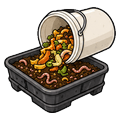 Add the contents of your bokashi bucket, up to about two thirds, and mix it into the soil.
 Fill the last third with soil, at least 5 to 10 cm deep: no waste should be visible any more.
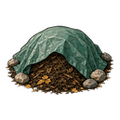 Cover it without making it airtight: a lid simply resting on top, a piece of cardboard or a cloth. The bokashi fermented without air, but turning it into soil needs oxygen.
Ideally, use garden soil or old, already used compost: they contain the living organisms that will do the work. Fresh potting compost, which is low in life, works less well.
Allow generally 2 to 6 weeks, depending on the temperature and the size of the pieces. Above 20 °C, everything moves quickly; in a cool cellar, you'll need a lot more patience. In households monitored during a recent study, the bokashi and soil mix was sampled between 2 and 7 weeks after it was prepared, so these timings are realistic.
The soil is ready when it smells of earth rather than sourness, and you can barely recognise the waste any more. If a few hard pieces remain, simply put them back into the next mix.
Emy's tipAlways keep a bucket of the soil you have just produced to start the next mix. Already full of life, it transforms the new bokashi faster than fresh soil.
Sources don't all agree, because they aren't talking about the same uses:
Our advice: in a soil factory that you leave to mature, one part bokashi to one or two parts soil works well; the three-thirds set-up described above gives roughly one to two. The more soil you add, the faster and more odour-free the transformation. And if the resulting soil seems very rich, mix it with potting compost or ordinary soil before repotting sensitive plants or sowing seeds.
Key pointsBokashi must never be placed as it is in contact with roots. Whether in a container or a pot, it must first transform in the soil for at least two weeks.
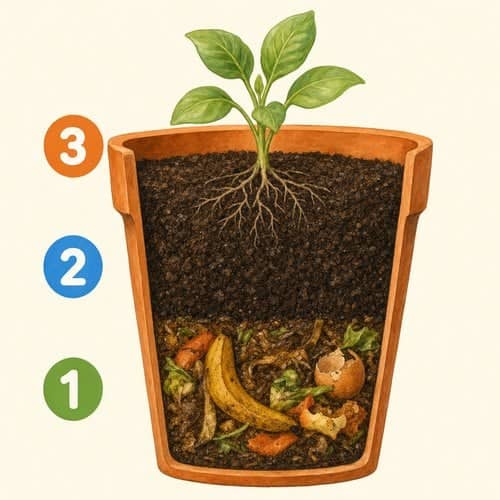 You can also prepare a large pot or planter in advance, for future repotting or planting:
 fill the bottom of the pot with bokashi, to about a third of its height;add soil on top and mix it into the bokashi;top up the pot with soil alone, right to the top;
 wait at least 2 weeks before planting, and preferably 4 for delicate plants or if the pot is somewhere cool.
The bokashi stays at the bottom: by the time the roots reach it, it will already have become soil. In a pot, the volume of soil is limited and the transformation can be slower than in open ground, so don't cut the waiting time short. For a balcony planter that is already planted, don't bury bokashi between the plants; prepare the next planter instead, or use the soil factory. In the diagram: the bokashi at the bottom of the pot (1), a good layer of soil (2) and the plant on top (3).
This soil can be used to repot your indoor and balcony plants, to fill new planters or to top up pots where the soil has become compacted. It is rich: for seedlings and young plants, mix it half and half with potting compost, or follow the advice in our composting guide on homemade potting compost. And there's nothing to stop you giving it to a neighbour who gardens.
If you have neither a balcony nor room for a container, the bokashi can leave home:
 A community garden, a local gardener, a friend or relative: many people appreciate this pre-compost, as long as you explain that it needs to be buried, not spread. Our guide Burying your bokashi in the garden will show them what to do.
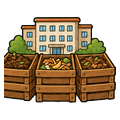 A shared composter: check with the person in charge first, as the rules often exclude meat and fish, even fermented.
 Food waste collection: in France, since 1 January 2024, the law requires every household to have a way of sorting its food and garden waste at source, either through separate collection or local composting. If your council collects food waste, the fermented contents of the bucket can generally go in, well drained. Just check the local guidelines.
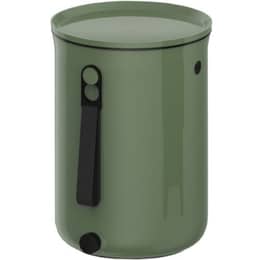
To carry your fermented bucket to a friend's garden, a model with a strap, such as the Skaza Organko 2 Bokashi Composter, is very handy. Drain off the liquid just before you set off.
Did you know?A well-fermented bokashi bucket that has stayed closed keeps for several months, even in the cold. So there's no rush: you can wait for your next visit to a friend, or for spring to start your soil factory.
Bokashi and a wormery make an interesting pair in a flat: the bucket takes the meat, fish and citrus that worms don't like, and the worms finish the job. But bokashi is acidic, so it must be given to them in small amounts, on dry bedding. The full method is in our guide Bokashi and wormeries. To choose where to put your worms, see also our guide Wormeries for flats.
Without a garden, bokashi is still an excellent solution, as long as you plan its second life. The soil factory, a container filled with soil and bokashi, produces rich soil for your pots in 2 to 6 weeks. A large pot can also be prepared in advance, with bokashi at the bottom, at least two weeks before planting. And if you have no space at all, a neighbouring gardener, a community garden or your council's food waste collection will take over.
Scan the code or visit mouttafarm.co.uk/guide: all our practical guides, with links to the products mentioned.



 France
 Belgium
 Switzerland
 Germany
 Austria
 Italy
 Spain
 Holland
 Portugal
 Ireland
 Sweden
 Finland
 Denmark
 Greece
 Poland
 Rumania
 Czech Republic
 USA
