












Best Seller
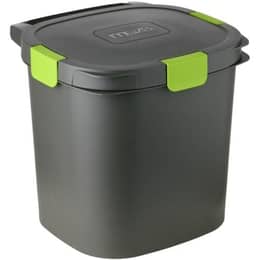
Bokashi Confort Composter
14-litre capacity, available individually or as a set of 2
£34.06 €40.83
Fast and odourless, compost worms eat your waste and turn it into worm casting for your plants.

From 2 to 4 trays, with an optional planter.

Up to 18 growing areas around a central wormery.

Terracotta with flower pot.

2 to 4 trays with a lower shelf.

Trays you add over time, for easy harvesting of vermicompost.

Turn your planters and flower beds into a wormery: WORMacotta, In-Ground.
 Practical guide

From the kitchen to the garden, your compost becomes simple, quick, and effective for everyone.
 Practical guide
 Practical guide
Live animals (worms and bait) and products to feed and care for pets and livestock.

Eisenia compost worms for your wormery or composter.

Ultra-fresh worms: compost worms, Dendros and Canadians from 100 g to 1 kg.

Natural solutions dedicated to the wellbeing of horses, ponies and donkeys.

Optimise the health and performance of your farm.

Mealworms, natural and nutritious supplements.
Enhance your home with our decorative items and care for your house in a natural and sustainable way.
Garden in an eco-friendly way that respects nature, for healthy and sustainable plants.
EM-based products designed to enrich soils, protect plants, support animal health, and make everyday well-being and maintenance easier.

Contains a blend of 80 families of beneficial microorganisms.

Revitalise, purify and improve water quality in all your applications.

Stimulate soil microbial activity and plant growth.

Cleanse and maintain your environment naturally.

For the wellbeing and health of pets, livestock and horses.

Enrich your body care or dietary routines with essential enzymes.
 Practical guidePractical guide

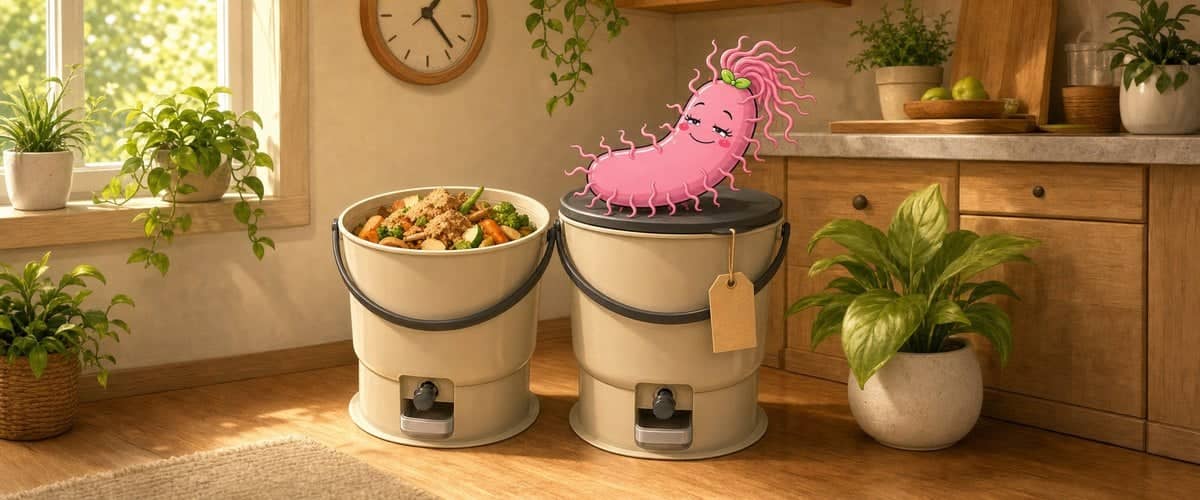
When people first discover bokashi, they often think one bin is enough. Then comes the day it is full: it has to stay closed for at least two weeks to ferment… and the evening's peelings have nowhere to go. That is why almost every set of instructions, ours included, recommends working with two bins.
This guide explains how to organise the rotation week after week, how much activator to plan for over the year, and what to do if your rhythm doesn't fit this pattern.
While you are filling the bin, fermentation is under way but not finished: the top layers have only just gone in. Once the bin is full, you close it and leave it alone for at least two weeks, at room temperature, without opening it. This resting time allows the lactic acid bacteria to acidify the whole contents and stabilise the waste. We go into these timings in our guide to fermentation time and the signs that bokashi is ready.
During those two weeks, your kitchen scraps keep coming. Without a second bin, you would have to throw them out with the rubbish, or reopen the fermenting bin, letting air in at the wrong moment.
Key pointsOne bin fills while the other ferments. That is the whole idea: you never stop sorting your scraps, and each bin has time to ferment properly.
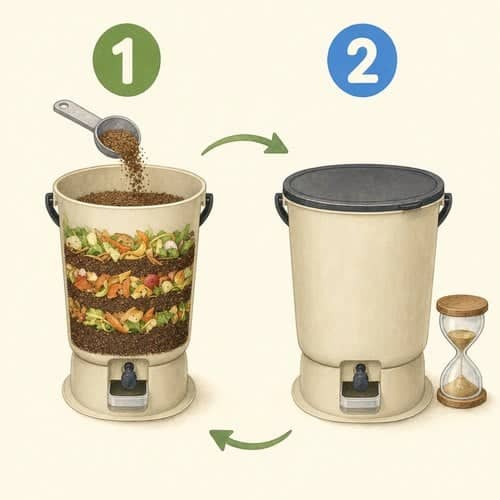 Let's take a household that fills a bin in about two weeks, the ideal rhythm. We'll call the bins A and B.
This rhythm gives roughly one bin emptied every two weeks, or a good twenty-odd fermented bins a year. To find out what to do with them, see our guide to burying bokashi in the garden, or the one on solutions without a garden. In the diagram: the bin being filled (1) and the closed bin fermenting (2), then they swap.
Emy's tipStick a small label on the lid of the bin going off to rest and write the closing date on it: you'll see at a glance when it will be ready.
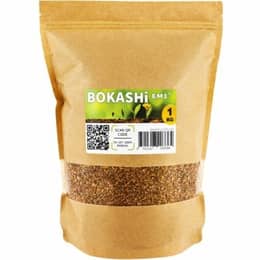
Consumption depends on the amount of waste, its type (meat, fish and very moist scraps need more) and the season. Here at the farm, we estimate that a two-person household uses about 2 kg of activator a year, or roughly six months for a 1 kg bag. A family of four commonly uses 2 to 6 kg a year, and a household that adds a lot of meat, fish or moist scraps will be at the top end of the range.
It's best always to have a little in reserve: a half-filled bin waiting for its activator ferments poorly. Keep your supply tightly closed, dry and away from light. Our Bokashi EM Compost Activator is made on the farm; if you'd rather make your own, the full method is in our guide to making your own bokashi activator.
If your bin takes more than a month to fill, it is probably too big for you. Each opening lets in a little air, and very slow filling increases the risk of mould on the top layers. Two solutions:
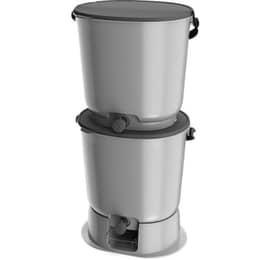
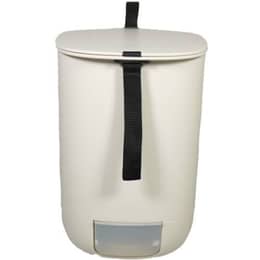
 Choose smaller bins, such as two 9.6-litre Skaza Organko 2 Bokashi Composters.
 Batch your additions: keep scraps in a small closed caddy and only tip them into the bokashi once a day, or every other day. The bin is opened less often, and fermentation is all the better for it.
If a bin fills in less than a week, the second one won't have finished resting by the time the first is full. Move up to larger bins, such as the kit of two 15.3-litre bins of the Skaza Essential Bokashi Composter, or add a third bin to the rotation. Some users who produce more than a litre of scraps a day even work with three or four bins.
The ground is frozen, the garden is too far away, you're going away for a few days? The fermented bin can wait. Tightly closed and drained regularly, it stays stable for weeks, and even several months according to the experience of many users. It's best to use it within the following months, but there's no rush to do it that very day.
The real issue is that a bin that's waiting is a bin that's out of use. If this happens to you often, there are two options:
 A third bin, acting as a buffer in winter or during busy periods.
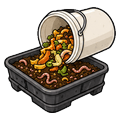 A large airtight storage container, such as a plastic box with a sealed lid: you transfer the contents of the fermented bins into it, onto a layer of newspaper, pressing down well and closing it again immediately. The bins are freed up, and the stock waits for spring. Remember to drain all the liquid from the bin before transferring it: excess liquid is the main enemy of storage.
We cover how to organise things through the seasons in our guide bokashi in winter, in summer and during the holidays.
Did you know?Once fermentation is complete, frost does bokashi no harm. In the Nordic countries, users store their fermented bins in a shed all winter and bury them when the ground thaws.
Nothing requires you to have two identical bins, but it is more practical: same capacity, same compactor, same routine, and the parts are interchangeable. That's why most of our models come in a set of two. When you get started, don't wait until the first bin is full to get the second: you'll be caught short. To get your first bin off to a good start, follow our method to start bokashi step by step.
A full bin must stay closed for at least two weeks: the second bin takes over during that time, and the rotation keeps going without interruption. Choose bins that you fill in one to two weeks, allow about 2 kg of activator a year for two people, and plan for a third bin or an airtight storage container if you can't always empty straight away. A fermented bin, tightly closed and drained, can wait without any problem.
Scan the code or visit mouttafarm.co.uk/guide: all our practical guides, with links to the products mentioned.



 France
 Belgium
 Switzerland
 Germany
 Austria
 Italy
 Spain
 Holland
 Portugal
 Ireland
 Sweden
 Finland
 Denmark
 Greece
 Poland
 Rumania
 Czech Republic
 USA
