









Best Seller
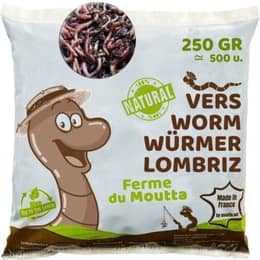
Compost worms Eisenia | 250 g of worms (approx. 500 pcs)
Packaging from 250 g to 10 kg of worms
13,57 €
-25%
Fast and odourless, compost worms eat your waste and turn it into worm casting for your plants.

From 2 to 4 trays with optional planter.

Up to 18 growing zones with central wormery.

Terracotta with flower pot.

From 2 to 4 shelves with a low shelf.

Urbalive, Worm Cafe, WORMcube, Tiny Worm, WORMwood, ...

Turn your planters into a Wormery: WORMacotta, In-Ground.
From the kitchen to the garden, your compost becomes simple, quick, and effective for everyone.
Live animals (worms and bait) and products to feed and care for pets and livestock.

Compost worms Eisenia for your wormery or worm compost bin.

Ultra-fresh worms: Bedding, Dendros and Canadians from 100 g to 1 kg.

Natural solutions dedicated to the well-being of horses, ponies, and donkeys.

Optimise the health and performance of your farm.

Mealworms, natural and nutritious supplements.
Enhance your home with our decorative items and care for your house in a natural and sustainable way.
Grow your garden in an eco-friendly and nature-friendly way, for healthy and sustainable plants.
EM-based products designed to enrich soils, protect plants, support animal health, and make everyday well-being and maintenance easier.

Contains a blend of 80 families of beneficial microorganisms.

Revitalise, purify and improve water quality in all your applications.

Stimulate soil microbial activity and plant growth.

Cleanse and maintain your environment naturally.

For the well-being and health of pets, livestock, and horses.

Enrich your body or dietary routines with essential enzymes.

When it comes to vermicomposting, not all earthworms are equal. Of the more than 6,000 worm species recorded worldwide, only a handful are able to live and breed in the conditions of a wormery. Here is which ones to choose, and why it is essential to get it right.
As we explain in our guide The ecological role of earthworms, earthworms fall into several ecological groups. Ordinary garden worms (the « burrowing worms », such as the common earthworm) dig deep tunnels in the soil and feed on earth that is already rich in organic matter: they simply cannot survive in the confined environment of a wormery, packed with fresh waste. Only compost worms — surface-dwelling worms used to living in leaf litter and decomposing organic matter — are suited to this use.
The compost worms you can use all belong to the Eisenia family. Three species stand out:
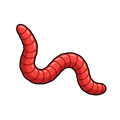 Eisenia Andreï, nicknamed the « Californian worm » despite its European origins, is recognisable by its bright red colour. It prefers fresh matter but copes less well with intense heat.
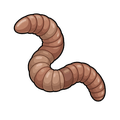 Eisenia Hortensis (also known as Dendrobaena veneta) is larger and well known to anglers. More effective on tougher matter, it withstands temperature swings better, from summer heat to winter cold, and can be a little adventurous in the first few days after being introduced.
 Eisenia Foetida, the « manure worm », is red striped with grey or yellow. It prefers matter that is already well into decomposition.
These three species live together very happily in the same wormery: over the months, one of them may come to dominate the others, simply because it is the best suited to your location, your climate and the food you give them.
These compost worms share characteristics that make them valuable allies. They breed quickly: from 8 to 10 weeks of age, a population can double every two to three months. They are voracious, able to process a quantity of waste equal to half their own body weight every day. And they are hardy, with a life expectancy of two to four years, provided their essential needs are met: constant moisture, darkness, and a temperature ideally between 15 and 25 °C. We describe the breeding cycle in detail in our guide Compost worm reproduction
Another particularity: these worms have neither eyes nor lungs. They breathe through their skin, which explains their constant need for moisture, and they sense light, which they instinctively avoid — that is why they immediately burrow under the waste as soon as you open the lid of your wormery.
Contrary to popular belief, it is not advisable to collect your worms straight from the garden without being able to identify the species precisely: you risk introducing burrowing worms, which will not survive, or species poorly suited to the confined environment of a bin. The most reliable solution is still to obtain identified compost worms from a specialist supplier — at Moutta Farm, we have been sending out our Eisenia compost worms for more than 15 years, as a mix of all three species, for a start with no unpleasant surprises. We also describe a free alternative in our guide Finding worms for free.
Well fed and kept in good conditions, a few dozen worms can produce several hundred offspring in a single year.
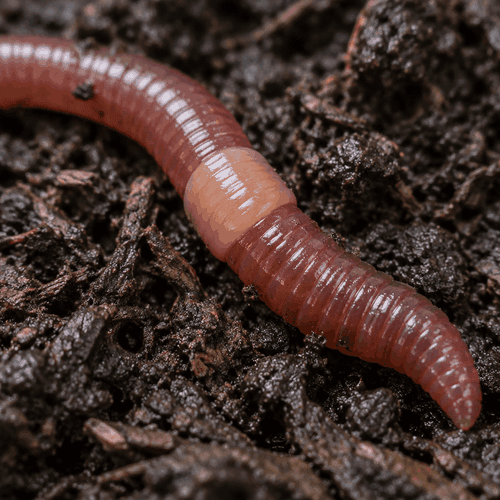 A healthy compost worm is active, retracts quickly when exposed to light, and has nicely moist, glistening skin. Beyond a certain age, you will notice a swelling on its body: the clitellum. This paler band shows that the worm has reached sexual maturity and is able to breed — a good sign that your population is thriving and ready to grow.


