On sale
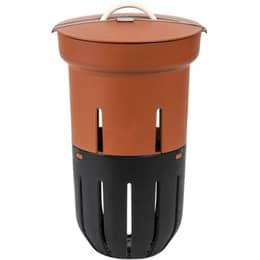
Wormery In-Ground
12 litre vermicomposting zone
26,33 €
-12%
Fast and odourless, compost worms eat your waste and turn it into worm casting for your plants.

From 2 to 4 trays with optional planter.

Up to 18 growing zones with central wormery.

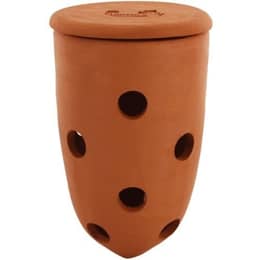
Terracotta with flower pot.

From 2 to 4 shelves with a low shelf.

Urbalive, Worm Cafe, WORMcube, Tiny Worm, WORMwood, ...

Turn your planters into a Wormery: WORMacotta, In-Ground.
From the kitchen to the garden, your compost becomes simple, quick, and effective for everyone.
Live animals (worms and bait) and products to feed and care for pets and livestock.

Compost worms Eisenia for your wormery or worm compost bin.

Ultra-fresh worms: Bedding, Dendros and Canadians from 100 g to 1 kg.

Natural solutions dedicated to the well-being of horses, ponies, and donkeys.

Optimise the health and performance of your farm.

Mealworms, natural and nutritious supplements.
Enhance your home with our decorative items and care for your house in a natural and sustainable way.
Grow your garden in an eco-friendly and nature-friendly way, for healthy and sustainable plants.
EM-based products designed to enrich soils, protect plants, support animal health, and make everyday well-being and maintenance easier.

Contains a blend of 80 families of beneficial microorganisms.

Revitalise, purify and improve water quality in all your applications.

Stimulate soil microbial activity and plant growth.

Cleanse and maintain your environment naturally.

For the well-being and health of pets, livestock, and horses.

Enrich your body or dietary routines with essential enzymes.
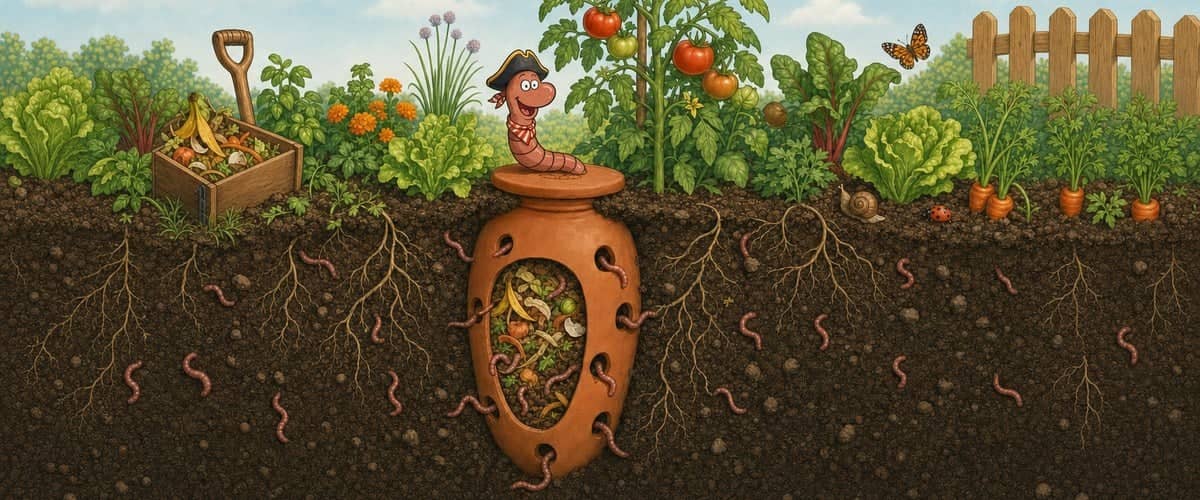
Alongside the tray and continuous-flow models, covered in our guides The tray wormery and The continuous-flow wormery, there is a third way to practise vermicomposting: right in the soil of your garden. The in-ground wormery works on a very different principle and is particularly well suited to households with outdoor space.
Rather than harvesting compost to spread on your plants afterwards, the in-ground wormery does the opposite: it sits directly in the ground, in the middle of a flower bed, a vegetable planter or a window box, and lets the worms work on the spot. You add your kitchen scraps, the worms turn them into vermicompost in direct contact with the surrounding soil, and the nutrients immediately benefit the nearby plants, with no harvesting or carrying involved.
This system comes in several formats, from the small terracotta pot buried next to a tomato plant to larger models for an entire vegetable patch. They all rely on the same principle: a perforated container with a lid, buried until the holes are no longer visible — which helps keep fruit flies out — and in which the worms process your scraps in direct contact with the soil. The choice of format mainly depends on how much waste you need to process and how much space you have: head to our in-ground wormeries section to discover the different models and find the one that suits your garden.
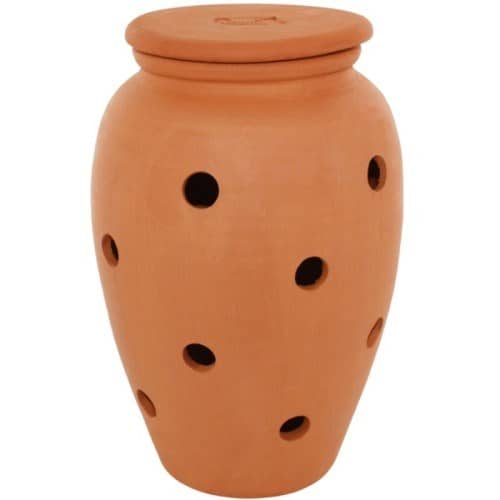 Compact format: a pot next to a tomato plant
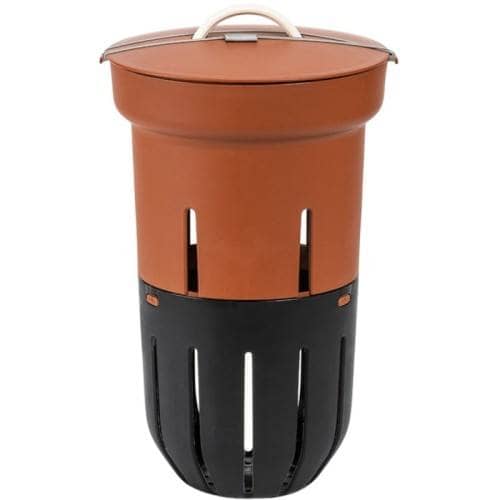 Large format: for a whole vegetable patch
Key pointsThe in-ground wormery reverses the usual logic: instead of taking the compost to your plants, your plants draw the nutrients directly from where the worms are working.
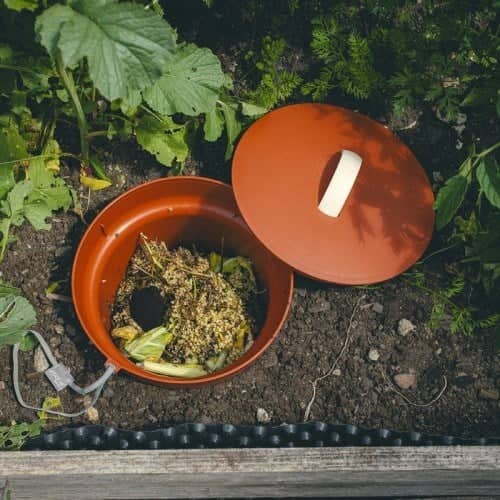 When starting out, first place a little cardboard torn into small pieces and some coffee grounds at the bottom, before adding your compost worms — this gives them an initial base to settle into. As with a conventional wormery, add only a reasonable amount of waste at first: the worms need time to build up their processing capacity, and too much fresh waste in the first few days can upset the balance. The diet to follow is the same as for a conventional wormery — we explain it in detail in our guide What do worms eat?
Unlike tray or continuous-flow models, an in-ground wormery does not need regular harvesting: the nutrients go straight into the surrounding soil. With the smaller formats, however, it may become necessary to empty it completely after a few months, once the pot contains more vermicompost than waste to process.
Another major difference: this system requires access to a garden, a flower bed or large outdoor vegetable planters. It is therefore not suitable for use in a flat or on a small balcony, unlike tray or continuous-flow models, which can just as easily be used indoors. On the other hand, it is a very good way to reduce how much you water your plants while doing without chemical fertilisers, as the soil continuously benefits from the nutrients produced on the spot.
Key pointsNo harvesting, no handling: the in-ground wormery needs the least maintenance of all the systems, provided you have proper access to the soil.
In winter, remember to mulch over the lid to protect the worms from the cold — the surrounding soil already provides good insulation, but extra mulch limits temperature swings around the opening. This is all the more useful because repeated freezing and thawing can damage some lids over time: a layer of mulch or a hemp mat is enough to protect them.
Discover our two in-ground models: the Wormacotta terracotta wormery, available in two sizes, and the In Ground tubular wormery, for larger volumes of waste.