Best Seller
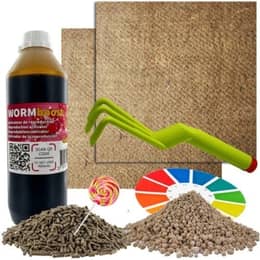
Pack of 5 must-have accessories | Square
Choice of rug shape: Square, Round, Rectangle or Oval
17,18 €
Fast and odourless, compost worms eat your waste and turn it into worm casting for your plants.

From 2 to 4 trays with optional planter.

Up to 18 growing zones with central wormery.

Terracotta with flower pot.

From 2 to 4 shelves with a low shelf.

Urbalive, Worm Cafe, WORMcube, Tiny Worm, WORMwood, ...

Turn your planters into a Wormery: WORMacotta, In-Ground.
From the kitchen to the garden, your compost becomes simple, quick, and effective for everyone.
Live animals (worms and bait) and products to feed and care for pets and livestock.

Compost worms Eisenia for your wormery or worm compost bin.

Ultra-fresh worms: Bedding, Dendros and Canadians from 100 g to 1 kg.

Natural solutions dedicated to the well-being of horses, ponies, and donkeys.

Optimise the health and performance of your farm.

Mealworms, natural and nutritious supplements.
Enhance your home with our decorative items and care for your house in a natural and sustainable way.
Grow your garden in an eco-friendly and nature-friendly way, for healthy and sustainable plants.
EM-based products designed to enrich soils, protect plants, support animal health, and make everyday well-being and maintenance easier.

Contains a blend of 80 families of beneficial microorganisms.

Revitalise, purify and improve water quality in all your applications.

Stimulate soil microbial activity and plant growth.

Cleanse and maintain your environment naturally.

For the well-being and health of pets, livestock, and horses.

Enrich your body or dietary routines with essential enzymes.
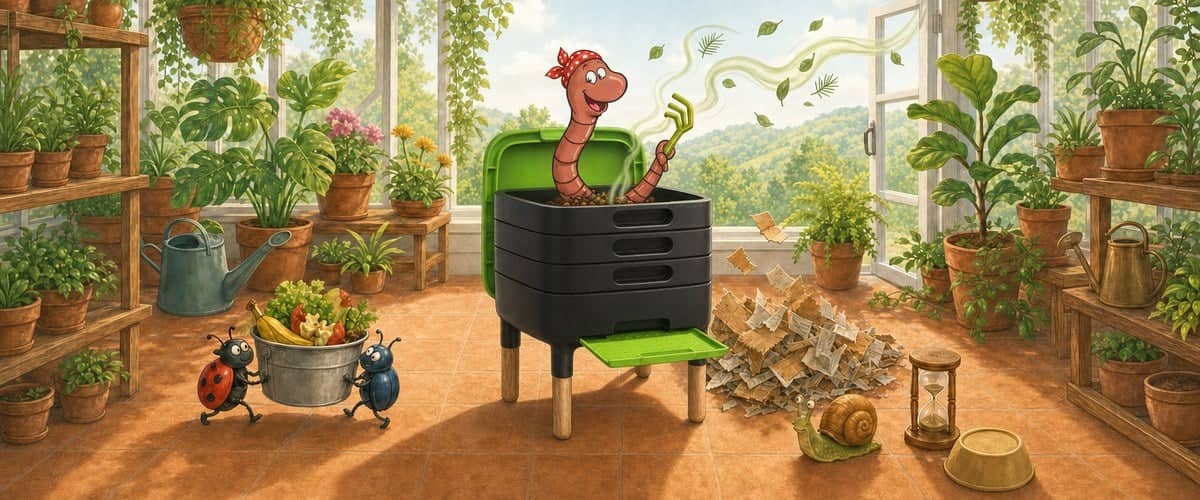
A wormery that is working well smells of almost nothing — at most a faint woodland smell, which is precisely what makes it such a good companion indoors. If you notice a strong or unpleasant odour, however, it is a signal to take seriously: not a lost cause, but an imbalance to correct quickly.
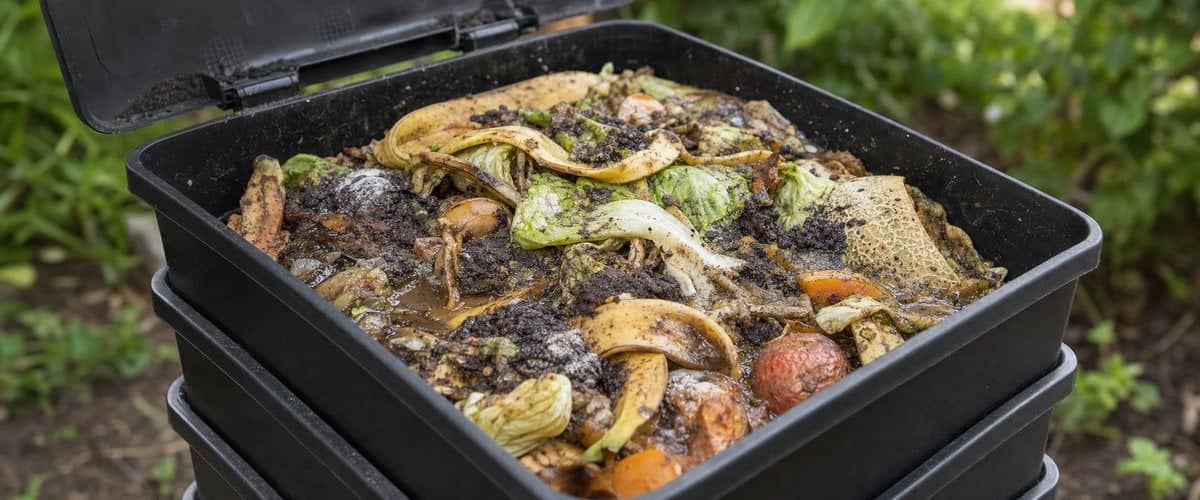
Your worms and the micro-organisms that live alongside them need oxygen to break down waste cleanly: this is aerobic decomposition, which is virtually odourless. When air no longer circulates enough — compacted bedding, too much moisture, too much waste added in one go —, some areas of the wormery switch to anaerobic decomposition: other micro-organisms take over in the absence of oxygen, and they are the ones producing the foul-smelling gases you notice. In the vast majority of cases, the cause is simple: you have fed your worms faster than they can digest, and the surplus has fermented before they had time to deal with it.
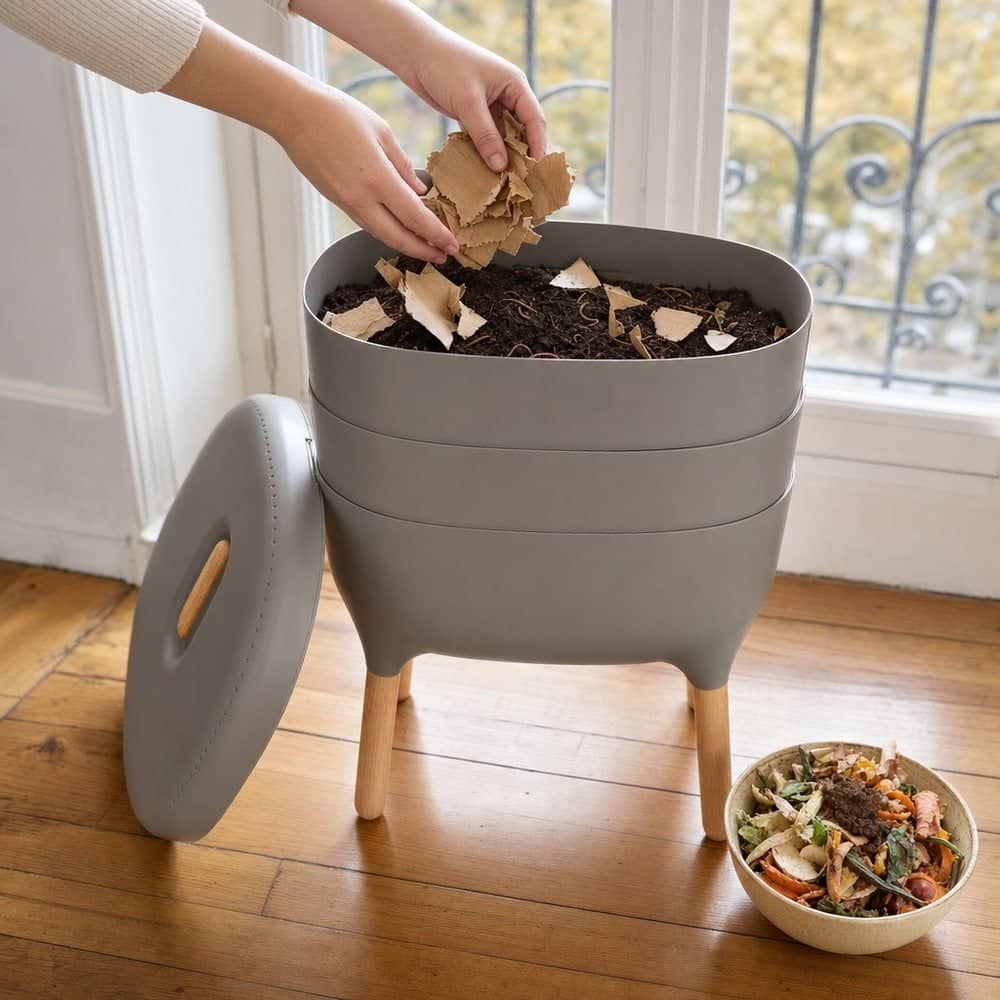 If a strong smell is coming from your wormery, here is what to do: remove the surplus undigested waste from the active tray, then add a good amount of paper or cardboard — this dries out the environment, brings carbon back in and helps air circulate better. Then stop feeding your worms for at least a week: long enough for them to catch up and digest what is left. All that remains is to be patient; the smell usually disappears within a few days to a week.
Willy's tipGently stirring once a week is generally enough to prevent this kind of imbalance, by stopping the waste from compacting and forming air-starved pockets — we explain how in our guide Should you stir your wormery?
The best way to avoid this problem is never to feed your worms faster than they can digest: it is better to add a little waste every day or every week than a full bucket all at once. Also make sure you always keep the balance between nitrogen-rich waste and carbon-rich materials (paper, cardboard) — we explain this routine in our guide What do earthworms eat?
A bad smell is not just unpleasant for you: an environment that stays starved of oxygen puts your worms in real danger. Anaerobic micro-organisms do not just produce unpleasant odours, they also release toxic substances, such as ammonia, which can quickly kill your worms if the situation persists. That is one more good reason to act at the first signs, rather than waiting for the smell to go away on its own.
A faint woodland smell is perfectly normal; a strong odour almost always signals too much waste or poor aeration. Remove the surplus, add cardboard, leave it for a few days: in the vast majority of cases, everything quickly returns to normal — and your worms will thank you for acting fast.