Pre-order
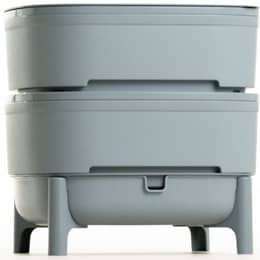
Wormery WORMgarden | 2 levels
From 1 to 3 planters with 6 growing pots per level
207,50 €
Fast and odourless, compost worms eat your waste and turn it into worm casting for your plants.

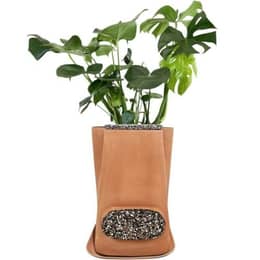
From 2 to 4 trays with optional planter.

Up to 18 growing zones with central wormery.

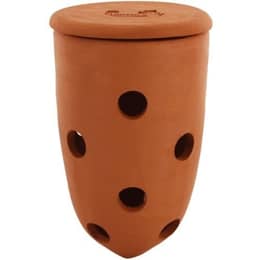
Terracotta with flower pot.

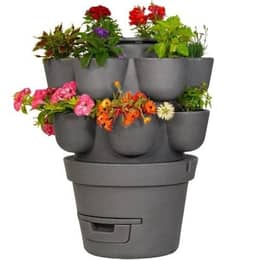
From 2 to 4 shelves with a low shelf.

Urbalive, Worm Cafe, WORMcube, Tiny Worm, WORMwood, ...

Turn your planters into a Wormery: WORMacotta, In-Ground.
From the kitchen to the garden, your compost becomes simple, quick, and effective for everyone.
Live animals (worms and bait) and products to feed and care for pets and livestock.

Compost worms Eisenia for your wormery or worm compost bin.

Ultra-fresh worms: Bedding, Dendros and Canadians from 100 g to 1 kg.

Natural solutions dedicated to the well-being of horses, ponies, and donkeys.

Optimise the health and performance of your farm.

Mealworms, natural and nutritious supplements.
Enhance your home with our decorative items and care for your house in a natural and sustainable way.
Grow your garden in an eco-friendly and nature-friendly way, for healthy and sustainable plants.
EM-based products designed to enrich soils, protect plants, support animal health, and make everyday well-being and maintenance easier.

Contains a blend of 80 families of beneficial microorganisms.

Revitalise, purify and improve water quality in all your applications.

Stimulate soil microbial activity and plant growth.

Cleanse and maintain your environment naturally.

For the well-being and health of pets, livestock, and horses.

Enrich your body or dietary routines with essential enzymes.
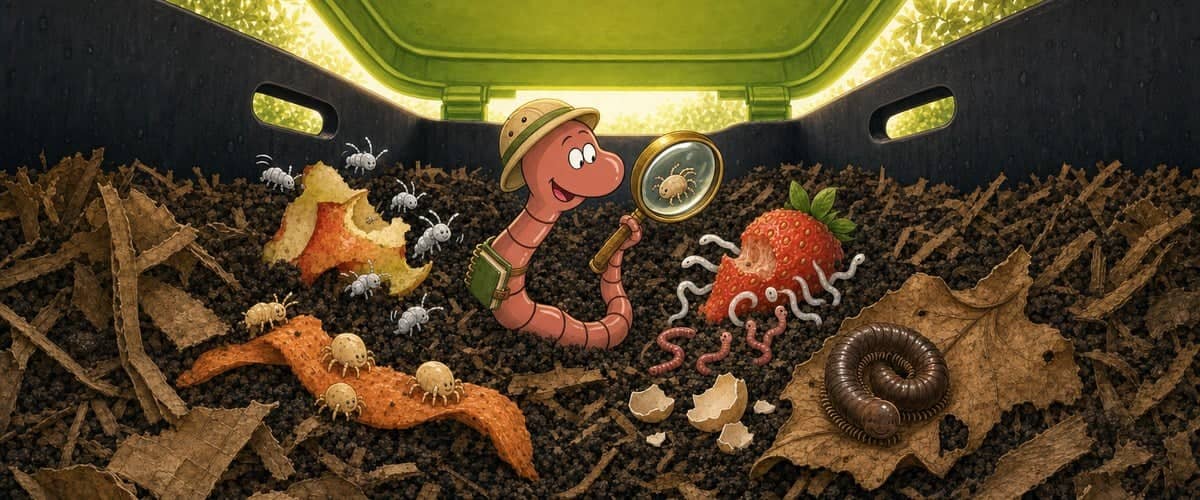
As the weeks go by, you will notice that your wormery is not home to worms alone: tiny creatures move in, sometimes in large numbers. Don't panic: in the vast majority of cases, these are perfectly normal residents of a healthy ecosystem, not pests to be fought. Here are the most common ones, and how to recognise them.
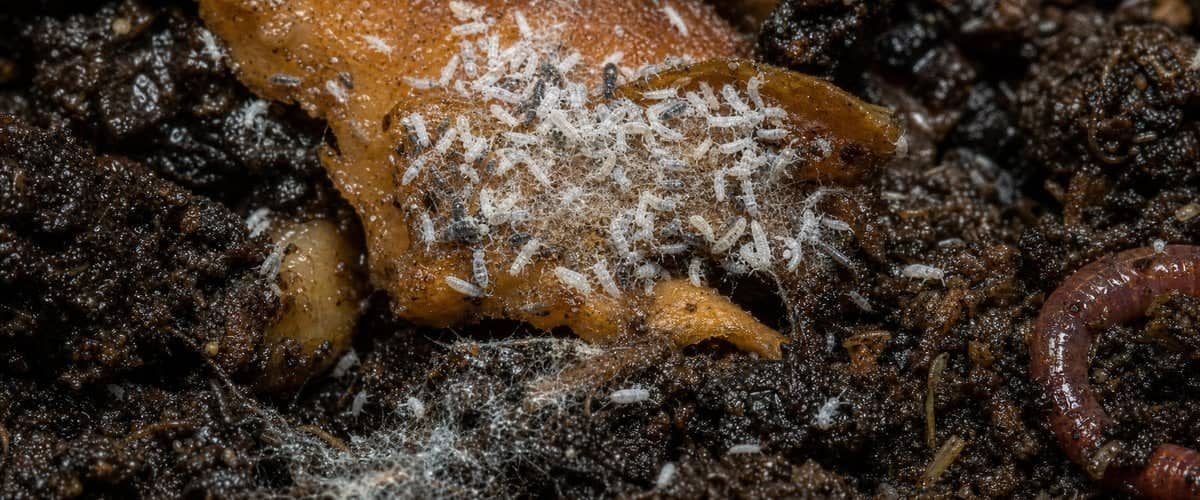
These are often the first ones you notice: minute white or dark specks, 1 to 3 millimetres long, that hop away in little jumps when you bring a finger close to the bedding. Springtails feed on mould and decaying matter; they play an active part in turning your waste into vermicompost. They are completely harmless to your worms, even when there are a great many of them.
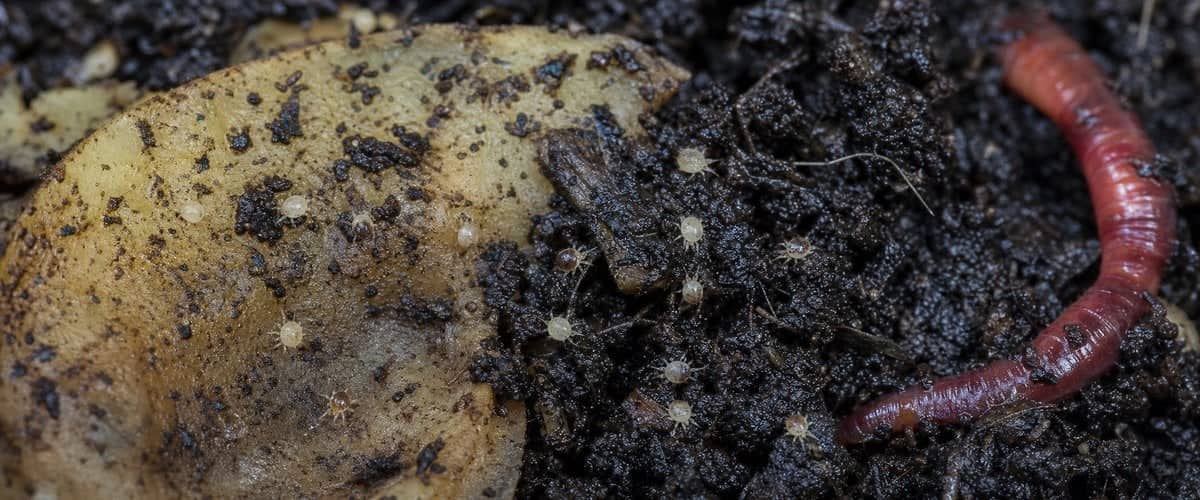
With their small round bodies and eight legs barely visible to the naked eye, mites are almost always present in a wormery, usually in small numbers. Like springtails, they feed on decaying organic matter and pose no danger to your worms. An unusually large population may simply indicate that conditions are a little too wet: try adding some paper or cardboard to dry things out slightly.
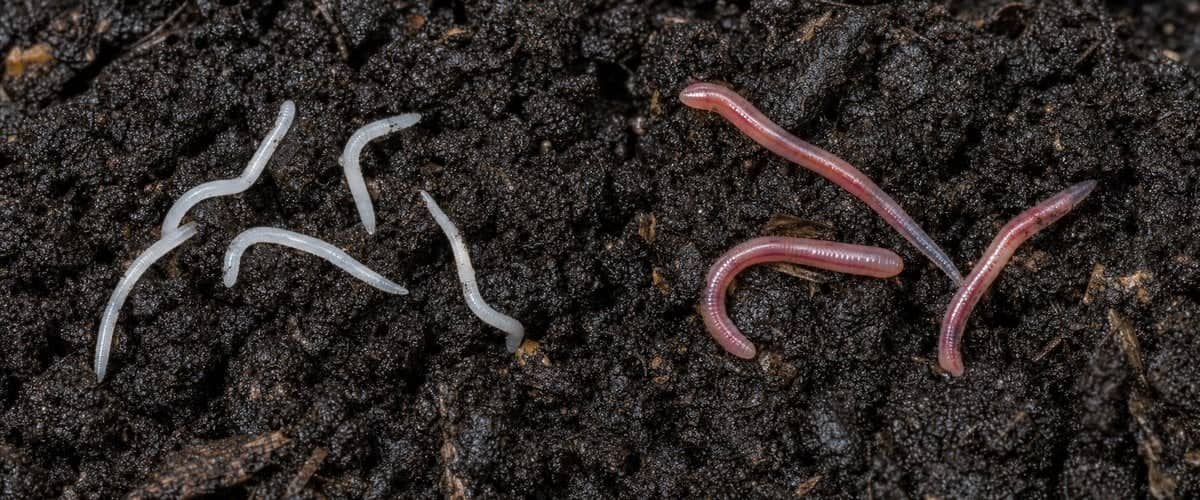
These small white worms, around 1 to 2 centimetres long, look remarkably like young compost worms. The difference lies in the colour: your worms, even very young ones, have red blood that gives them a pinkish tinge, whereas enchytraeids stay white all their lives. They do your worms no harm — on the contrary, they share the same job of decomposition. Their presence in large numbers is above all a useful indicator: it signals slightly acidic conditions. If this is the case for you, a little crushed eggshell is generally enough to rebalance things — we explain this in detail in our guide What earthworms eat
Willy's tipIf you are unsure about a creepy-crawly you have spotted in your wormery, one simple rule will do in the vast majority of cases: if your worms are thriving and the compost is progressing normally, its presence is the sign of a working ecosystem, not a problem to be solved.
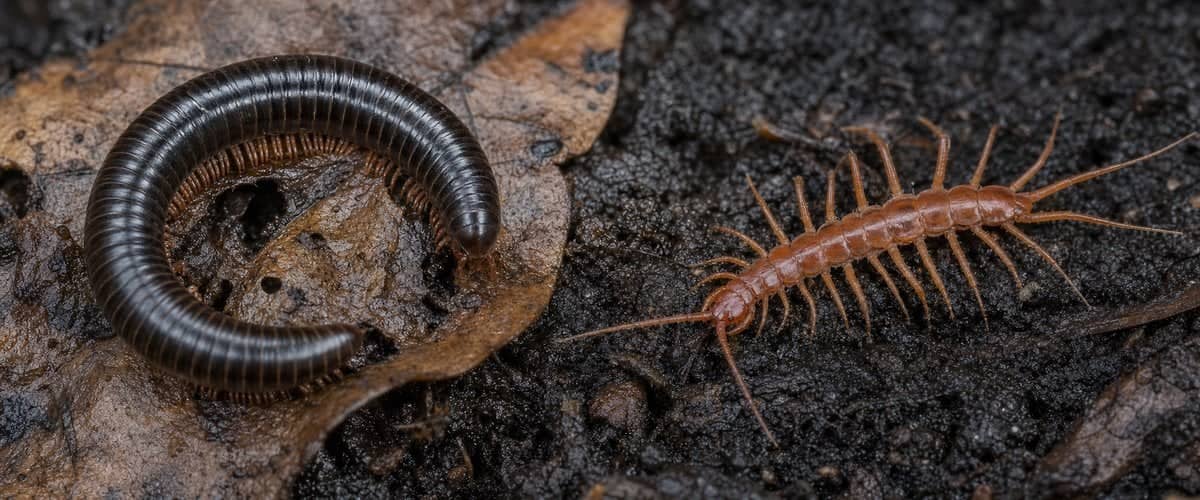
If you spot a millipede in your wormery — more likely if you use animal manure or dead leaves as bedding —, take a good look at its shape before you start worrying. A true millipede, with a cylindrical body and two pairs of legs per segment, is entirely vegetarian and harmless to your worms: it feeds on leaves already softened by moisture and bacteria, and helps break them down. Its cousin the centipede, on the other hand, is flat and has only one pair of legs per segment: it is a predator that may occasionally attack your worms. The good news is that it remains rare in a wormery started with shredded paper or cardboard bedding, as its natural hunting ground lies elsewhere.
Springtails, mites, enchytraeids, millipedes... most of the little creatures you will come across in your wormery are not intruders but helpful housemates that contribute, in their own small way, to the same transformation as your worms. Observe them without fear: they are the sign of a wormery that is alive, and thriving.