









Best Seller
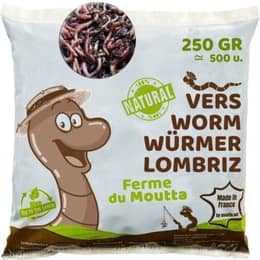
Compost worms Eisenia | 250 g of worms (approx. 500 pcs)
Packaging from 250 g to 10 kg of worms
13,57 €
-25%
Fast and odourless, compost worms eat your waste and turn it into worm casting for your plants.

From 2 to 4 trays with optional planter.

Up to 18 growing zones with central wormery.

Terracotta with flower pot.

From 2 to 4 shelves with a low shelf.

Urbalive, Worm Cafe, WORMcube, Tiny Worm, WORMwood, ...

Turn your planters into a Wormery: WORMacotta, In-Ground.
From the kitchen to the garden, your compost becomes simple, quick, and effective for everyone.
Live animals (worms and bait) and products to feed and care for pets and livestock.

Compost worms Eisenia for your wormery or worm compost bin.

Ultra-fresh worms: Bedding, Dendros and Canadians from 100 g to 1 kg.

Natural solutions dedicated to the well-being of horses, ponies, and donkeys.

Optimise the health and performance of your farm.

Mealworms, natural and nutritious supplements.
Enhance your home with our decorative items and care for your house in a natural and sustainable way.
Grow your garden in an eco-friendly and nature-friendly way, for healthy and sustainable plants.
EM-based products designed to enrich soils, protect plants, support animal health, and make everyday well-being and maintenance easier.

Contains a blend of 80 families of beneficial microorganisms.

Revitalise, purify and improve water quality in all your applications.

Stimulate soil microbial activity and plant growth.

Cleanse and maintain your environment naturally.

For the well-being and health of pets, livestock, and horses.

Enrich your body or dietary routines with essential enzymes.
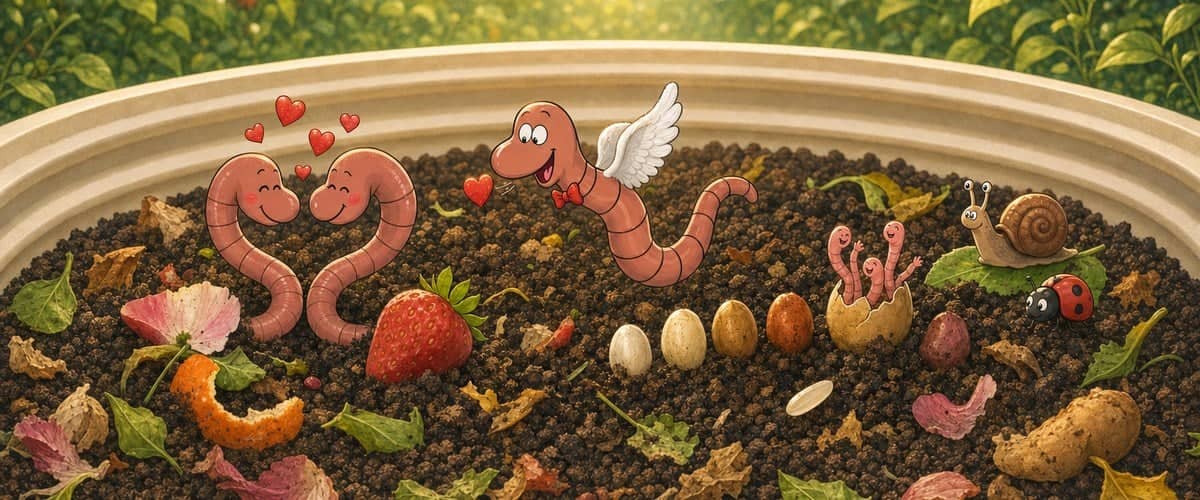
One of the questions beginners ask most often: will my worms breed on their own, and how fast will my population grow? Good news: compost worms reproduce naturally and fairly quickly in a well-maintained wormery. Here is how the cycle works, from the first mating to the arrival of new worms.
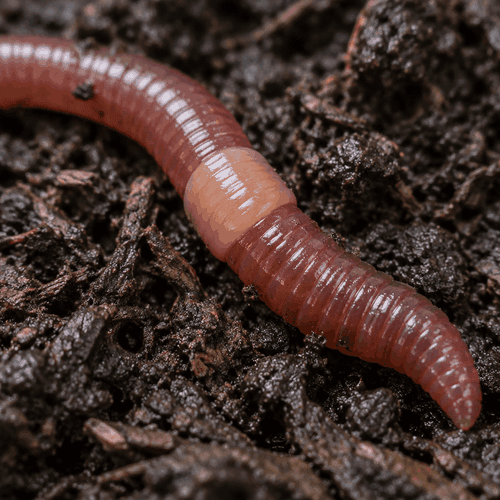 Earthworms are hermaphrodites: each individual has both male and female reproductive organs. This does not mean a worm can reproduce alone — mating is still necessary, rather like with snails. Each worm produces both eggs and sperm, but needs a partner to fertilise its own eggs.
The sign that a worm is old enough to breed is the clitellum: this visible swelling on its body, located about a third of the way along its length, is the organ that will later form the cocoon.
When two mature worms meet, they mate belly to belly, lying head to tail. Each passes its sperm to the other, which keeps it in reserve. Some time after they separate, each worm's clitellum secretes a substance that hardens on the outside and forms a cocoon. As the worm wriggles backwards out of it, it deposits both its own eggs and the sperm received from its partner, which fertilises them along the way.
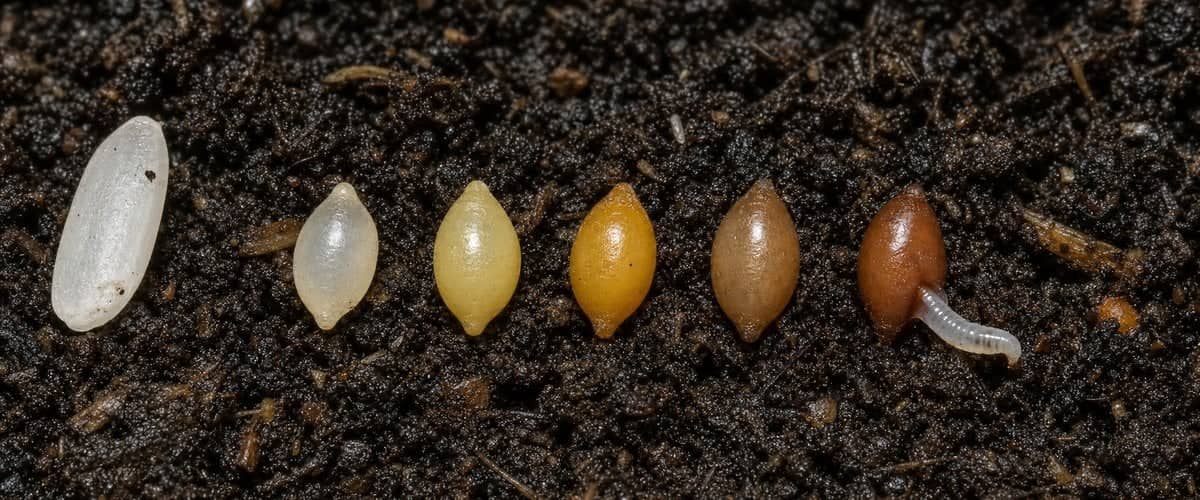
A cocoon measures roughly 3 mm, about the size of a grain of rice. It gradually changes colour as the young worms develop inside: first pearly white, then yellow, then light brown, and finally reddish just before hatching. Allow at least three weeks of development before one or more young worms emerge — hatching depends greatly on the temperature of their surroundings.
Each cocoon can contain up to around ten fertilised eggs, but in practice only two or three young worms usually emerge. At birth, they are white, almost translucent, and tiny: a few millimetres long and barely 2 to 3 milligrams in weight.
Did you know?Each cocoon is only a few millimetres long, yet it can hold up to around ten eggs — even if, in practice, only two or three young worms will emerge.
Allow between 4 and 6 months for a young worm to reach sexual maturity and be able to breed in turn. This timescale varies with conditions: temperature, moisture, food availability and population density in your wormery all play a part. Your worms breed best between 15 and 25 °C — the same temperatures at which they digest your waste most efficiently. The closer you stay to this range, the faster your worms will mature and reproduce.
In good conditions, the worm population in a wormery doubles roughly every 3 to 4 months. This is an average: it assumes a stable temperature, regular feeding and enough available space. We explain how to choose the right spot — particularly temperature and exposure — in our guide How to start your wormery
Rest assured: your worms will not take over your home. Their population regulates itself naturally, according to three main factors: the amount of food available, the space they have, and the build-up of their own castings in a confined space. When one of these factors becomes limiting, cocoon production slows down by itself — so there is no need to step in to curb your worms' breeding.
This same mechanism explains why, over time, your tray wormery needs your attention more and more often: usually, it is simply a matter of harvesting the bottom tray once it is ready and putting it back empty on top of the stack; more rarely, if the bottom tray is not yet ready while the others are already full, it is a sign that you actually need an extra tray. Head over to our guide The tray wormery to learn how to recognise each of these two signs.
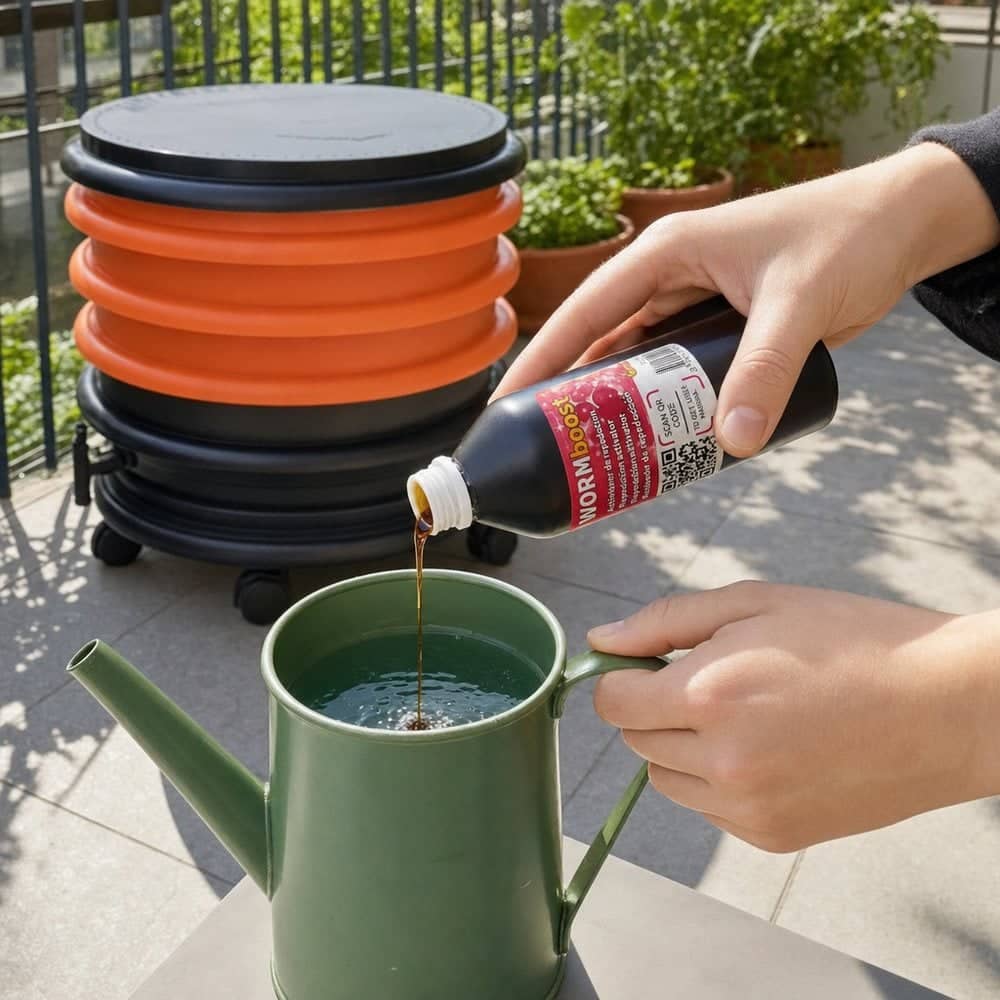 A few simple steps help your worms breed in good conditions. The calcium provided by crushed eggshells — already recommended in our guide What earthworms eat to regulate acidity — also encourages cocoon production. Coffee grounds, added regularly, would also appear to have a positive effect on reproduction, in addition to their role as a structuring material already mentioned in that same guide.
A stable temperature, ideally between 15 and 25 °C, and a fairly undisturbed environment also play an important part. If you would like to give your colony an extra boost, our Wormboost, to be diluted with water, has been designed precisely as a reproduction booster for your worms.
Your worms reproduce naturally, without any intervention on your part: mating, a cocoon, then a few weeks later, the arrival of new worms. Allow several months before these in turn start breeding, and expect a population that doubles roughly every 3 to 4 months in good conditions — a pace that regulates itself, without ever getting out of control.


