
Willy the worm soft toy
The mascot for young and old in a 73 cm long format!
12,42 €
Fast and odourless, compost worms eat your waste and turn it into worm casting for your plants.

From 2 to 4 trays with optional planter.

Up to 18 growing zones with central wormery.

Terracotta with flower pot.

From 2 to 4 shelves with a low shelf.

Urbalive, Worm Cafe, WORMcube, Tiny Worm, WORMwood, ...

Turn your planters into a Wormery: WORMacotta, In-Ground.
From the kitchen to the garden, your compost becomes simple, quick, and effective for everyone.
Live animals (worms and bait) and products to feed and care for pets and livestock.

Compost worms Eisenia for your wormery or worm compost bin.

Ultra-fresh worms: Bedding, Dendros and Canadians from 100 g to 1 kg.

Natural solutions dedicated to the well-being of horses, ponies, and donkeys.

Optimise the health and performance of your farm.

Mealworms, natural and nutritious supplements.
Enhance your home with our decorative items and care for your house in a natural and sustainable way.
Grow your garden in an eco-friendly and nature-friendly way, for healthy and sustainable plants.
EM-based products designed to enrich soils, protect plants, support animal health, and make everyday well-being and maintenance easier.

Contains a blend of 80 families of beneficial microorganisms.

Revitalise, purify and improve water quality in all your applications.

Stimulate soil microbial activity and plant growth.

Cleanse and maintain your environment naturally.

For the well-being and health of pets, livestock, and horses.

Enrich your body or dietary routines with essential enzymes.

Your Eisenia worms have no natural tendency to escape: being sensitive to light, they prefer to stay buried in the material rather than expose themselves to daylight. So if you ever see some climbing up the sides or clustering under the lid, it is a signal worth taking into account rather than normal behaviour — but rest assured, it is rare, and always temporary.
One detail not to be confused with a genuine escape: it is perfectly normal to see a few worms briefly come up to the surface, for example just after you have added food. It is only a concern when they are really trying to get out of the wormery — crossing the edge of a tray or gathering against the lid for several days.
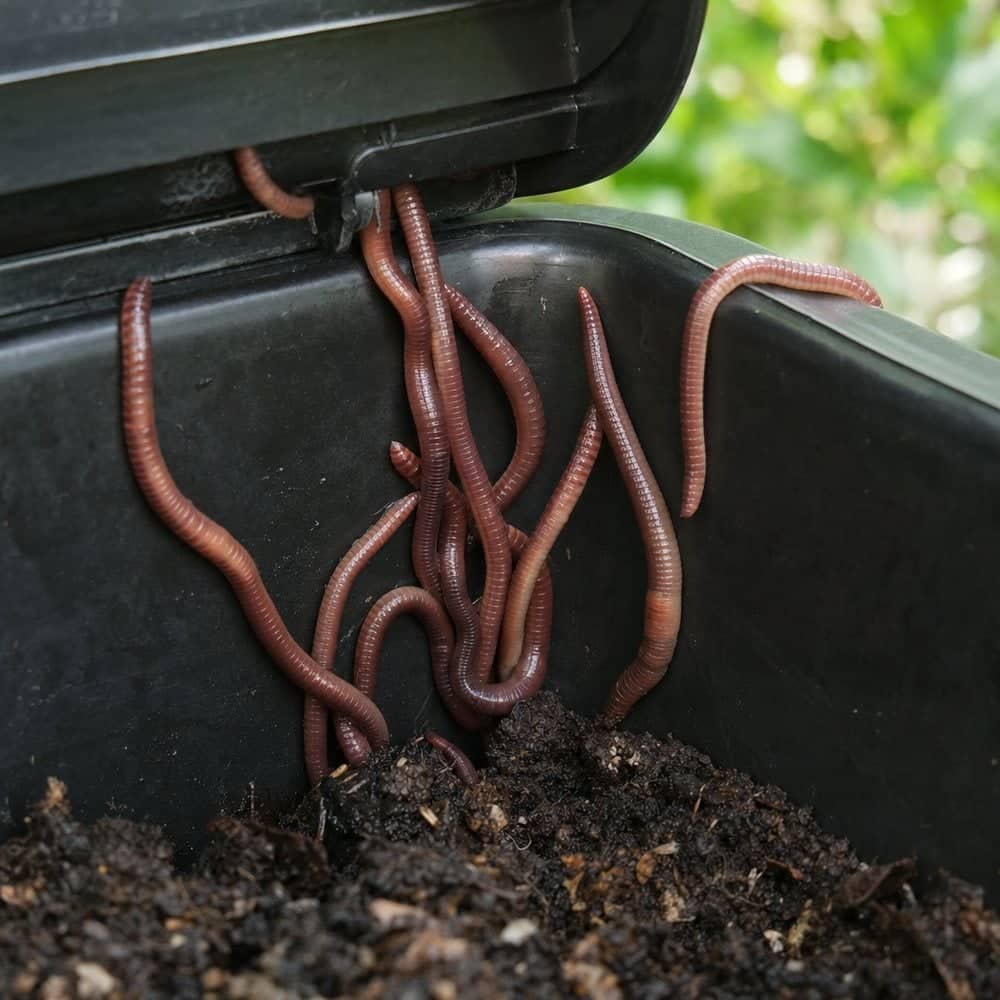 This behaviour mostly shows up in the very first days after they arrive. Your worms are discovering a new environment, and part of their exploring behaviour is precisely to check whether there is somewhere better than their new home — this is normal, and it settles down as they acclimatise. Several factors can prolong or worsen this period:
After the first few days, an escape attempt is more likely a sign that the environment no longer suits your worms: most often too much moisture, which you can correct by adding paper or cardboard, or conditions that have become too acidic (which may also relate to the forbidden foods mentioned above), which you simply need to rebalance with crushed eggshells or lime mix (RegulaWorm).
Willy's tipIf your bedding is made entirely of cardboard, make sure you moisten it well before introducing your worms. The test is simple: it should make the sound of a damp sponge when you squeeze it in your hand, without actually dripping. Bedding that is too dry is just as likely to send your worms looking elsewhere as bedding that is too wet.
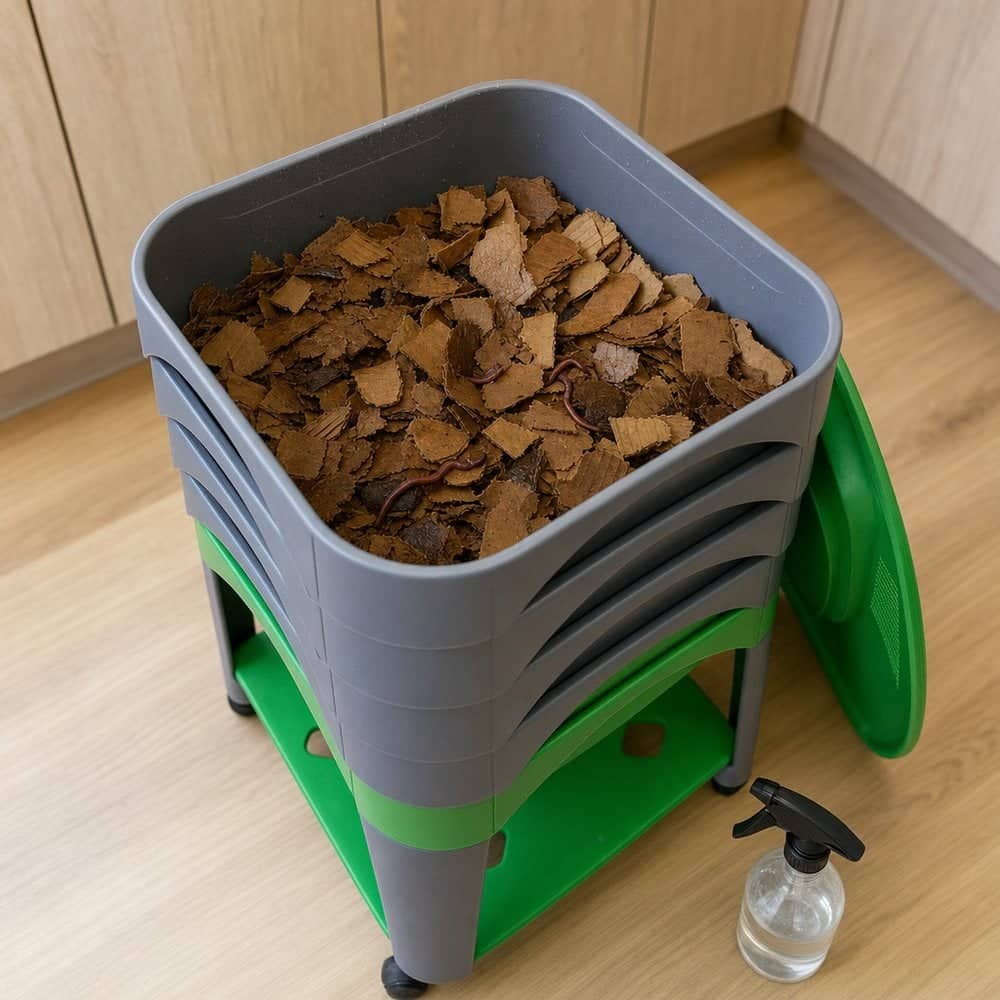 If you have some adventurers, the simplest technique is to add a new tray on top of the first one and half-fill it with slightly moistened pieces of cardboard. Your worms will usually take refuge there for a few days while they settle, and then everything returns to normal.
Willy's tipTo be kept as a last resort, as it is less eco-friendly: a low light source placed on the wormery for 2 to 3 days is also enough to deter your worms from coming out, since they are sensitive to light — they will simply stay buried deeper.
Always make sure the bottom tray stays filled with maturing compost, even when you are not harvesting yet. This tray acts as a natural refuge for your worms if their living conditions are temporarily disrupted — temperature (see our guide Protecting from cold and heat), moisture or food.
Escaping worms remain a rare and almost always temporary occurrence, most often linked to the first few days after setting up. A new refuge tray of moistened cardboard, a little patience, and the right balance of moisture and acidity day to day are, in the vast majority of cases, all it takes to bring your worms back snug in their bedding.