











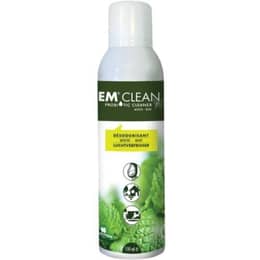
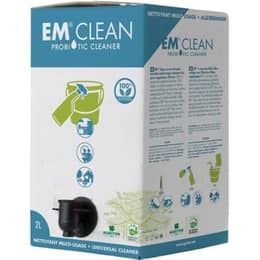
EM Clean, EM deodoriser | Mint
Naturally neutralises bad odours
£10.78 €12.92
Fast and odourless, compost worms eat your waste and turn it into worm casting for your plants.

From 2 to 4 trays, with an optional planter.

Up to 18 growing areas around a central wormery.

Terracotta with flower pot.

2 to 4 trays with a lower shelf.

Trays you add over time, for easy harvesting of vermicompost.

Turn your planters and flower beds into a wormery: WORMacotta, In-Ground.
 Practical guide

From the kitchen to the garden, your compost becomes simple, quick, and effective for everyone.
 Practical guide
 Practical guide
Live animals (worms and bait) and products to feed and care for pets and livestock.

Eisenia compost worms for your wormery or composter.

Ultra-fresh worms: compost worms, Dendros and Canadians from 100 g to 1 kg.

Natural solutions dedicated to the wellbeing of horses, ponies and donkeys.

Optimise the health and performance of your farm.

Mealworms, natural and nutritious supplements.
Enhance your home with our decorative items and care for your house in a natural and sustainable way.
Garden in an eco-friendly way that respects nature, for healthy and sustainable plants.
EM-based products designed to enrich soils, protect plants, support animal health, and make everyday well-being and maintenance easier.

Contains a blend of 80 families of beneficial microorganisms.

Revitalise, purify and improve water quality in all your applications.

Stimulate soil microbial activity and plant growth.

Cleanse and maintain your environment naturally.

For the wellbeing and health of pets, livestock and horses.

Enrich your body care or dietary routines with essential enzymes.
 Practical guidePractical guide

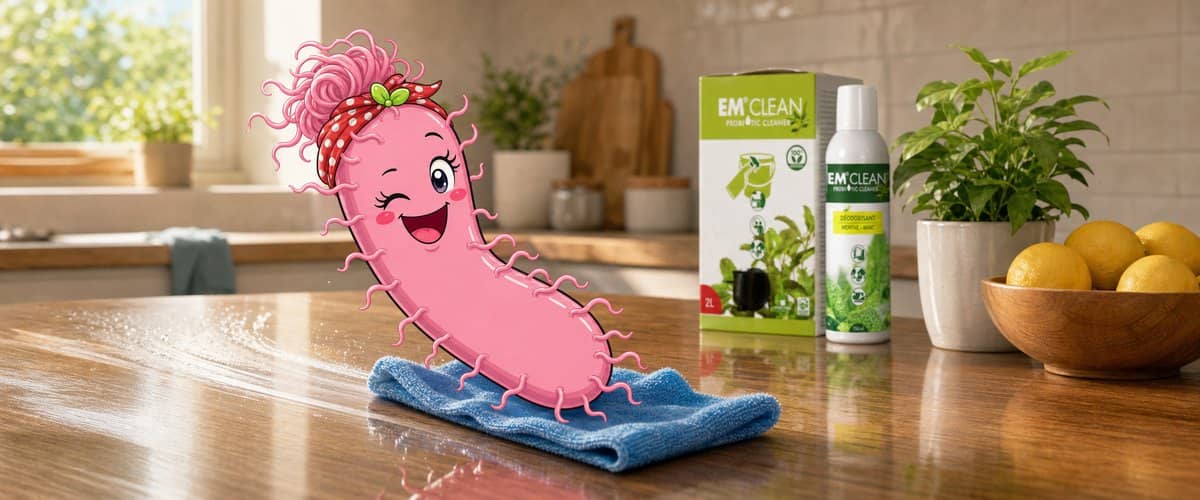
One single container for floors, windows, the bathroom, the patio and even the laundry: that is the promise of microbial cleaners such as EM Clean. Lightly scented and colourant-free, they appeal to people who want to declutter their cupboards and cut down on harsh products at home.
This guide gives you the right dilutions surface by surface, the techniques that make a difference, and an honest clarification: what an EM cleaner does well, what it does not do, and the situations where another product remains essential.
EM Clean multi-purpose cleaner is a liquid concentrate made by fermentation. It contains water, effective microorganisms (mainly lactic acid bacteria and yeasts) and the substances produced during fermentation, including organic acids. It does not foam, contains no colourant and needs little or no rinsing.
You will often see these products called « probiotic cleaners ». The term is misleading: a probiotic is a microorganism that benefits your health when swallowed. On a surface, it is simply a cleaner that contains live microorganisms and leaves some of them on whatever it touches.
In practice, what does the cleaning is first and foremost the water, the wiping action and the cloth. The acids from fermentation help to loosen light limescale deposits, and according to the manufacturer the microorganisms carry on breaking down organic residues after cleaning, an effect that independent tests have not confirmed. The manufacturer therefore advises against rinsing: apply, wipe and leave to dry.
The dosages below follow the manufacturer's instructions. Always check the label on your container, and use cold or lukewarm water, preferably unchlorinated.
 Floors: the manufacturer recommends 1 to 10 % depending on how dirty they are. For routine cleaning, 50 to 100 ml in a 10-litre bucket (0.5 to 1 %) is enough; save the stronger dilutions for heavily soiled floors. Use a well-wrung mop or microfibre cloth, without rinsing.
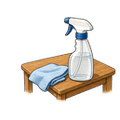 Worktops, tables, furniture, tiles, stainless steel: 1 to 10 % depending on the dirt, in a spray bottle. Leave for two to three minutes, then wipe.
 Windows and mirrors: 1 to 2 %, no more, otherwise streaks appear. Wipe with a clean microfibre cloth.
 Toilets: 10 to 30 % for the inside and outside of the bowl.
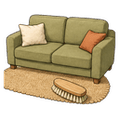 Rugs and sofas: vacuum first, then lightly dampen with a 1 to 10 % solution and brush. Test on a hidden area first.
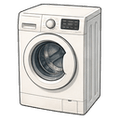 Washing machine: 10 to 30 ml of neat EM Clean in the fabric softener compartment.
 Patio, garden furniture, greenhouse, shed: 5 to 10 %, brush, then rinse with a weak dilution. For long-standing grime, the manufacturer advises starting at 20 to 30 %.
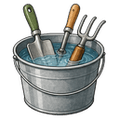 Very dirty tools and objects: soak in a 10 % solution for anything from a few hours to several days, then brush.
Emy's tipOnly make up the amount you need for each cleaning session. A dilution does not keep: pour what is left down the sink, the shower or the toilet rather than leaving it in the spray bottle.
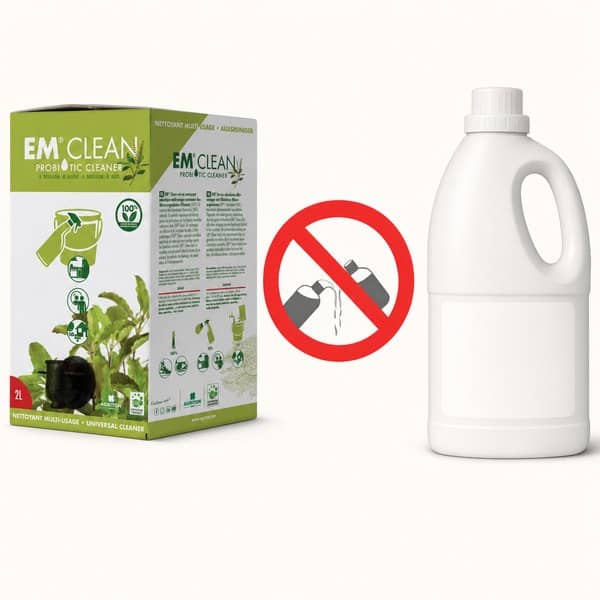
This is the most important rule. Firstly, because bleach and disinfectants kill microorganisms: used one after the other, the two products cancel each other out. Secondly, and above all, because EM Clean is a fermented product rich in lactic acid, and therefore acidic, like EM solutions, whose pH is around 3 to 3.5. Mixing bleach with an acidic product releases chlorine gas, which is toxic to breathe. Every year, cases of poisoning, sometimes serious, are caused by this kind of mixture.
So keep separate buckets, spray bottles and cloths, and never use one product straight after the other on the same surface.
Marble, travertine, limestone and some natural stone tiles are sensitive to acids. On these surfaces, test a weak dilution on a hidden area first, or use a neutral soap instead.
Like any microbial cleaner, EM Clean may irritate the skin or airways in some people. Avoid breathing in the spray mist, ventilate while cleaning, wear gloves if you have sensitive skin, and store the container out of the reach of children.
Did you know?The bleach bottle and the EM cleaner container must never meet in the same bucket: as well as cancelling each other out, the two products together can release a toxic gas.
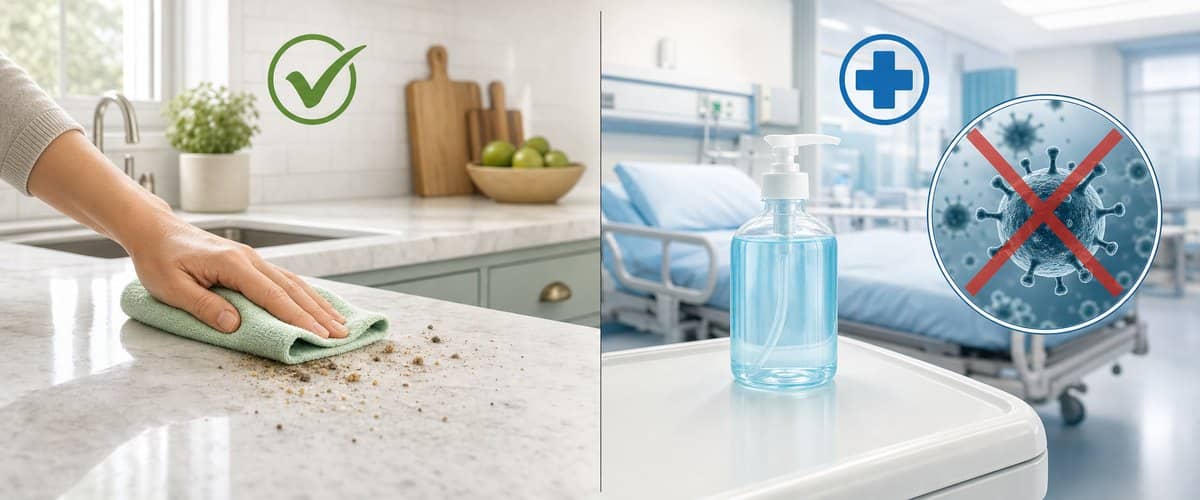
EM Clean is a cleaner, not a disinfectant. The manufacturer says so itself. It removes dirt and reduces unpleasant odours, but it is not intended to kill germs and we do not present it as such.
The good news is that in the home, disinfecting is rarely necessary. Regular cleaning is enough for most surfaces. Home hygiene specialists recommend focusing efforts on a few key moments, when a suitable product and stricter practices are called for:
For surfaces in direct contact with food, we recommend hot water and washing-up liquid, followed by rinsing. Keep EM Clean for the rest of the kitchen: floors, cupboard fronts, splashback, the outside of appliances.
Key pointsEM Clean is a great replacement for your usual cleaners for everyday cleaning. It does not replace a disinfectant in the rare situations where one is genuinely needed.
Microbial cleaners are the subject of research, particularly in hospitals. But almost all of these studies concern other products, based on spores of bacteria of the genus Bacillus, not EM. They therefore allow no conclusions to be drawn about EM Clean.
Independent evaluations of EM cleaners themselves are rare. A review published in Austria in 2009 found them less effective than conventional detergents on ordinary floor dirt, but useful for reducing odours and maintaining traps and drains. Laboratory tests published in 2025 on five commercial microbial cleaners point the same way: three cleaned as well as or less well than a reference cleaner without microorganisms, and repeated applications neither improved the results nor established the microorganisms permanently on the surfaces. For odour control, see our guide Getting rid of bad odours with EM, and for drains, Septic tanks, pipes and composting toilets.
Our view: EM Clean is a good everyday cleaner, simple, versatile and economical once diluted, especially where odours are a problem. For heavy degreasing, black soap or washing-up liquid are still more effective. The regulatory status of microbial cleaners is explained in our guide EM and regulations.
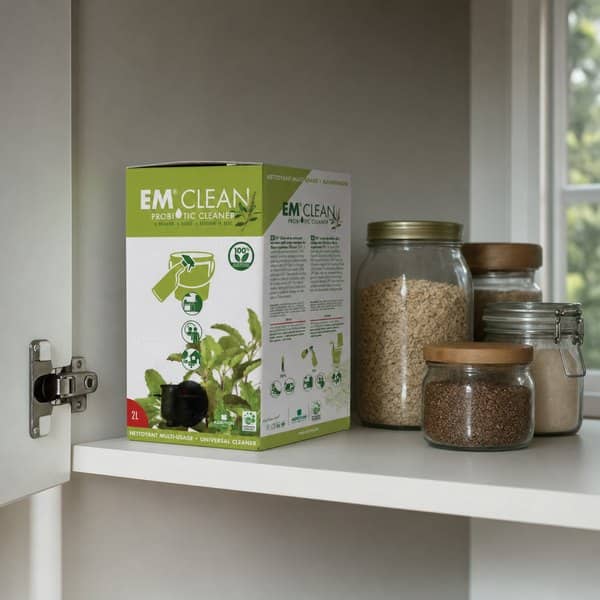
EM Clean is a fermented cleaner based on effective microorganisms, used diluted in water, from 0.5 % for floors to 30 % for toilets, without rinsing. It is suitable for most surfaces in and around the home, and is particularly useful where odours keep coming back. Never combine it with bleach, test it on limestone surfaces, and make up your dilutions as and when you need them. It is not a disinfectant: for raw meat, someone who is ill or vulnerable, or waste water, use the appropriate practices and products.
Scan the code or visit mouttafarm.co.uk/guide: all our practical guides, with links to the products mentioned.



 France
 Belgium
 Switzerland
 Germany
 Austria
 Italy
 Spain
 Holland
 Portugal
 Ireland
 Sweden
 Finland
 Denmark
 Greece
 Poland
 Rumania
 Czech Republic
 USA
