












Best Seller
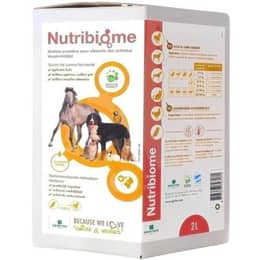
EM-A Food Supplement Nutribiome | 2 L Bag-in-box
Probiotic for animal feed, from 2 to 1000 litres
£12.81 €15.36
Fast and odourless, compost worms eat your waste and turn it into worm casting for your plants.

From 2 to 4 trays, with an optional planter.

Up to 18 growing areas around a central wormery.

Terracotta with flower pot.

2 to 4 trays with a lower shelf.

Trays you add over time, for easy harvesting of vermicompost.

Turn your planters and flower beds into a wormery: WORMacotta, In-Ground.
 Practical guide

From the kitchen to the garden, your compost becomes simple, quick, and effective for everyone.
 Practical guide
 Practical guide
Live animals (worms and bait) and products to feed and care for pets and livestock.

Eisenia compost worms for your wormery or composter.

Ultra-fresh worms: compost worms, Dendros and Canadians from 100 g to 1 kg.

Natural solutions dedicated to the wellbeing of horses, ponies and donkeys.

Optimise the health and performance of your farm.

Mealworms, natural and nutritious supplements.
Enhance your home with our decorative items and care for your house in a natural and sustainable way.
Garden in an eco-friendly way that respects nature, for healthy and sustainable plants.
EM-based products designed to enrich soils, protect plants, support animal health, and make everyday well-being and maintenance easier.

Contains a blend of 80 families of beneficial microorganisms.

Revitalise, purify and improve water quality in all your applications.

Stimulate soil microbial activity and plant growth.

Cleanse and maintain your environment naturally.

For the wellbeing and health of pets, livestock and horses.

Enrich your body care or dietary routines with essential enzymes.
 Practical guidePractical guide


A peeling forgotten in a sealed bag can end up in one of two ways: it rots and smells dreadful, or it ferments and takes on a sour smell, rather like sauerkraut. The whole logic of effective microorganisms (EM) lies in this difference: steering organic matter towards fermentation rather than putrefaction.
This guide explains what really happens, what we know about the various microorganisms in the mix, and why the famous "dominance principle" promoted by the manufacturer should be read with caution.
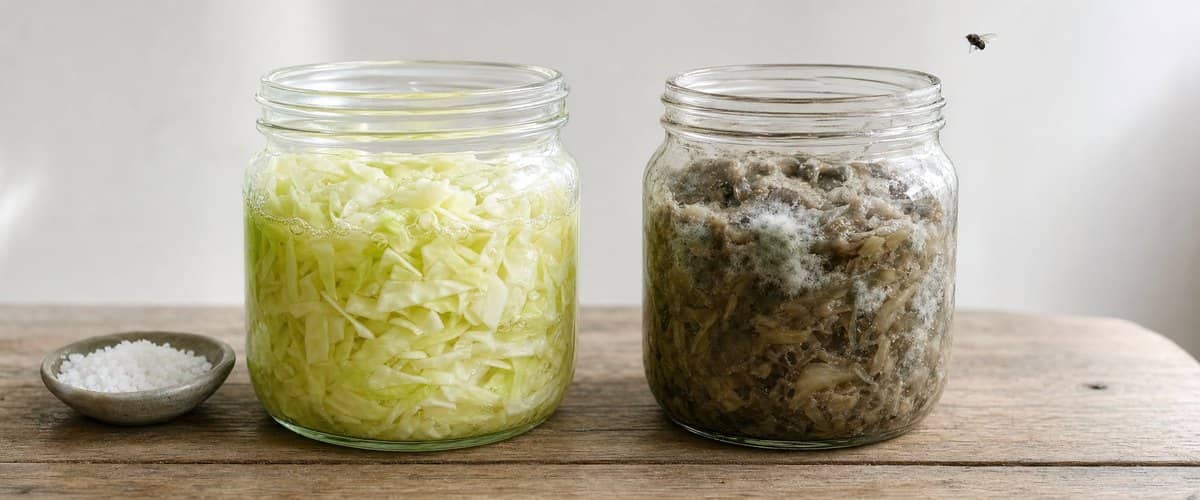
When oxygen is lacking, organic matter is transformed by microorganisms that don't need air. Depending on which ones gain the upper hand, the result is very different:
This is nothing new. Sauerkraut, kimchi, olives, cured sausage and farmers' silage all rely on the same principle. What EM offer is a way of applying this age-old know-how to kitchen waste, manure, animal bedding or compost. For the specific case of the bucket, see how bokashi fermentation works.

Lactic acid bacteria are the real workhorses of EM. They consume sugars and give off lactic acid. The environment quickly becomes acidic: a successfully activated EM has a pH of 3.2 to 3.6, and the EM-1 stock solution is in the same range.
Most putrefying bacteria grow poorly in such an acidic, airless environment. This is exactly what happens in a well-sealed silo: the pH drops, the material is "locked" and keeps for months. This mechanism has long been established, it is used throughout the food industry, and there is nothing specific to EM about it.
Two conditions are essential for it to work:
Key pointsThe most robust effect of EM is simple: acidifying organic matter away from air, so that it ferments instead of rotting. Anything that encourages acidification (sugars, no air, mild warmth) encourages a good result.
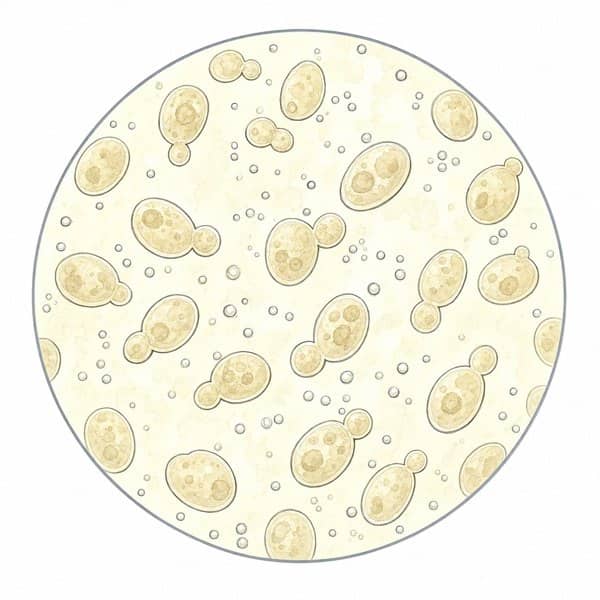
Yeasts turn sugars into alcohol and carbon dioxide. They are what makes a container of EM swell during activation, and they contribute to the fruity, slightly alcoholic smell of a good ferment. Their presence in EM products is confirmed by analyses.
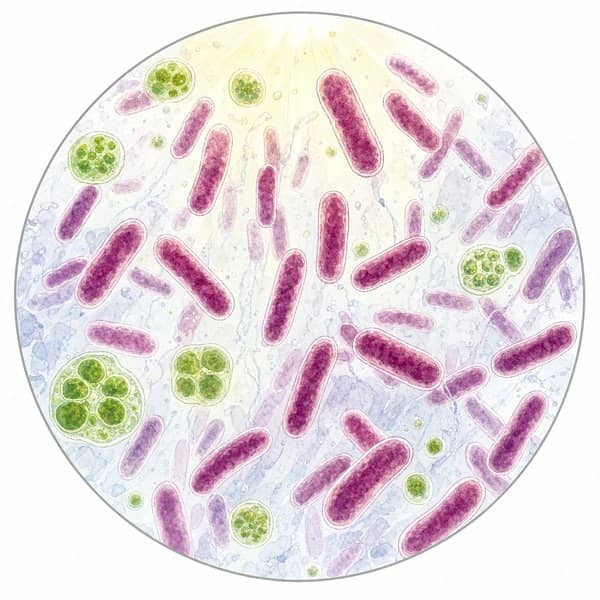
The manufacturer presents them as the key to the mix: they are said to use light and heat to turn waste and foul-smelling gases into substances useful to plants. In nature, these purple bacteria certainly exist and have a very versatile metabolism.
The real question is whether they are present and active in the finished product, a highly acidic liquid kept in the dark. A DNA analysis published in 2024 found none in the solution tested, and other analyses show that they are, at best, a very small minority. Their actual role in everyday use therefore remains unknown.
According to Professor Teruo Higa, the microorganisms in any environment fall into three groups: a small minority of "regenerative" ones, a small minority of "degenerative" ones, and a large majority of "opportunists" that side with whichever group is dominant. Applying EM regularly would tip the opportunists onto the right side, in soil, water or air.
It is a vivid image, but it remains a theory. The proportions given actually vary between the manufacturer's documents, which clearly shows that they are not measurements. No independent study has validated this classification, and Higa himself acknowledged the difficulty of obtaining reproducible results.
Current knowledge allows us to distinguish two situations:
Other trials, including a four-year field trial in Switzerland, compared live EM with sterilised EM: both gave the same results. In other words, what is attributed to the microbes often comes from what accompanies them (molasses, bran, bokashi). We go into these studies in detail in the guide what science says about EM.
Did you know?The principle that works best was known long before EM: it is the principle of silage. Inoculating fresh, sugary, airless material with lactic acid bacteria is a standard, well-studied and well-mastered farming practice.
The most cautious public assessments consider an effect of EM plausible mainly for composting, silage and manure treatment, provided that temperature, moisture and nutrient supply are controlled. In practice, four factors make the difference:
 The substrate. Without sugars or fresh material, lactic acid bacteria have nothing to ferment.
 Air. Lactic fermentation needs a closed, compacted environment. In an aerated compost heap, other microorganisms do the work.
 Temperature. Below about 15 °C, everything slows down, and frost kills microorganisms. To activate a solution, manufacturers aim for 25 to 30 °C.
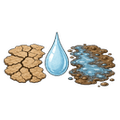 Moisture. Too dry and nothing happens; waterlogged and the material may rot despite the EM.
Emy's tipIf a ferment disappoints, don't double the dose: first check that there is sugar, little air, a mild temperature and material that is just moist. Correct these four points, then try again.
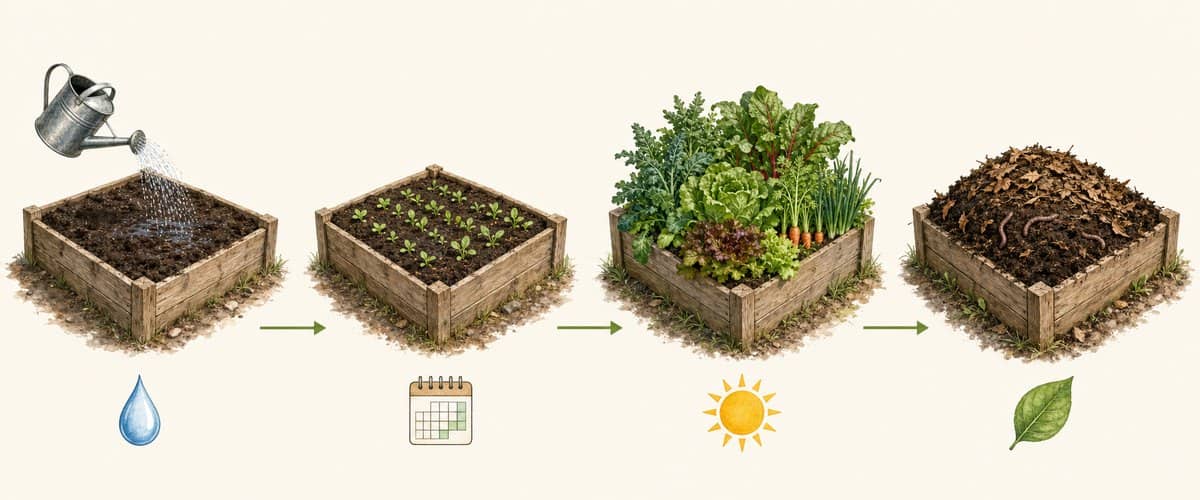
The manufacturer sums up the speed of action as follows: a few minutes for a bad smell, sometimes several years for soil fertility. Here is what can be taken from this:
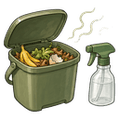 Odours: an acidic solution sprayed on animal bedding or a bin quickly limits the release of ammonia. This is a plausible effect linked to acidity, and in a trial on dry toilets, sauerkraut juice did just as well as EM.
 Fermentation of a bucket or silo: a few days to a few weeks, depending on temperature.
 Soil: long-term trials in temperate climates have shown no specific effect of the microorganisms on yields or soil life. What improves a soil is first and foremost the regular addition of organic matter, whether fermented or composted.
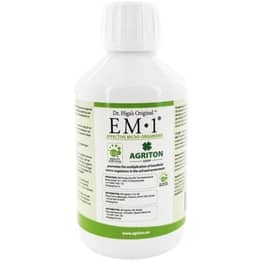
To put these principles into practice, start with a well-prepared solution: our guide activating EM-1 step by step explains how to get a successful ferment, or you can start with Microferm EM-A, which is already activated. In the garden, the area where EM make the most sense is managing organic matter: see speeding up your compost with EM.
EM work above all through lactic fermentation: their bacteria consume sugars, acidify the environment and, away from air, stop organic matter from rotting. This mechanism is robust and has been known for centuries. The manufacturer's "dominance principle", on the other hand, has not been proven: it makes sense in a closed, sugary environment such as a bucket or silo, much less so in open soil already rich in life, where trials attribute the observed effects to the organic matter added. EM therefore give their best results where the substrate, air, temperature and moisture are under control.
Scan the code or visit mouttafarm.co.uk/guide: all our practical guides, with links to the products mentioned.



 France
 Belgium
 Switzerland
 Germany
 Austria
 Italy
 Spain
 Holland
 Portugal
 Ireland
 Sweden
 Finland
 Denmark
 Greece
 Poland
 Rumania
 Czech Republic
 USA
