












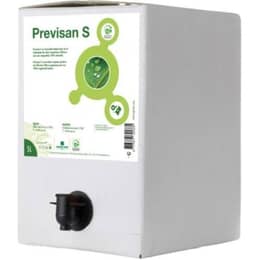
EM Previsan S, EM leaf film | 5 L Bag-in-box
Natural film with micro-organisms for leaves, from 5 to 250 L
£60.59 €72.64
Fast and odourless, compost worms eat your waste and turn it into worm casting for your plants.

From 2 to 4 trays, with an optional planter.

Up to 18 growing areas around a central wormery.

Terracotta with flower pot.

2 to 4 trays with a lower shelf.

Trays you add over time, for easy harvesting of vermicompost.

Turn your planters and flower beds into a wormery: WORMacotta, In-Ground.
 Practical guide

From the kitchen to the garden, your compost becomes simple, quick, and effective for everyone.
 Practical guide
 Practical guide
Live animals (worms and bait) and products to feed and care for pets and livestock.

Eisenia compost worms for your wormery or composter.

Ultra-fresh worms: compost worms, Dendros and Canadians from 100 g to 1 kg.

Natural solutions dedicated to the wellbeing of horses, ponies and donkeys.

Optimise the health and performance of your farm.

Mealworms, natural and nutritious supplements.
Enhance your home with our decorative items and care for your house in a natural and sustainable way.
Garden in an eco-friendly way that respects nature, for healthy and sustainable plants.
EM-based products designed to enrich soils, protect plants, support animal health, and make everyday well-being and maintenance easier.

Contains a blend of 80 families of beneficial microorganisms.

Revitalise, purify and improve water quality in all your applications.

Stimulate soil microbial activity and plant growth.

Cleanse and maintain your environment naturally.

For the wellbeing and health of pets, livestock and horses.

Enrich your body care or dietary routines with essential enzymes.
 Practical guidePractical guide

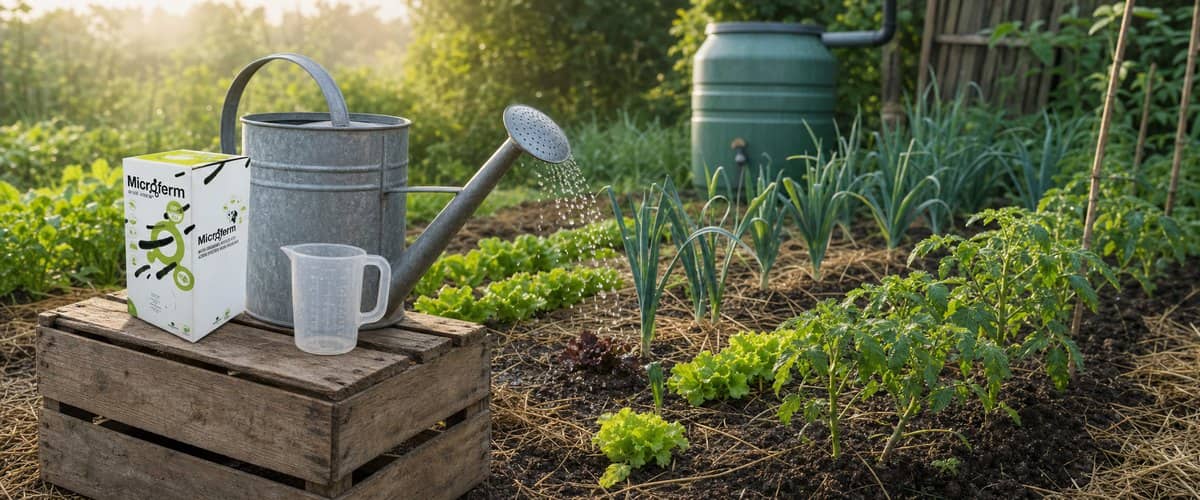
Watering your vegetable garden with effective microorganisms, spreading bokashi mulch around your vegetables: more and more gardeners are taking to these practices. But you still need to know the right doses and the right timing, and what you can reasonably expect from them.
Here are the manufacturers' guidelines, cross-checked against independent trials, along with a simple method for judging for yourself.
Let's be honest: the trials give mixed results.
Our view: EM support the organic matter you add to the soil, especially when it has been fermented; they cannot work miracles on poor, bare soil. Our guide What the science says about effective microorganisms covers these studies in detail.
Key pointsWhat feeds soil life is first and foremost organic matter: compost, mulch, green manures, crop residues. EM should be seen as a complement to these inputs, never as a substitute.
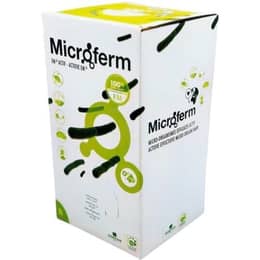
For watering the soil, the basic dilution is 1 in 100: 10 ml of EM-A per litre of water, or 100 ml in a 10-litre watering can. This is the dose given by the manufacturer of EM-A Microferm activated solution, and it also applies to the EM-A you make yourself from EM-1 mother solution (see our guide Activating EM-1). Other instructions call for a weaker dilution (1 in 250 to 1 in 1,000) but more frequent watering: over the year, the quantities work out about the same.
The manufacturer of Microferm recommends 1 to 2 litres of product per 100 m² per year, spread from spring to autumn. In practice, a 10-litre watering can diluted at 1 in 100 covers about 30 to 50 m², and you go over the area again every 2 to 4 weeks during the season, or 5 to 6 times a year. Several small doses are better than one large one.
Emy's tipIn dry weather, water first with plain water, then go over with the EM watering can an hour later. The microorganisms establish themselves far better in soil that is already moist.
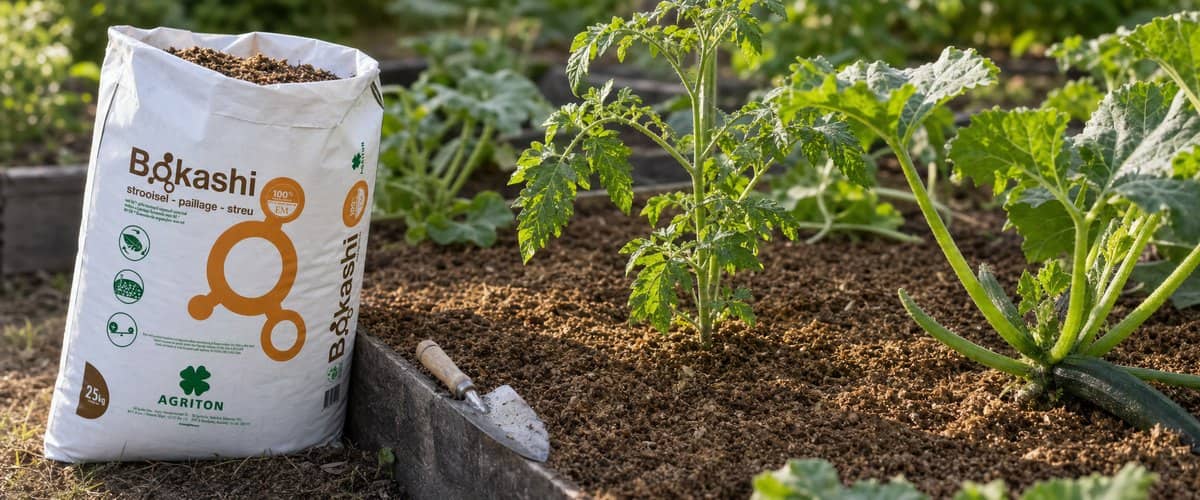
Our EM Bokashi mulch for soil is a coarse organic material made from straw meal and apple pulp fermented with EM. It should not be confused with kitchen bokashi: that is a pre-compost of food waste, highly acidic, which must be buried at 20–30 cm and mixed into the soil (see our guide Burying your bokashi in the garden). The mulch, by contrast, is spread on the surface.
The bokashi juice from your kitchen bucket can also be used to water the vegetable garden, diluted at least 1 in 100 and applied at the base of plants: our guide Bokashi juice: dilution, uses and limits tells you everything.
EM do not feed plants: they support the transformation of organic matter. Indeed, the clearest effects appear when they accompany compost or fermented material, and almost never when they are applied on their own to poor soil.
A few good combinations: water with EM just after spreading compost or mulch, spray it on a green manure when you cut it down, or add it to the compost heap, which we explain in the guide Speeding up your compost with EM. The rock dusts and clays offered by some manufacturers follow a different logic, that of correcting the soil: have your soil analysed first.
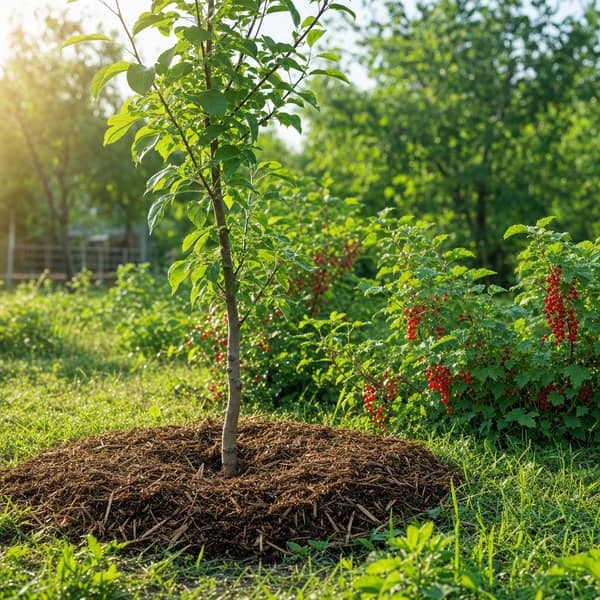
 Fruit trees and soft fruit: the same 1 in 100 dilution applies, under the whole canopy, in spring and after harvest; bokashi mulch is spread at the same dose as on beds.
 Large areas: manufacturers allow a few dozen litres per hectare per year, in 4 to 6 applications; follow the label and the supplier's advice. On a garden hose, a dosing spray gun such as our Aquamix, set to 1%, saves you trips back and forth with the watering can.
 Vines: some winegrowers are trying it, but we have only found anecdotal accounts, with no published results.
Did you know?To find out whether the effect comes from the microorganisms or from the molasses and bran that come with them, researchers compared live EM in the field with the same EM heat-sterilised. The result: most of the effect came from the material applied, not from the microbes.
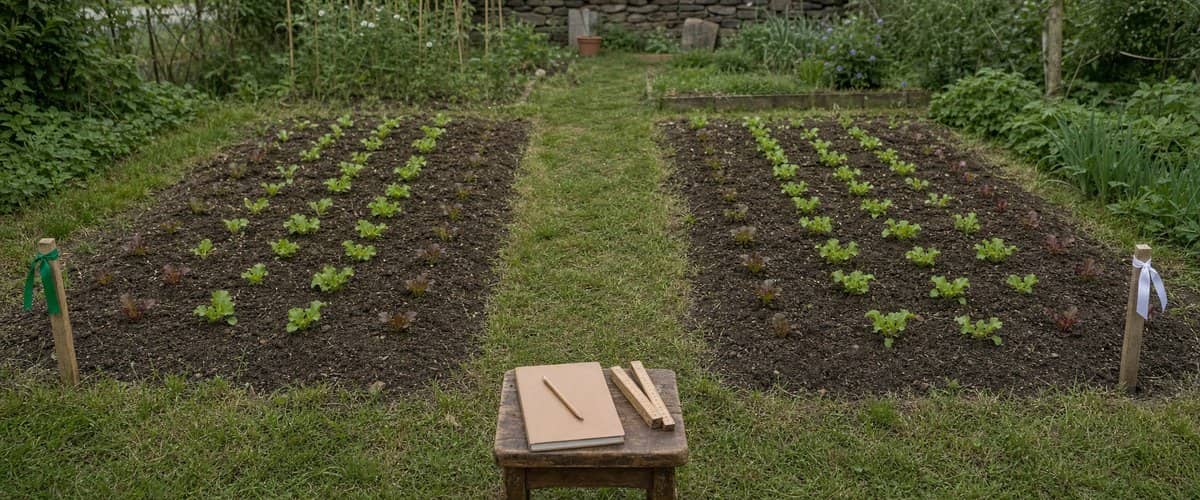
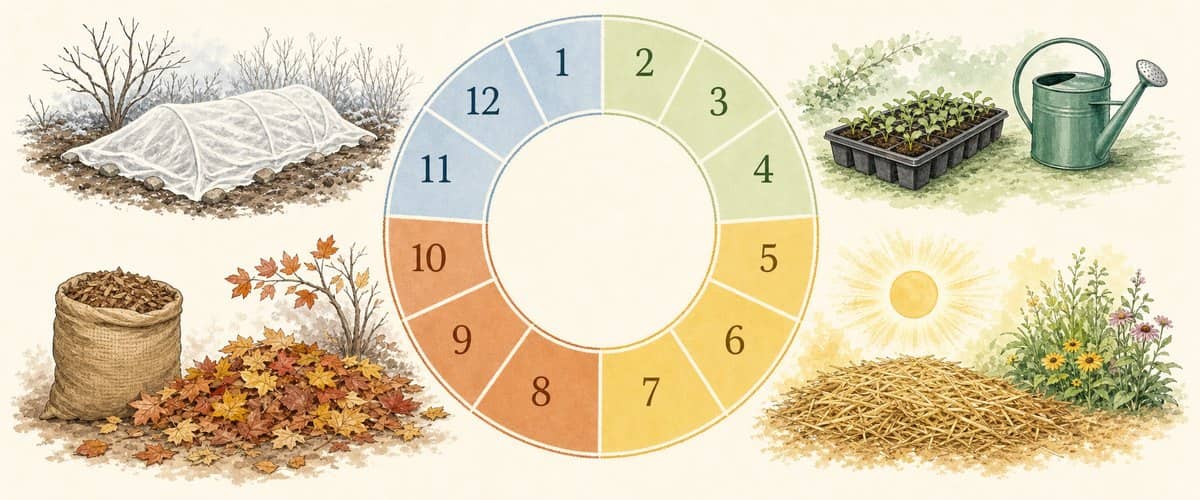
The best way to find out whether EM make a difference for you is to compare, in your own garden:
If you see no difference, you will still have learnt something useful about your garden.
In the vegetable garden, EM are used diluted at 1 in 100, on moist soil, in overcast weather or in the evening, every 2 to 4 weeks from spring to autumn, which comes to about 1 to 2 litres of product per 100 m² per year. EM bokashi mulch is spread at 0.5 to 1 kg per m² per year, or at about 4% of the volume in planting holes, away from seeds and very young plants. Trials show variable effects, often due to the organic matter rather than the microorganisms: always combine EM with compost and mulch, and judge the results with a control bed.
Scan the code or visit mouttafarm.co.uk/guide: all our practical guides, with links to the products mentioned.



 France
 Belgium
 Switzerland
 Germany
 Austria
 Italy
 Spain
 Holland
 Portugal
 Ireland
 Sweden
 Finland
 Denmark
 Greece
 Poland
 Rumania
 Czech Republic
 USA
