












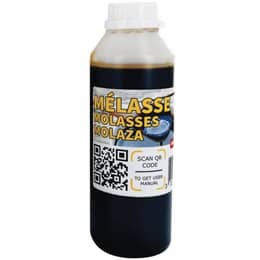
Beet molasses | 250 ml bottle
Animal nutrition or to activate EM (A+), from 250 ml to 10 litres
£3.71 €4.45
Fast and odourless, compost worms eat your waste and turn it into worm casting for your plants.

From 2 to 4 trays, with an optional planter.

Up to 18 growing areas around a central wormery.

Terracotta with flower pot.

2 to 4 trays with a lower shelf.

Trays you add over time, for easy harvesting of vermicompost.

Turn your planters and flower beds into a wormery: WORMacotta, In-Ground.
 Practical guide

From the kitchen to the garden, your compost becomes simple, quick, and effective for everyone.
 Practical guide
 Practical guide
Live animals (worms and bait) and products to feed and care for pets and livestock.

Eisenia compost worms for your wormery or composter.

Ultra-fresh worms: compost worms, Dendros and Canadians from 100 g to 1 kg.

Natural solutions dedicated to the wellbeing of horses, ponies and donkeys.

Optimise the health and performance of your farm.

Mealworms, natural and nutritious supplements.
Enhance your home with our decorative items and care for your house in a natural and sustainable way.
Garden in an eco-friendly way that respects nature, for healthy and sustainable plants.
EM-based products designed to enrich soils, protect plants, support animal health, and make everyday well-being and maintenance easier.

Contains a blend of 80 families of beneficial microorganisms.

Revitalise, purify and improve water quality in all your applications.

Stimulate soil microbial activity and plant growth.

Cleanse and maintain your environment naturally.

For the wellbeing and health of pets, livestock and horses.

Enrich your body care or dietary routines with essential enzymes.
 Practical guidePractical guide

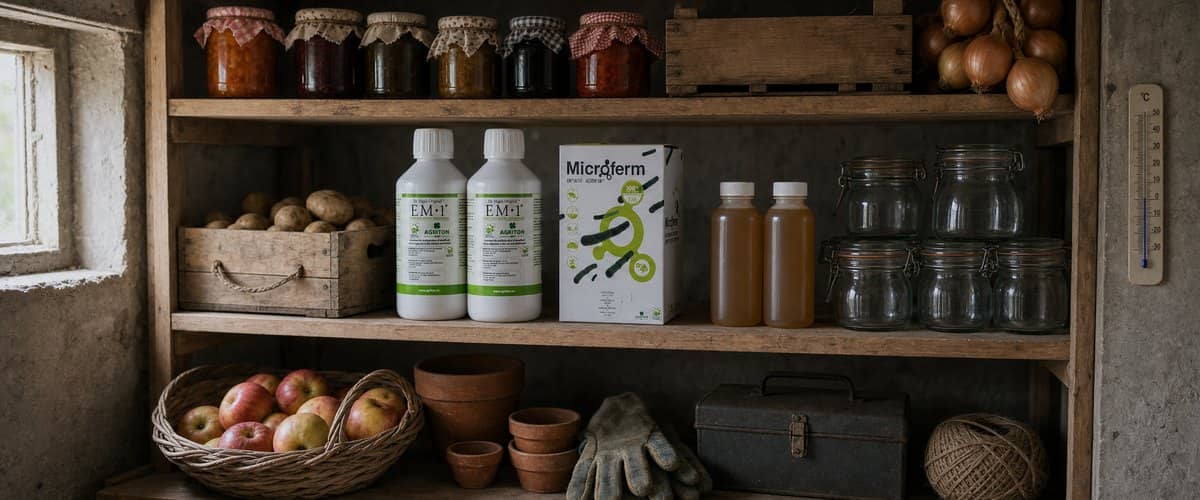
EM are living products. Like a sourdough starter or a yoghurt, they keep well if you follow a few rules, and they eventually run out of steam if neglected. They also have their reassuring quirks: a swollen container, a white film on the surface… which often cause needless worry.
This guide covers the shelf life of each product, the right way to store them, and how to tell a successful EM-A from a failed one, with what to do in each case.
Shelf lives vary from product to product, and sometimes from one set of instructions to another. Here are the guidelines we go by:
Our advice: use your homemade EM-A within 1 to 2 months, and the sooner the better. After that, it isn't dangerous, but it contains fewer and fewer active micro-organisms.
Key pointsConcentrate: according to the date on the label (up to 2 years for ours). Microferm in Bag-in-Box: according to the use-by date on the packaging (around 1 year). Homemade EM-A: 1 to 2 months. The more “awake” a product is and the more it is exposed to air, the sooner it needs to be used.
 Somewhere cool, but never freezing: a room at moderate temperature, a cellar, a pantry. Technical data sheets put the storage range for EM-1 at roughly 3 to 38 °C; the ideal is still a stable room temperature, around 15 to 25 °C. Frost kills the micro-organisms. A fridge isn't necessary.
 Away from light and direct sunlight: a garage in high summer or a windowsill won't do.
 Tightly closed: air lets in unwanted micro-organisms. Always screw the cap back on straight after use.
 In a full container: when the level of your homemade EM-A drops in a large container, decant it into smaller bottles filled to the brim.
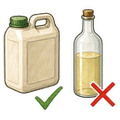 In plastic rather than glass: EM keep producing a little gas, and glass doesn't cope well with pressure.
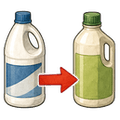 Away from household products: bleach, disinfectants and chlorinated products destroy the micro-organisms. Never reuse a container that has held them.
Emy's tipKeep your EM in a closed cardboard box at the back of a cupboard in a room at moderate temperature. The box protects them from both light and temperature swings.
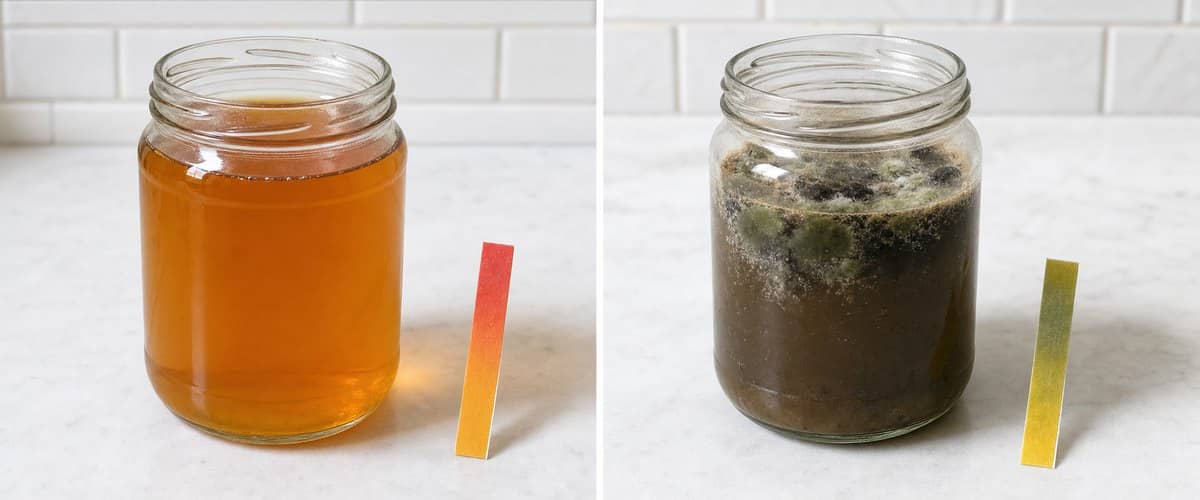
Three criteria are enough, to be checked as soon as activation is complete, then from time to time during storage.
pH is the final arbiter. pH paper, such as our pH test strips, costs little and saves a lot of guesswork. If the smell is good but the pH is still slightly high after 7 days, it is often just a question of warmth: leave it somewhere warm for longer and measure again. But if the pH stays above 4 and the smell is bad, the balance of micro-organisms isn't right.
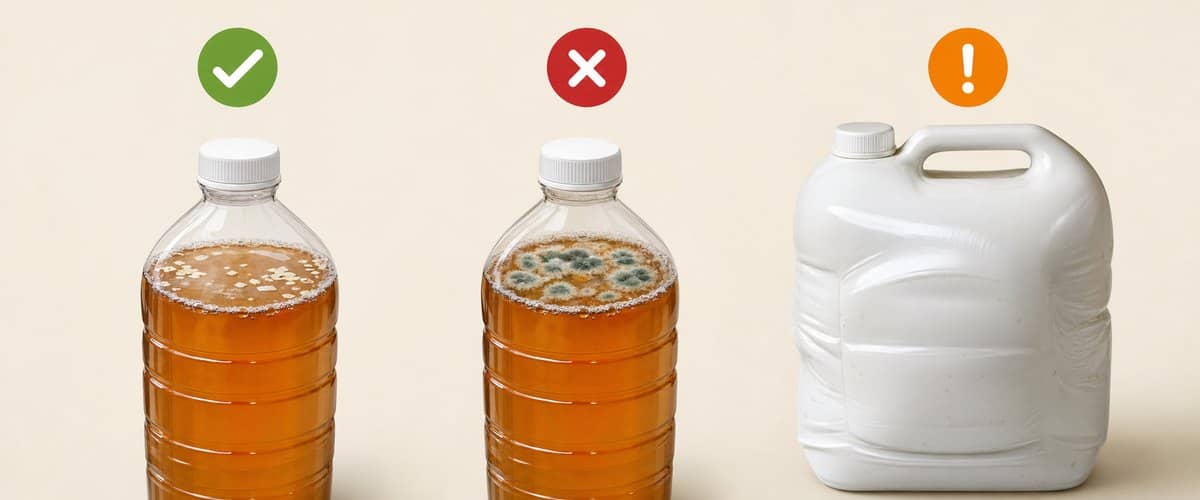
This is normal. These are yeasts, which are part of the culture. A small deposit at the bottom of the container is also normal. If the smell and pH are good, you can use your EM-A without worry.
This indicates that air has got in or that the container wasn't cleaned properly. In a liquid, don't try to remove it: if it comes with a bad smell, the EM-A needs replacing.
This is the clearest sign of failure. There's no point persevering or adding more EM-1: start again with a clean container.
This isn't a problem in itself: EM produce gas. For a container, gently open the cap a quarter turn to release the pressure, then close it again. A slightly bulging Bag-in-Box pouch is normal. What matters is the smell.
Did you know?According to the manufacturer, almost all failed EM-A come down to two causes: a poorly cleaned container or a temperature that fluctuates too much during activation. Cold and chlorinated water complete the list of usual suspects.
To succeed next time, go through these points:
 The container: poorly rinsed, or with traces of household product.
 The water: chlorinated, because it wasn't left to stand for 24 hours.
 The temperature: too low, or rising and falling between day and night.
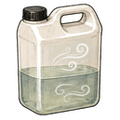 Air: a half-empty container, or one opened too often.
 The concentrate: too old, poorly stored, or frozen.
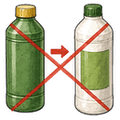 Re-culturing: an EM-A made from another EM-A, which manufacturers advise against.
The full method, with proportions and temperatures, can be found in our guide Activating EM-1: making your own EM-A step by step.
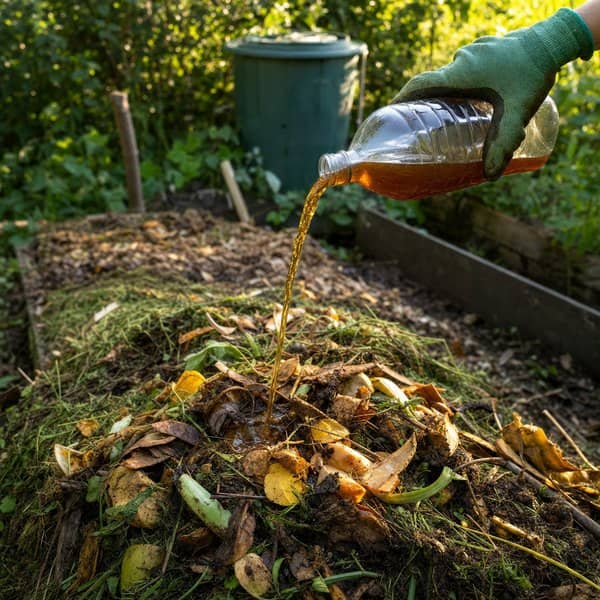
A failed EM-A should not go on plants, either watered in or sprayed: you would be introducing micro-organisms you know nothing about. The simplest option is to pour it onto the compost heap, away from plants, where it will be diluted and broken down with everything else. We explain how to use EM in compost in the guide Speeding up your compost with EM.
An EM-A that is simply old, still smells good and keeps a low pH isn't “failed”: it is just less rich. Use it first for compost, and keep fresh EM-A for seedlings and the vegetable garden.
To avoid waste, make small batches suited to one or two months' use. And if you only use EM now and then, Microferm EM-A Active Solution, ready to dilute, keeps much longer than homemade EM-A. For regular use and large volumes, EM-1 Concentrate remains more economical. The same storage principles apply to fermented bran for bokashi: see our guide on bokashi bran.
EM should be kept cool, away from light and frost, tightly closed and in a container that is as full as possible. The concentrate keeps until the date on its label (up to 2 years for ours), Microferm in Bag-in-Box until the use-by date on its packaging (around 1 year), and homemade EM-A should be used within 1 to 2 months. A good EM-A smells sweet and sour, is orangey brown in colour and has a pH of 3.8 or below; a white film or a swollen container are normal. A putrid smell and a pH that stays above 4 mean failure: pour it onto the compost, never on plants, and start again with a clean container and a stable temperature.
Scan the code or visit mouttafarm.co.uk/guide: all our practical guides, with links to the products mentioned.



 France
 Belgium
 Switzerland
 Germany
 Austria
 Italy
 Spain
 Holland
 Portugal
 Ireland
 Sweden
 Finland
 Denmark
 Greece
 Poland
 Rumania
 Czech Republic
 USA
