











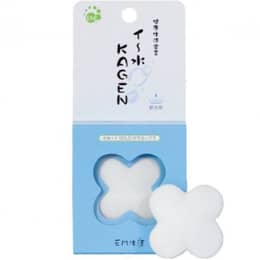
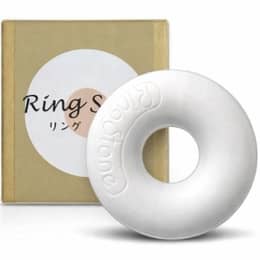
EM ceramic figurine | For cold drinks
Improve water, reduce limescale deposits, limit oxidation
£24.96 €29.92
Fast and odourless, compost worms eat your waste and turn it into worm casting for your plants.

From 2 to 4 trays, with an optional planter.

Up to 18 growing areas around a central wormery.

Terracotta with flower pot.

2 to 4 trays with a lower shelf.

Trays you add over time, for easy harvesting of vermicompost.

Turn your planters and flower beds into a wormery: WORMacotta, In-Ground.
 Practical guide

From the kitchen to the garden, your compost becomes simple, quick, and effective for everyone.
 Practical guide
 Practical guide
Live animals (worms and bait) and products to feed and care for pets and livestock.

Eisenia compost worms for your wormery or composter.

Ultra-fresh worms: compost worms, Dendros and Canadians from 100 g to 1 kg.

Natural solutions dedicated to the wellbeing of horses, ponies and donkeys.

Optimise the health and performance of your farm.

Mealworms, natural and nutritious supplements.
Enhance your home with our decorative items and care for your house in a natural and sustainable way.
Garden in an eco-friendly way that respects nature, for healthy and sustainable plants.
EM-based products designed to enrich soils, protect plants, support animal health, and make everyday well-being and maintenance easier.

Contains a blend of 80 families of beneficial microorganisms.

Revitalise, purify and improve water quality in all your applications.

Stimulate soil microbial activity and plant growth.

Cleanse and maintain your environment naturally.

For the wellbeing and health of pets, livestock and horses.

Enrich your body care or dietary routines with essential enzymes.
 Practical guidePractical guide

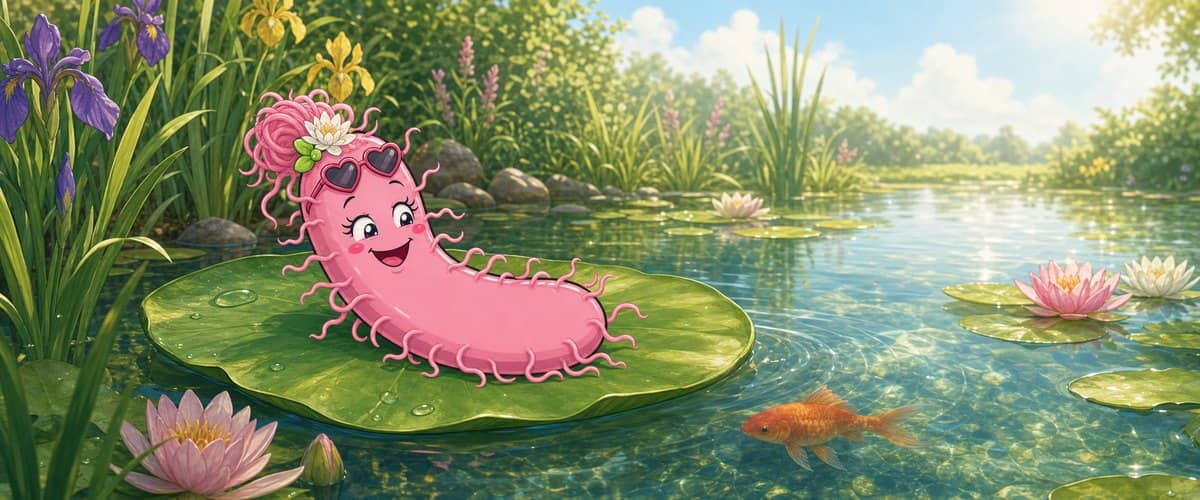
Green water in spring, blanket weed in summer, black sludge that smells of rotten eggs when you stir it: most garden pond problems share the same origin. Too many nutriments, too much organic matter at the bottom, and plenty of sunshine.
Effective microorganisms (EM) are often suggested to help a pond regain its balance. They can support the breakdown of organic matter, but they are no substitute for good design or regular maintenance. Here is how to use them, at what dose, with what precautions for your fish, and what we honestly cannot promise.
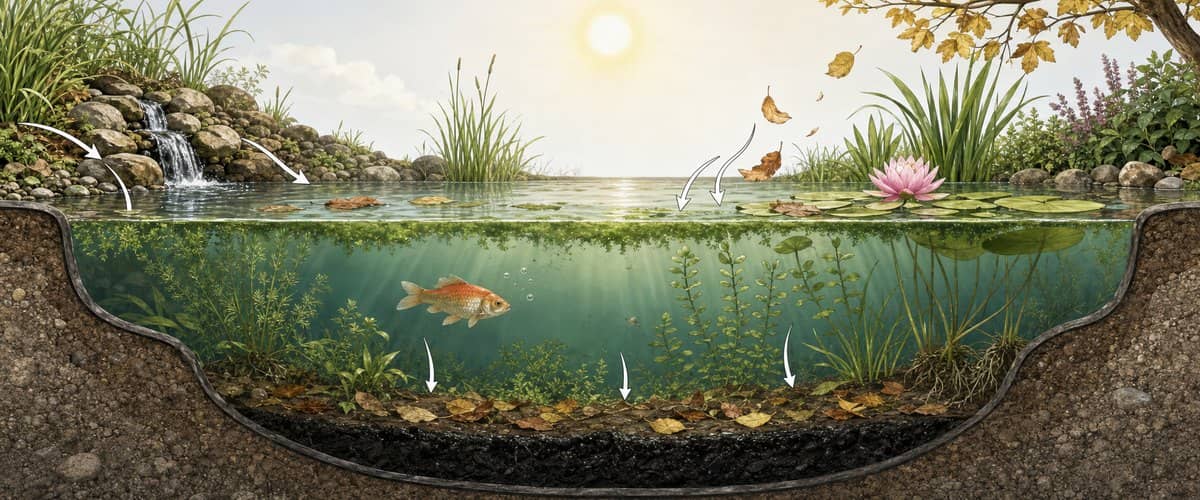
Algae need two things: light and nutrients, especially nitrogen and phosphorus. In a pond, these nutrients arrive by several routes:
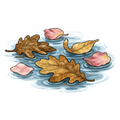 dead leaves, petals and debris falling into the water;
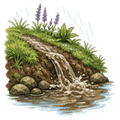 run-off carrying soil or garden fertiliser, and roof water carrying debris;
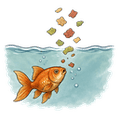 fish food and fish waste;
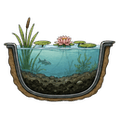 sludge at the bottom, which releases nutrients as it breaks down.
When organic matter builds up at the bottom without oxygen, it rots instead of breaking down cleanly: this is the black sludge that gives off a sulphurous smell. Shallow water in full sun warms up quickly and encourages algae. Finally, algae-rich water often sees its pH rise during the day, as the algae use up the carbon dioxide in the water, then fall again at night.
Did you know?A new pond very often goes through a green-water phase in its first spring. The plants are not yet established and the nutrients are freely available: microscopic algae take advantage. This phase is normal and usually fades as the plants grow.
First and foremost, reduce whatever is feeding the algae. These are the steps that matter most:
 Remove leaves and debris regularly; in autumn, a net stretched over the water saves a lot of trouble.
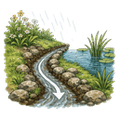 Divert run-off from fertilised lawns and borders, and do not use fertiliser near the banks.
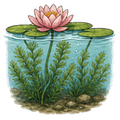 Plant: submerged plants that oxygenate the water, marginal plants, and floating-leaved plants such as water lilies, which shade part of the surface, up to about half. All of them take up nutrients that the algae would otherwise use.
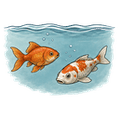 Keep fish numbers moderate: few fish for the volume, and only as much food as they eat in a few minutes.
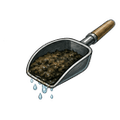 Remove excess sludge gradually, preferably in autumn, without emptying the whole pond: a thin layer shelters useful wildlife.
 Keep the water moving if you have fish: a pump, waterfall or filter improves oxygenation.
A natural wildlife pond with no fish needs even less intervention. Slightly cloudy water and some algae are normal there, and amphibians and aquatic insects need peace and quiet. Do not add anything without a specific reason. And never pour any product whatsoever into a stream, river or public pond.
Key pointsEM are no substitute for managing nutrients. Fewer leaves, less food, more plants and a little shade: that is the basis of balanced water, with or without EM.
Multiply the length by the width and by the average depth, in metres: this gives you m³, and 1 m³ is 1,000 litres. A pond measuring 4 m by 3 m, with an average depth of 60 cm, holds about 7 m³, or 7,000 litres.
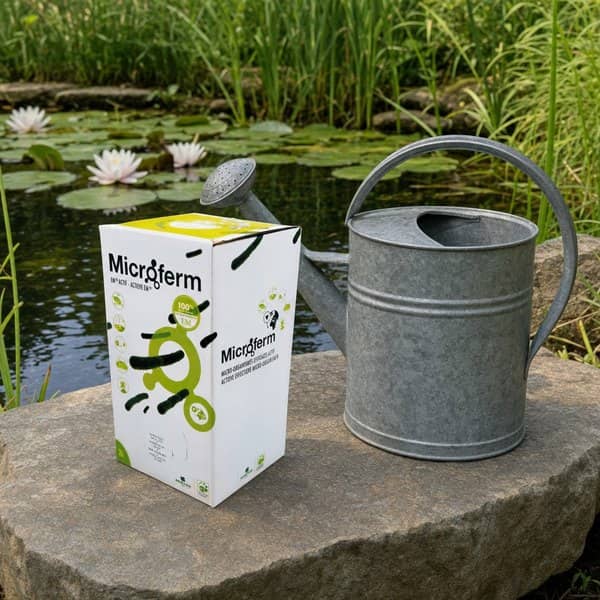
The manufacturer of EM-A Microferm recommends 1 litre per year for 1 to 10 m³ of water, i.e. 0.1 to 1 litre per m³, and the low dose, 1 litre per year for 10 m³, in a pond with fish or other aquatic animals. This annual amount is split up: one application every two weeks from spring, then every week when the weather is warm.
For our 7 m³ pond with fish, that comes to about 0.7 litre over the season, or around thirty millilitres per application. These are small quantities: the manufacturer itself advises increasing the frequency of applications rather than the dose.
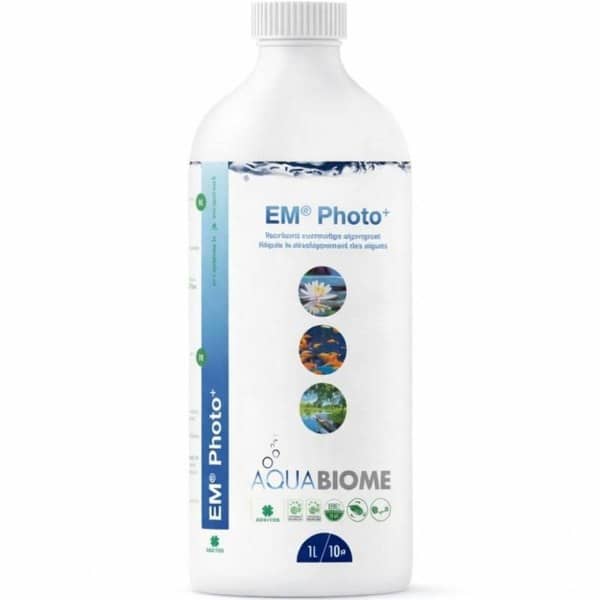
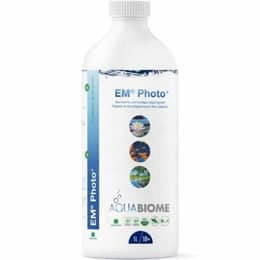
EM Photo+ Aquabiome contains, according to the manufacturer, phototrophic microorganisms, meaning ones that use light. The manufacturer recommends it for green water, combined with Microferm: 0.5 litre of EM Photo+ and 10 litres of Microferm per 10,000 litres of water per year, applied monthly from March to November. Note that this combination corresponds to the high dose of Microferm: with fish, err on the side of caution and split the doses further.
For the sludge at the bottom, the manufacturer offers EM Bokashi pond balls, at around one ball per 1 to 2 m² of pond bottom per year, ideally placed in winter. Their composition, use and the studies concerning them are covered in detail in our guide bokashi balls for ponds.
Emy's tipDilute the dose in a watering can filled with pond water, then spread it over the whole surface, away from where you feed the fish. Never pour the neat product all at once in one spot.
EM-A is an acidic liquid, with a pH of around 3.5. At the recommended doses, around thirty millilitres in several thousand litres, its effect on the pond's acidity is negligible. The real point to watch lies elsewhere: oxygen.
 All decomposition uses up oxygen. In very hot, thundery weather, water naturally holds less of it. If your fish come up gasping for air at the surface, aerate the water (pump, fountain) and add nothing, neither EM nor food, until things return to normal. In close, thundery weather, it is in any case best to postpone any application.
 Do not combine EM with an algae treatment or fish medication: chemicals destroy the microorganisms, and mixtures make any diagnosis more difficult.
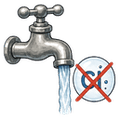 Use non-chlorinated water for diluting, and for topping up the pond where possible (rainwater).
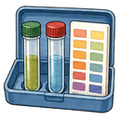 Monitor with tests: simple strips or kits for pH, hardness and nitrites will tell you whether the water is moving in the right direction.
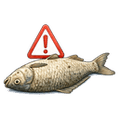 A sick fish or unusual deaths are a matter for an experienced fishkeeper or a specialist vet, not for an EM product.
We have found no independent study measuring the effect of Microferm or EM Photo+ in a garden pond. The claimed effects, such as reduced sludge and algae, are based on observations by the manufacturer and users. Conversely, a 2025 study carried out in tanks found that EM clay balls worsened water quality by adding nutrients and bacteria to it; the project that used them disputes these results.
There is also a regulatory reason for our caution. A microbial product intended to break down organic matter is not a biocide; claiming that it gets rid of algae could make it one. EM therefore do not kill algae: they support the breakdown of organic matter and sludge, which may, over time, deprive algae of some of their nutrients. Clear water is the result of a balance built up over weeks or months.
To get off to a good start with these products (non-chlorinated water, storage, small repeated doses), see our golden rules for getting started with EM, and for an overview of the evidence, our guide what science says about EM.
A pond with green water or black sludge is almost always suffering from an excess of nutrients and organic matter. Start with the causes: leaves, run-off, fish food, lack of plants and shade. EM can then support the breakdown of organic matter: Microferm at 1 litre per year for 1 to 10 m³, or for 10 m³ with fish, in small regular applications diluted in pond water, possibly with EM Photo+ and pond balls for the bottom. Keep an eye on oxygen and water quality, never pour any into watercourses, and keep your expectations realistic: the effectiveness of EM in ponds has not been demonstrated by independent studies.
Scan the code or visit mouttafarm.co.uk/guide: all our practical guides, with links to the products mentioned.



 France
 Belgium
 Switzerland
 Germany
 Austria
 Italy
 Spain
 Holland
 Portugal
 Ireland
 Sweden
 Finland
 Denmark
 Greece
 Poland
 Rumania
 Czech Republic
 USA
