












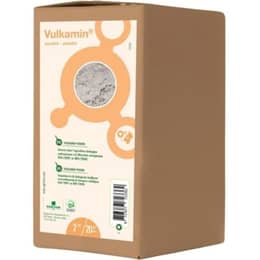
Vulkamin, volcanic powder for animal bedding | 2 kg box
Absorbent, disinfectant and enriching for soils, from 2 to 1000 kg
£7.96 €9.54
Fast and odourless, compost worms eat your waste and turn it into worm casting for your plants.

From 2 to 4 trays, with an optional planter.

Up to 18 growing areas around a central wormery.

Terracotta with flower pot.

2 to 4 trays with a lower shelf.

Trays you add over time, for easy harvesting of vermicompost.

Turn your planters and flower beds into a wormery: WORMacotta, In-Ground.
 Practical guide

From the kitchen to the garden, your compost becomes simple, quick, and effective for everyone.
 Practical guide
 Practical guide
Live animals (worms and bait) and products to feed and care for pets and livestock.

Eisenia compost worms for your wormery or composter.

Ultra-fresh worms: compost worms, Dendros and Canadians from 100 g to 1 kg.

Natural solutions dedicated to the wellbeing of horses, ponies and donkeys.

Optimise the health and performance of your farm.

Mealworms, natural and nutritious supplements.
Enhance your home with our decorative items and care for your house in a natural and sustainable way.
Garden in an eco-friendly way that respects nature, for healthy and sustainable plants.
EM-based products designed to enrich soils, protect plants, support animal health, and make everyday well-being and maintenance easier.

Contains a blend of 80 families of beneficial microorganisms.

Revitalise, purify and improve water quality in all your applications.

Stimulate soil microbial activity and plant growth.

Cleanse and maintain your environment naturally.

For the wellbeing and health of pets, livestock and horses.

Enrich your body care or dietary routines with essential enzymes.
 Practical guidePractical guide

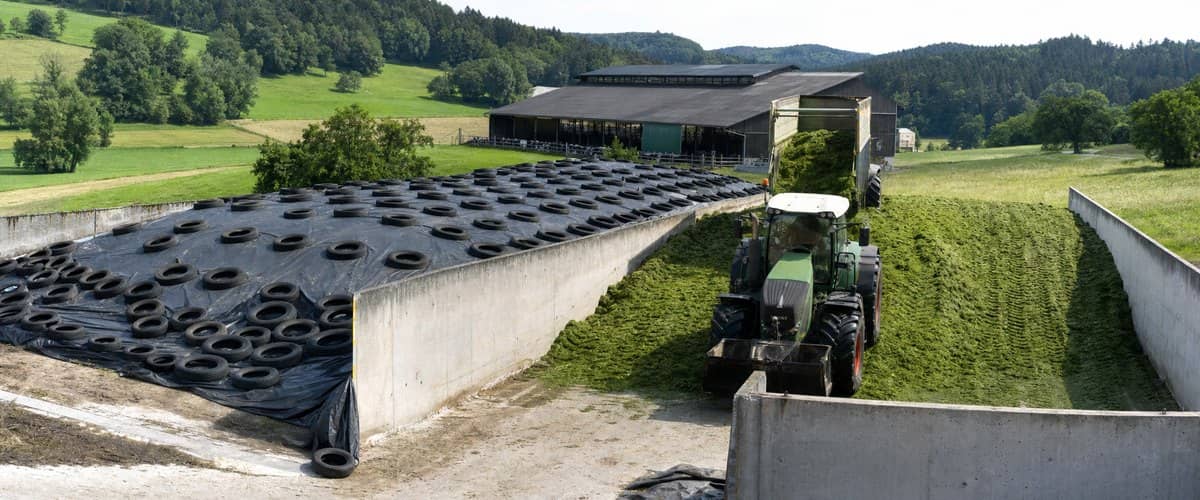
Ensiling makes it possible to preserve grass, maize or cereals harvested wet for months, by fermenting them in the absence of air. Done well, it produces a stable, palatable forage. Done badly, it heats up, goes mouldy, loses some of its value and can even become dangerous for livestock.
Biological preservatives, or inoculants, help fermentation get off to a fast start and go in the right direction. EM Silage is one of them, with a distinctive feature: it combines lactic acid bacteria and yeasts. Here is how to use it, what the research says, and why harvesting and clamping technique remains, by far, the deciding factor.
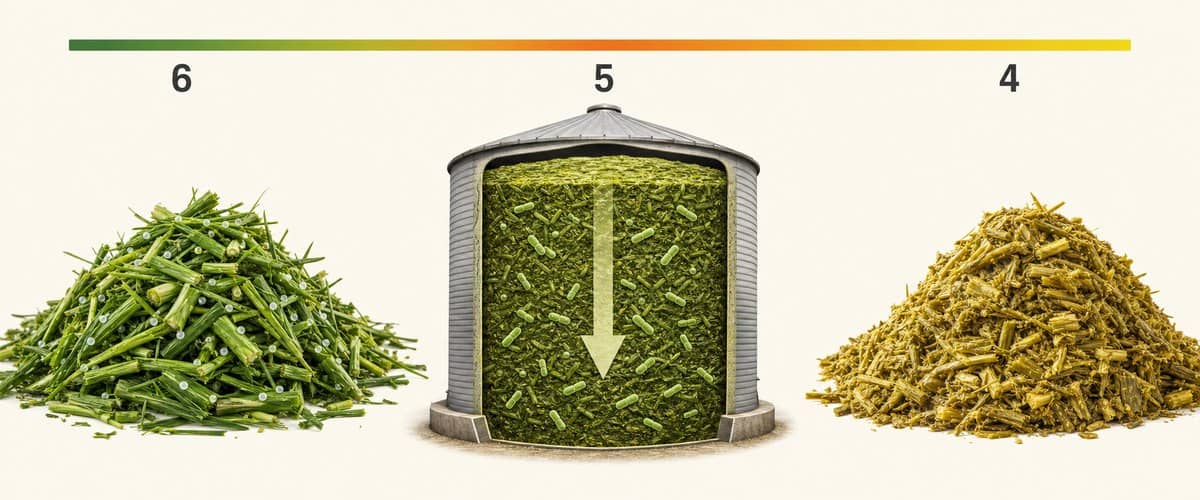
A silo goes through several phases. Just after filling, there is still air between the stems: the plant cells continue to respire and micro-organisms consume sugars, giving off heat. This phase must be as short as possible, ideally less than 24 hours.
Once the oxygen is used up, lactic acid bacteria take over. They convert the sugars in the forage into lactic acid, and the pH falls. This fermentation lasts about two weeks. The pH targets generally aimed for are 3.8 to 4.2 for maize, below 4.5 for grasses and below 4 for legumes. At this stage, the silo remains stable as long as it is airtight.
The danger returns when the silo is opened. With air, wild yeasts begin to consume the lactic acid, the pH rises, moulds take hold and the forage heats up. Losses can reach 8 to 9% of dry matter per week for a temperature rise of 5°C.
Did you know?Kitchen bokashi is based on the same idea as silage: an airless lactic fermentation that acidifies the material and preserves it. What the livestock farmer does with tonnes of forage, the gardener does with a bucket of bokashi.
Forage naturally carries lactic acid bacteria, but not always in sufficient numbers, nor always the most effective ones. An inoculant provides a large population right from the start. There are two main families:
The effect of lactic inoculants is well documented. In a laboratory trial published in 2013 on grass and maize, the final pH of the grass went from 4.55 without inoculant to 3.89–4.15 with it, and dry matter losses from 6.3% to 4.0–5.8%. The untreated grass silage began to heat after 96 hours of exposure to air, compared with 162 hours or more for the inoculated batches. Note: this trial involved conventional lactic inoculants, not an EM product.
An inoculant is most useful when conditions are difficult: grass that is too wet, legumes (lucerne, clover), which acidify more slowly, or maize that tends to heat at feed-out.
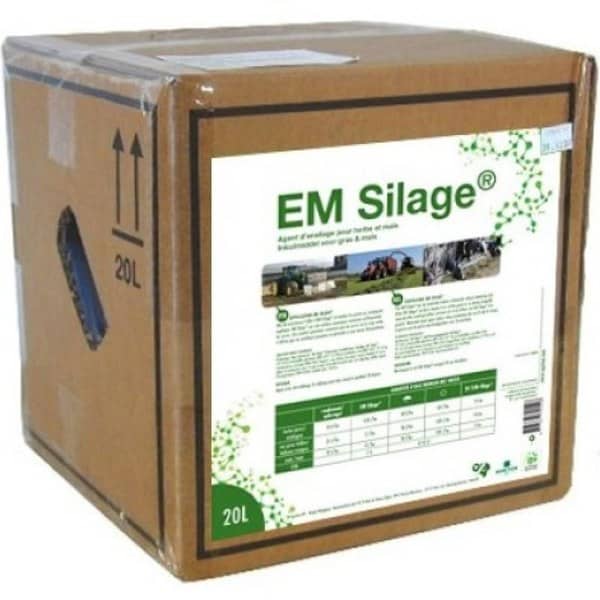
According to the manufacturer, EM Silage is a live liquid made up of homofermentative and heterofermentative lactic acid bacteria and cultured yeasts. It is intended for grass, maize, mixed cereal and legume crops, immature cereals and moist grain. The instructions do not specify the strains.
The presence of yeasts is unusual: in a silo, it is precisely wild yeasts that trigger heating once it is opened. The manufacturer claims that its cultured yeasts take the place of undesirable yeasts and that the acetic acid produced by its bacteria reinforces this effect. We have not found any independent study that confirms this.
The manufacturer's current instructions state 80 ml of EM Silage per tonne of fresh forage, diluted in at least 4 litres of water per tonne to spread the product evenly. For very dry forage, above 45% dry matter, more liquid is required, at least 40 litres per hectare. A 20-litre bag-in-box therefore treats around 250 tonnes. The product keeps for one year in its packaging. Always check the dosage on the label of your batch.
Emy's tipPrepare the mixture on the morning of harvest, in the quantity calculated for the day, and keep the tank in the shade. A mixture of live micro-organisms heating up in the sun in the sprayer loses some of its benefit.
No inoculant can make up for poorly managed harvesting and clamping. The key points:
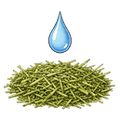 Harvest at the right dry matter content: around 30 to 35% for maize; for grass, at least 30%, ideally 35 to 40%, after a quick wilt of 24 to 48 hours. Above 45%, consolidation becomes difficult.
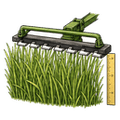 Mow at 7 cm or higher to avoid picking up soil, a source of poor fermentation.
 Chop short, and all the more finely the drier the forage: it consolidates better.
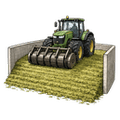 Consolidate in thin layers, 30 cm at most, continuously throughout filling.
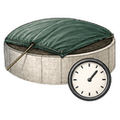 Seal quickly: less than 24 hours between the start of filling and sheeting, with a thin film in contact with the forage, a thick sheet on top, and carefully placed weights.
 Wait until fermentation is complete, at least two weeks, before opening.
Once the silo is open, the rule is to move forward quickly enough that air does not have time to heat the silage face: at least 10 cm a day in winter and 20 cm in summer.
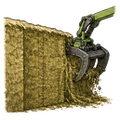 Cut cleanly, without tearing, to keep a smooth, compact face.
 Do not leave loose silage lying at the foot of the silo.
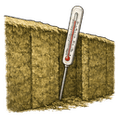 Check regularly that the face is not heating and does not smell mouldy or strongly of vinegar.
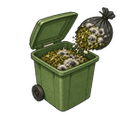 Discard any mouldy parts: mouldy or poorly fermented silage can make animals ill.
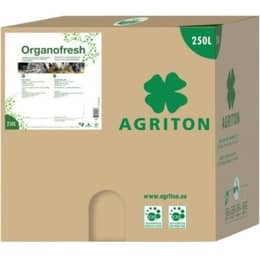
For the mixed ration itself, the manufacturer also offers Organofresh EM, to be added to the mixer wagon, according to the manufacturer at a rate of 1 to 2 litres per tonne of ration. It aims to limit heating of the ration between preparation and feeding.
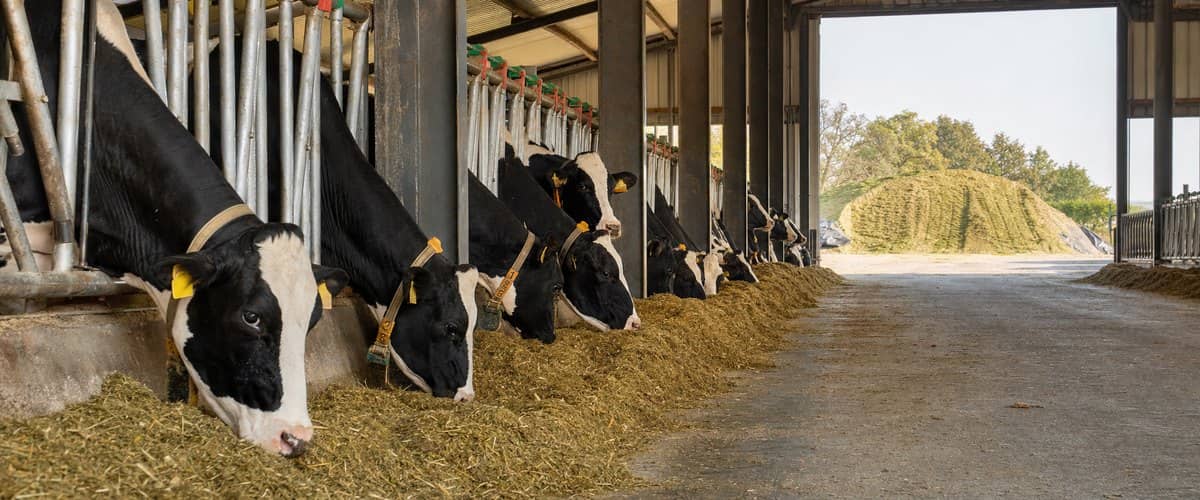
Silage is one of the uses where an effect of EM is considered plausible, since it is precisely a lactic fermentation. However, data specific to EM products remain limited:
Key pointsThe benefits of lactic inoculants are established; those of EM Silage rest on a handful of trials, one of them commissioned by the manufacturer. In any case, an inoculant improves good harvesting and clamping: it will not rescue forage that is too wet, poorly consolidated or badly sheeted.
To understand the role of the different micro-organisms in fermentation, see our guide how EM works, and for an overview of the evidence, our guide what science says about EM. EM-fermented feeds given directly to ruminants are covered in our guide fermented feeds for horses and livestock.
Good silage depends on a rapid lactic fermentation in the absence of air, followed by a feed-out rate fast enough to prevent heating. Lactic inoculants help lower the pH, limit losses and improve aerobic stability: this is well established. EM Silage combines lactic acid bacteria and yeasts, is dosed according to the current instructions at 80 ml per tonne diluted in at least 4 litres of water, and is applied evenly at harvest. The available trials on this product are encouraging for aerobic stability but few in number. Harvesting at the right dry matter content, consolidation, prompt sheeting and a steady advance of the silage face remain the keys.
Scan the code or visit mouttafarm.co.uk/guide: all our practical guides, with links to the products mentioned.



 France
 Belgium
 Switzerland
 Germany
 Austria
 Italy
 Spain
 Holland
 Portugal
 Ireland
 Sweden
 Finland
 Denmark
 Greece
 Poland
 Rumania
 Czech Republic
 USA
