












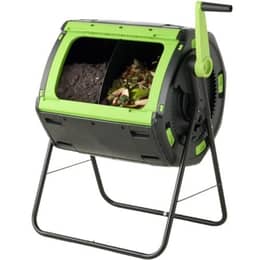
Maze 180L Double Chamber Rotating Composter
Effortless outdoor composting
£124.43 €149.17
Fast and odourless, compost worms eat your waste and turn it into worm casting for your plants.

From 2 to 4 trays, with an optional planter.

Up to 18 growing areas around a central wormery.

Terracotta with flower pot.

2 to 4 trays with a lower shelf.

Trays you add over time, for easy harvesting of vermicompost.

Turn your planters and flower beds into a wormery: WORMacotta, In-Ground.
 Practical guide

From the kitchen to the garden, your compost becomes simple, quick, and effective for everyone.
 Practical guide
 Practical guide
Live animals (worms and bait) and products to feed and care for pets and livestock.

Eisenia compost worms for your wormery or composter.

Ultra-fresh worms: compost worms, Dendros and Canadians from 100 g to 1 kg.

Natural solutions dedicated to the wellbeing of horses, ponies and donkeys.

Optimise the health and performance of your farm.

Mealworms, natural and nutritious supplements.
Enhance your home with our decorative items and care for your house in a natural and sustainable way.
Garden in an eco-friendly way that respects nature, for healthy and sustainable plants.
EM-based products designed to enrich soils, protect plants, support animal health, and make everyday well-being and maintenance easier.

Contains a blend of 80 families of beneficial microorganisms.

Revitalise, purify and improve water quality in all your applications.

Stimulate soil microbial activity and plant growth.

Cleanse and maintain your environment naturally.

For the wellbeing and health of pets, livestock and horses.

Enrich your body care or dietary routines with essential enzymes.
 Practical guidePractical guide

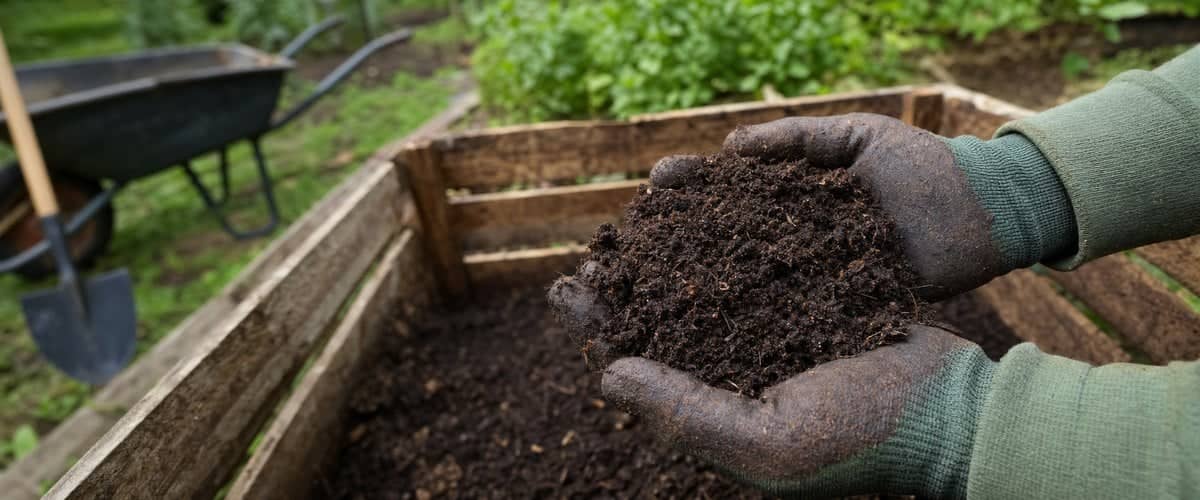
After months of patience, the question always comes up sooner or later: is my compost ready? The calendar gives you a rough idea, but it isn't enough on its own. Two composters started on the same day can progress at very different rates depending on the waste added, the season and how they are looked after. Compost maturity is judged by its condition, not its age.
The good news is that you don't need a laboratory to check. Your eyes, your nose, a few cress seeds and a jar are all it takes. Here are the three stages to know about, followed by three easy tests you can do at home.
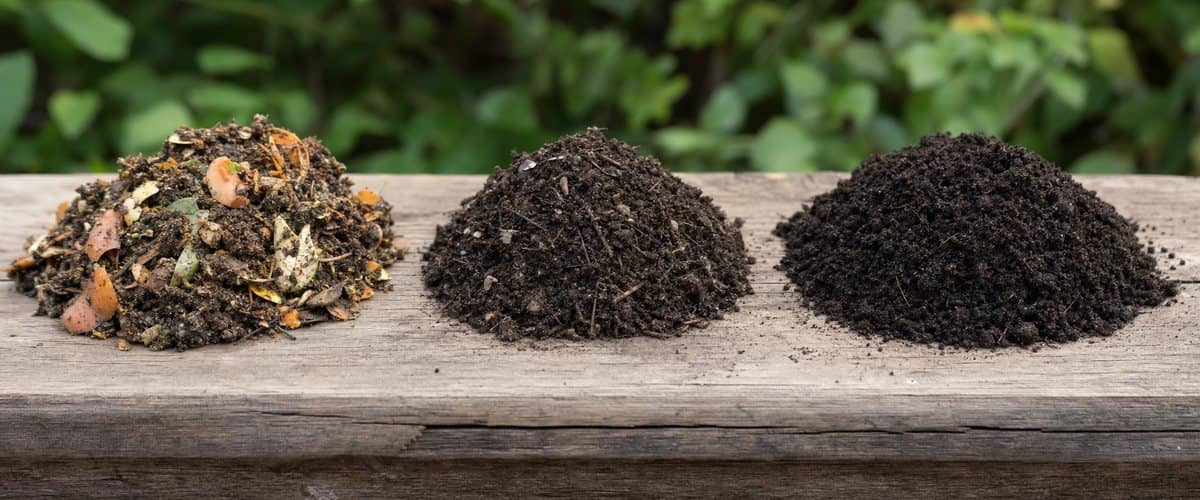
Compost doesn't go from “not ready” to suddenly “ready”: it passes through several stages, and each one has its use in the garden.
Some of the original waste is still recognisable, the material is coarse and sometimes still warm. This compost is still active: in contact with roots, it can harm young plants. It is best spread only on the surface, as a mulch, around the base of trees, on bare soil or on well-established crops, and left for several weeks or even several months before being worked into the soil. This is also what a rotary composter produces after a few weeks: we come back to this below.
Most of the waste is no longer recognisable, but fibres and visible pieces remain. It can already be used as a soil improver, raked into the top few centimetres of soil around established plants and covered with a mulch.
This is the stage you are waiting for for the vegetable patch, planting and potting mixes. But be careful: even when mature, compost should never be used neat for sowing or planting. We go through the quantities in our guide Using your compost in the garden.
Before any test, start by looking: it is often enough. Take a handful from the bottom of the composter, where the oldest material is, and examine it.
 Colour: dark brown to almost black, and above all even.
 Smell: like damp forest soil or a woodland floor. No smell of ammonia, sourness or rot.
 Texture: fine and crumbly, it breaks up between your fingers like good potting compost.
 The original waste: you should no longer be able to tell what was a peeling or a leaf.
There will almost always be a few stubborn bits left: eggshells, fruit stones, cabbage stalks, pieces of wood. Their presence doesn't mean the compost isn't mature. Simply remove them when sieving and put them back in the composter for another cycle, as we explain in our guide Harvesting and sieving your compost.
Cress germinates quickly and reacts badly to compost that is still immature. That is what makes it an excellent indicator, recommended by most composting guides.
Fill two or three small pots with your compost, or with a mixture of soil and compost, sow a few cress seeds, water them and keep them somewhere warm. If the seeds germinate well and evenly within about a week, your compost is mature. If they germinate poorly, sparsely or not at all, give it a little more time.
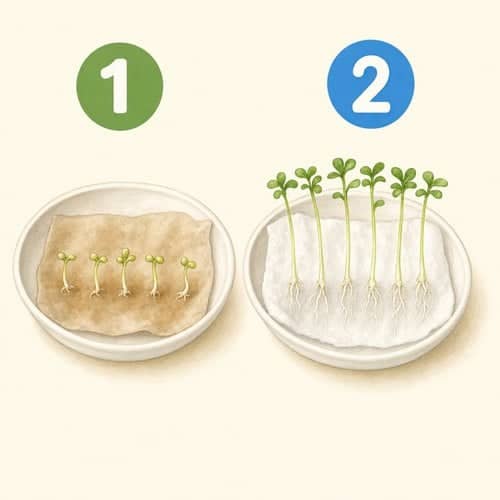 For delicate sowings, there is a more rigorous variant. Mix one volume of compost with one volume of water, leave it to stand for a few minutes while stirring, then collect the brown liquid. Place five radish or cress seeds on kitchen paper moistened with this liquid, and five more on kitchen paper moistened with plain water. Cover, keep warm and observe for about a week.
If the seeds “on water” germinate noticeably faster, in greater numbers or with longer roots, the compost needs to mature further. If both batches look alike, it is ready. Avoid tomato seeds for this test: they are too hardy and germinate almost anywhere. In the diagram: the batch on compost liquid (1) germinates noticeably less well than the batch on plain water (2), a sign that this compost still needs to mature.
Willy's tipDo the cress test a month before you plan to use your compost. That way, you will have time to let it mature for a few more weeks if the result is inconclusive, without delaying your spring sowings.
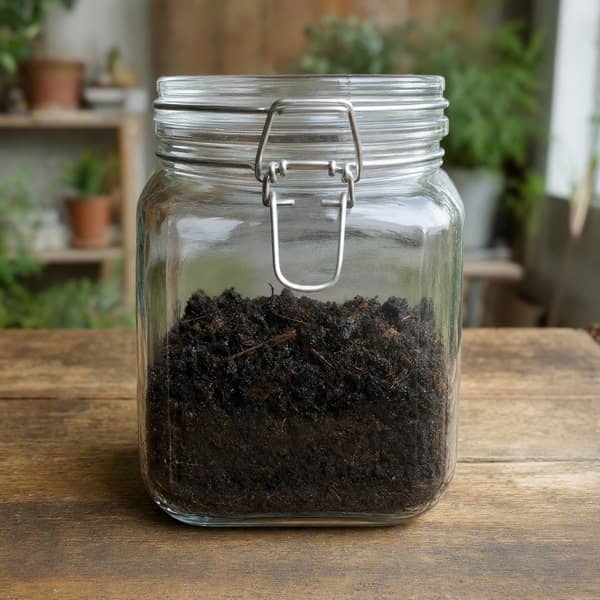
This test reveals what your nose can't always detect in the open air. Put a few centimetres of compost in the bottom of a glass jar, smell it a first time, then add enough water to soak it thoroughly. Seal it tightly and leave it untouched for a week.
When you open it, mature compost still smells of earth, stays dark and keeps its texture. An unpleasant smell, on the other hand, shows that decomposition isn't finished: micro-organisms are still at work. This test is enough for compost intended to be spread on the surface; for sowing, follow it up with the cress test.
This last test only applies if your compost has already heated up, which isn't always the case in a household composter. Turn it well, then push your hand into the centre of the heap a few days later. If it no longer warms up, it has very probably reached a stable state. Then leave it to rest for at least another four weeks before using it.
Timings vary widely from one source to another, as they depend on the equipment, the waste added, turning and the climate. Here are the guidelines we go by:
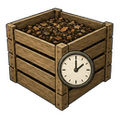 in a bin: allow 4 to 9 months depending on the season and care;
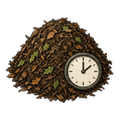 in a heap: 6 months to 1 year;
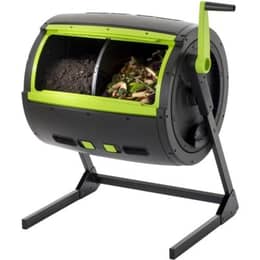
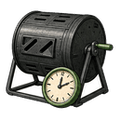 in a rotary composter: fresh compost in a few weeks, which must then mature for 3 to 5 months in a heap, or be spread on bare soil in autumn.
Be wary of promises of compost “in two weeks”: a rotary composter makes turning easier, but it doesn't shorten maturation. We go into this in our guide Rotary composter. And if you also have a wormery, harvesting works differently: see our guide Harvesting vermicompost and worm tea.
Key pointsMature compost is dark, crumbly, smells like a woodland floor, and the original waste is no longer recognisable. If in doubt, cress settles it: if it germinates well within a week, your compost is ready.
Compost maturity isn't read from the calendar but from the material itself. Observation is usually enough: dark colour, forest smell, crumbly texture, unrecognisable waste. For delicate uses such as sowing, confirm with the cress test; the sealed jar and heat tests provide a second opinion. Fresh or semi-mature compost isn't wasted for all that: it makes a very good mulch, provided it stays on the surface. Once your compost is ready, bring out the compost collection trolley: it's harvest time.
Scan the code or visit mouttafarm.co.uk/guide: all our practical guides, with links to the products mentioned.



 France
 Belgium
 Switzerland
 Germany
 Austria
 Italy
 Spain
 Holland
 Portugal
 Ireland
 Sweden
 Finland
 Denmark
 Greece
 Poland
 Rumania
 Czech Republic
 USA
