












Best Seller
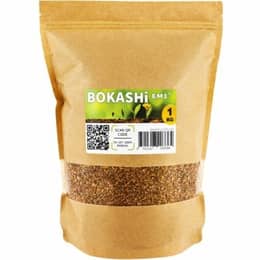
Bokashi EM compost activator | 1 kg bag
Individually or in sets of 2 or 3 bags
£5.99 €7.18
Fast and odourless, compost worms eat your waste and turn it into worm casting for your plants.

From 2 to 4 trays, with an optional planter.

Up to 18 growing areas around a central wormery.

Terracotta with flower pot.

2 to 4 trays with a lower shelf.

Trays you add over time, for easy harvesting of vermicompost.

Turn your planters and flower beds into a wormery: WORMacotta, In-Ground.
 Practical guide

From the kitchen to the garden, your compost becomes simple, quick, and effective for everyone.
 Practical guide
 Practical guide
Live animals (worms and bait) and products to feed and care for pets and livestock.

Eisenia compost worms for your wormery or composter.

Ultra-fresh worms: compost worms, Dendros and Canadians from 100 g to 1 kg.

Natural solutions dedicated to the wellbeing of horses, ponies and donkeys.

Optimise the health and performance of your farm.

Mealworms, natural and nutritious supplements.
Enhance your home with our decorative items and care for your house in a natural and sustainable way.
Garden in an eco-friendly way that respects nature, for healthy and sustainable plants.
EM-based products designed to enrich soils, protect plants, support animal health, and make everyday well-being and maintenance easier.

Contains a blend of 80 families of beneficial microorganisms.

Revitalise, purify and improve water quality in all your applications.

Stimulate soil microbial activity and plant growth.

Cleanse and maintain your environment naturally.

For the wellbeing and health of pets, livestock and horses.

Enrich your body care or dietary routines with essential enzymes.
 Practical guidePractical guide

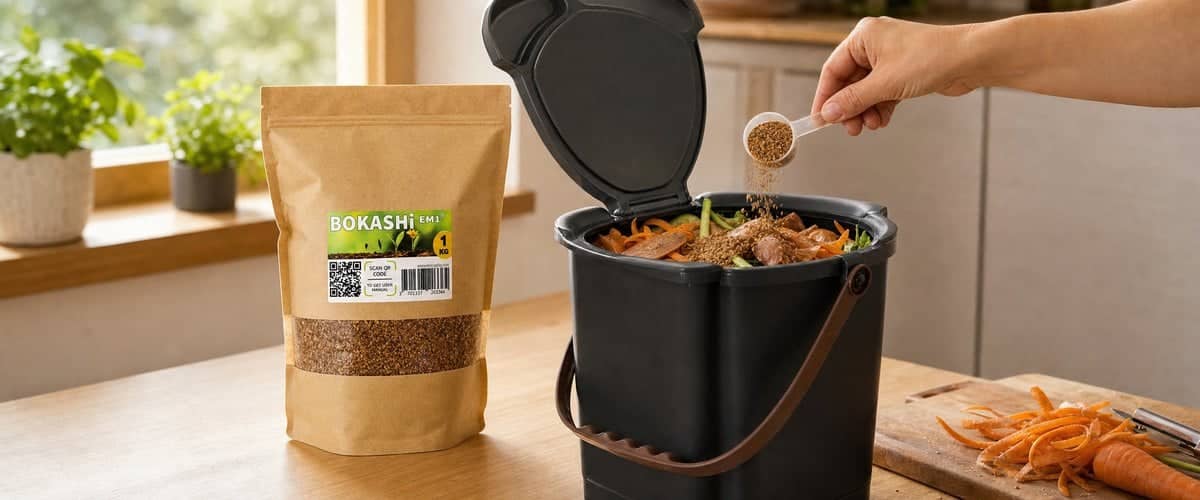
Powders, granules, liquids, “starter” sachets: garden centre shelves are packed with compost activators promising faster, odour-free compost. We even make our own bokashi activator. All the more reason to be straight with you: a well-managed compost heap generally doesn't need an activator.
That doesn't mean these products are never worthwhile. Here is what an activator really does, when it's unnecessary, when it can give things a boost, and how to do without one using free alternatives.
The word “activator” actually covers two families of products that work in completely different ways:
Yet compost micro-organisms are already everywhere: on peelings and leaves, in the soil and in mature compost. So there's no need to add an inoculant or activator to the heap: soil and finished compost already contain the microbes that will break down plant matter.
A compost heap that gets a balanced mix of green and brown materials, enough air and the right moisture needs nothing else. Let's be frank: composting generally goes very well without these products, as long as you balance what goes in and keep it aerated.
The few studies available point the same way. In 2010, a team of researchers compared, on household waste, a control compost with composts seeded with effective micro-organisms (EM) or a fungus, Trichoderma: they found no significant difference in the end result. Another study from 2015, testing two commercial EM products, concluded that they shortened composting time only marginally.
Above all, no activator can make up for compost that is too compacted, waterlogged or dried out. If yours isn't progressing or smells bad, the cause is almost always the mix, air or water: start with our guide Smelly or slow compost: troubleshooting, and review the balance described in Green and brown materials.
Key pointsAn activator is never a requirement for success. The right mix, air and moisture do most of the work; at best, an activator gives a little boost.
There are a few situations where an extra input makes sense, without expecting miracles:
 Lots of brown material in one go, for example a large volume of autumn leaves or shredded prunings: a nitrogen input gets decomposition going again. This is where an activator is most useful.
 Starting a new composter: a few spadefuls of garden soil or mature compost provide a varied population of micro-organisms straight away. A commercial product isn't necessary, but it does no harm.
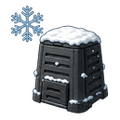 Winter: compost slows down in the cold, and no activator really changes that. What helps is insulating the heap, protecting it from rain and keeping a good mix.
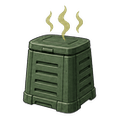 Odours: some gardeners use effective micro-organisms to reduce bad smells, particularly from kitchen scraps. But a smell is first and foremost a sign of too little air or too much green material, which should be corrected first.
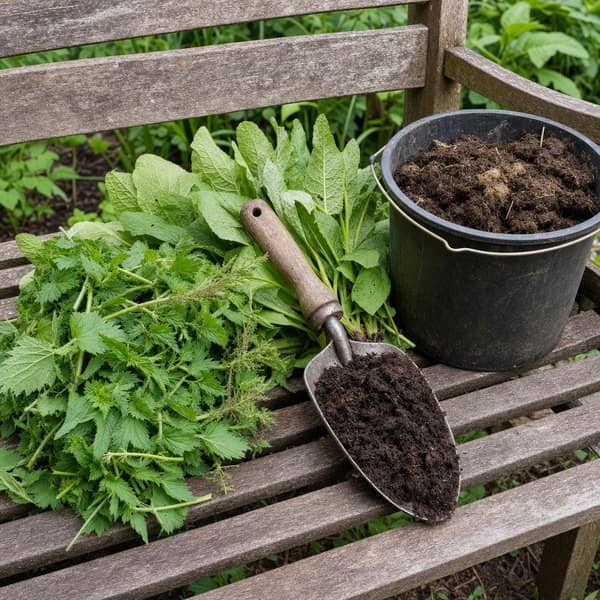
Before buying anything, look at what you already have to hand:
 Mature compost or garden soil: one or two spadefuls in the heart of the heap make the best “starter” there is.
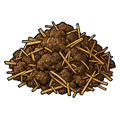 Manure (horse, poultry, rabbit): rich in nitrogen and micro-organisms.
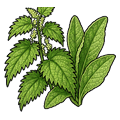 Fresh nettles or comfrey, placed in the centre of the heap, or nettle tea, a very good decomposition activator.
 Roasted hoof and horn or poultry droppings, sandwiched between layers of leaves.
 Fresh grass clippings, in thin, mixed layers: they heat up quickly and supply plenty of nitrogen. We cover them in our guide to green garden waste.
For hot composting, where the rise in temperature depends heavily on the available nitrogen, these inputs placed in the heart of the heap are particularly useful: see our guide Hot composting (Berkeley method).
Willy's tipAlways set aside a bucket of mature compost when you harvest. When you restart an empty bin, simply spread it over the first layer: your new waste will be colonised by the micro-organisms from the old compost.
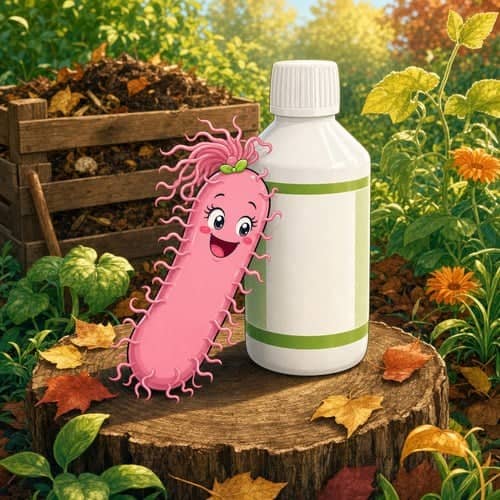 Effective micro-organisms, or EM, are a mixture of micro-organisms produced by fermentation, mainly lactic acid bacteria, often combined with yeasts and photosynthetic bacteria depending on the label. For conventional composting, independent evaluations remain scarce, and the trials mentioned above showed no clear benefit. So we present them as an optional aid, not a guarantee.
Bokashi is a different matter. Here, the activator is part of the method: it supplies the lactic acid bacteria that start fermentation in the sealed bucket. Without it, scraps are likely to rot instead of fermenting. Our Bokashi EM compost activator, a bran fermented with EM, is first and foremost for this purpose. It also comes in handy in a conventional composter, as we explain below.
For those who want to try EM on their compost, EM-A Microferm activated solution is ready to use: the manufacturer recommends diluting it in water and spraying it between layers. EM-1, the mother solution, is rather for preparing your own activated solution or fermented bran. Detailed instructions for both are in our guide to effective micro-organisms, which also reviews what the science says.
We make our activator on the farm primarily for bokashi, but it also has its place in a garden composter. It doesn't replace a good mix, air and moisture, but it can be genuinely helpful:
 Against bad smells: sprinkled over kitchen scraps, it adds lactic acid bacteria that make them ferment rather than rot, which reduces strong odours. This is especially useful in summer, or when you add a lot of wet peelings at once.
 To start a new composter: a handful over the first additions, along with a spadeful of garden soil or mature compost.
 To revive stalled compost, once moisture and aeration have been corrected.
The dose: a handful, or about two tablespoons, spread over each addition of kitchen scraps, then covered with a layer of brown material. There's no need to put any on dead leaves or shredded prunings. If a smell persists despite everything, go back to the causes covered above: too little air or too much green material.
Willy's tipKeep a pot of activator next to your kitchen caddy: a pinch each time you fill it, and the scraps arrive at the composter already fermenting, with no strong smell when you open it.
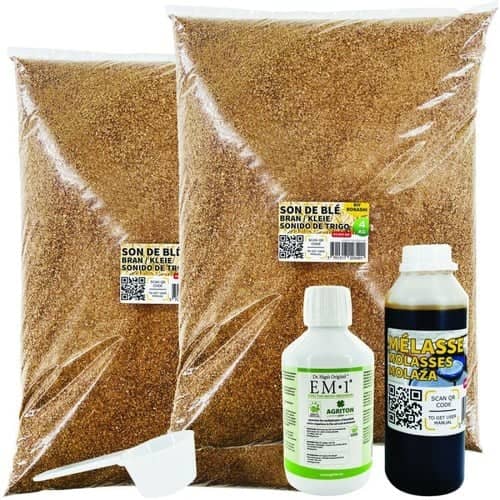 As we've seen, the simplest options cost nothing: mature compost, garden soil, nettles or manure. If you practise bokashi, you can also make your own fermented bran. Our kit for making your own Bokashi & Compost activator brings together wheat bran, EM-1 and molasses. The basics of our recipe:
 Warm 500 ml of non-chlorinated water to between 25 and 30 °C. Tap water should be left to stand uncovered for 24 hours so the chlorine evaporates.
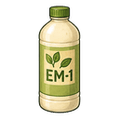 Add 30 ml of EM-1, stir, then add 30 ml of molasses.
 Pour over 1 kg of wheat bran and knead: the bran should be damp but not soaking.
 Pack it into a black bag tied with a knot, placed in an airtight container, somewhere warm and dark.
 Wait three weeks without opening. A fermented smell and a light white film are signs of success.
Dried and kept away from light, it keeps for about a year. All the steps are detailed in our bokashi guide.
A well-balanced, aerated and properly moist compost heap generally doesn't need an activator: the micro-organisms are already there. A nitrogen input can help when there's too much brown material, and a few spadefuls of mature compost are enough to get started. Effective micro-organisms remain an optional aid for conventional compost, with results that vary between studies; our bokashi activator is mainly helpful there against kitchen scrap odours and for starting or reviving a compost heap. On the other hand, it is essential for successful bokashi. Before buying, always start by checking the mix, air and water.
Scan the code or visit mouttafarm.co.uk/guide: all our practical guides, with links to the products mentioned.



 France
 Belgium
 Switzerland
 Germany
 Austria
 Italy
 Spain
 Holland
 Portugal
 Ireland
 Sweden
 Finland
 Denmark
 Greece
 Poland
 Rumania
 Czech Republic
 USA
