












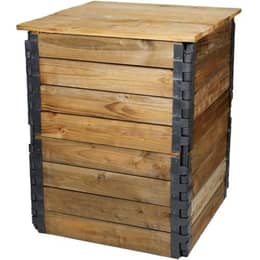
Compostys wooden composter | 305 litres
PEFC-certified spruce wood
£96.62 €115.83
Fast and odourless, compost worms eat your waste and turn it into worm casting for your plants.

From 2 to 4 trays, with an optional planter.

Up to 18 growing areas around a central wormery.

Terracotta with flower pot.

2 to 4 trays with a lower shelf.

Trays you add over time, for easy harvesting of vermicompost.

Turn your planters and flower beds into a wormery: WORMacotta, In-Ground.
 Practical guide

From the kitchen to the garden, your compost becomes simple, quick, and effective for everyone.
 Practical guide
 Practical guide
Live animals (worms and bait) and products to feed and care for pets and livestock.

Eisenia compost worms for your wormery or composter.

Ultra-fresh worms: compost worms, Dendros and Canadians from 100 g to 1 kg.

Natural solutions dedicated to the wellbeing of horses, ponies and donkeys.

Optimise the health and performance of your farm.

Mealworms, natural and nutritious supplements.
Enhance your home with our decorative items and care for your house in a natural and sustainable way.
Garden in an eco-friendly way that respects nature, for healthy and sustainable plants.
EM-based products designed to enrich soils, protect plants, support animal health, and make everyday well-being and maintenance easier.

Contains a blend of 80 families of beneficial microorganisms.

Revitalise, purify and improve water quality in all your applications.

Stimulate soil microbial activity and plant growth.

Cleanse and maintain your environment naturally.

For the wellbeing and health of pets, livestock and horses.

Enrich your body care or dietary routines with essential enzymes.
 Practical guidePractical guide

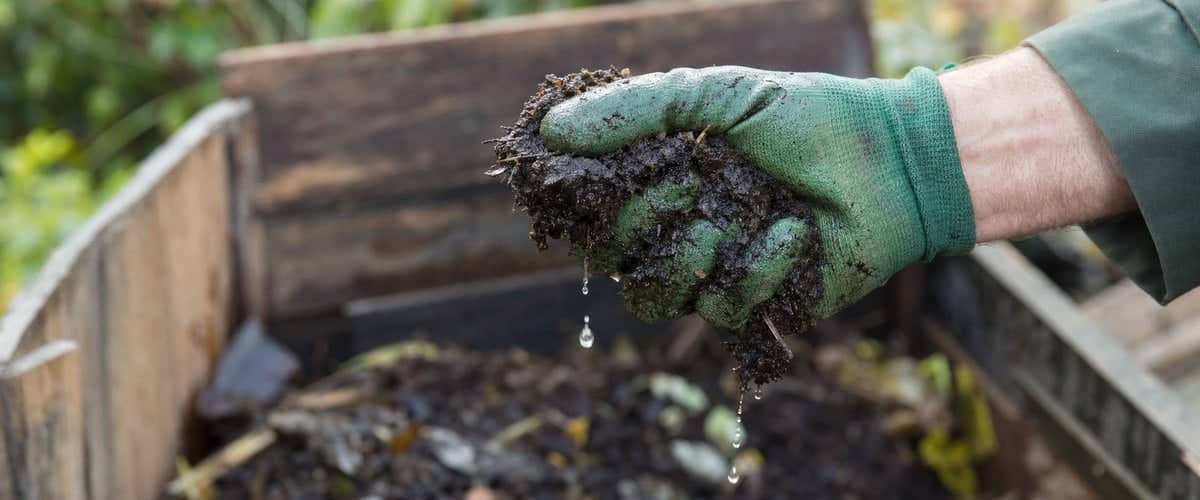
Should you turn your compost? And if so, how often? Advice varies from one book to the next, from “every time you add waste” to “never”, which is enough to put any beginner off. In reality, it all comes down to two very practical needs of micro-organisms: air and water, in the right amounts.
Here is how to check moisture in a few seconds, how often to mix depending on your equipment, and how to rescue compost that is too dry or too wet.
Composting is an “aerobic” process: the bacteria and fungi that break down your waste breathe oxygen. When air runs short, other micro-organisms take over. These work without oxygen, more slowly, and produce methane and foul-smelling gases. That is where the notorious rotten-egg smell comes from.
Air circulates through the gaps left between pieces of material. Over time, and under its own weight, the material settles, especially if it is very wet or rich in fine matter such as grass clippings. Mixing therefore recreates these air pockets, blends fresh additions with material that is already breaking down, and lets you check moisture at the same time.
Water is just as vital: micro-organisms live in the film of moisture surrounding each piece. Too dry, and they stop working. Too wet, and the water drives out the air, bringing back the bad smells.
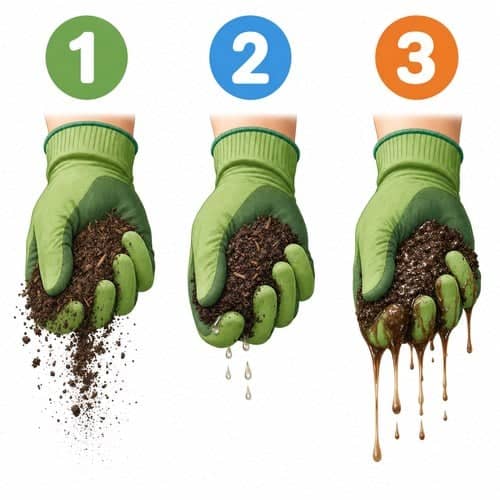 The right moisture level can be checked in ten seconds, wearing a glove. Take a handful of compost from the centre of the bin and squeeze hard:
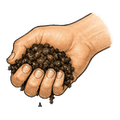 a few drops form between your fingers: the moisture is perfect;
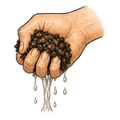 water runs out freely: the compost is too wet;
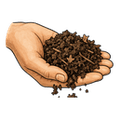 nothing comes out and the handful crumbles: it is too dry.
This test is described in most composting guides. The image to keep in mind is a wrung-out sponge: damp to the touch, but not dripping. In the diagram: too dry (1), just right (2) and too wet (3).
Key pointsHealthy compost is as damp as a wrung-out sponge, has air between its pieces and does not smell bad. If any of these three points slips, it is a sign that you need to step in.
There are two very different actions to distinguish.
For a bin composter, mix the new waste into the existing material to a depth of about twenty centimetres. This quick step stops peelings from forming a compact layer on the surface, limits fruit flies and spreads the moisture evenly.
This time the aim is to aerate the whole volume. Here, recommendations vary between guides: at least once a month for some, every one to two months (a little more often at the start) or once or twice a month for others, and only “several times a year” for the least demanding.
Our view: a light mix with every addition and a thorough mix about once a month in the warmer months, and hardly anything in winter. If you mix less, the compost will still form, just more slowly: a well-balanced mix will eventually break down without any intervention.
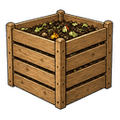 Bin composter (wood or plastic): mix to 20 cm with every addition, and mix more deeply about once a month with an aerator or a fork.
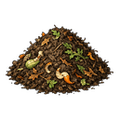 Compost heap: turn it completely with a fork, moving the heap alongside, about once a month in the warmer months. It is more physical, but the result is very even.
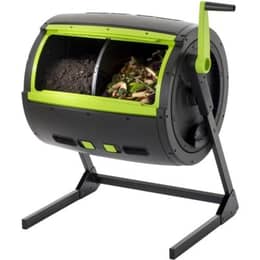
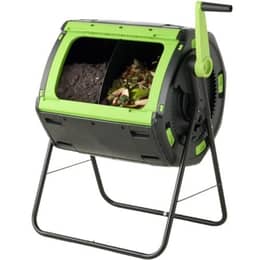
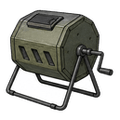 Tumbler composter: a few turns of the drum each time you add waste. That is the whole point of this system: aeration takes no effort.
To choose between these systems, see our guides Compost heap or compost bin and Tumbler composter.
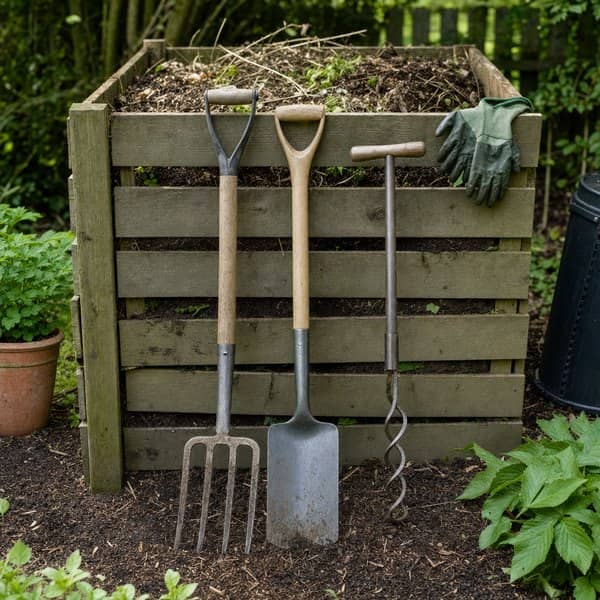
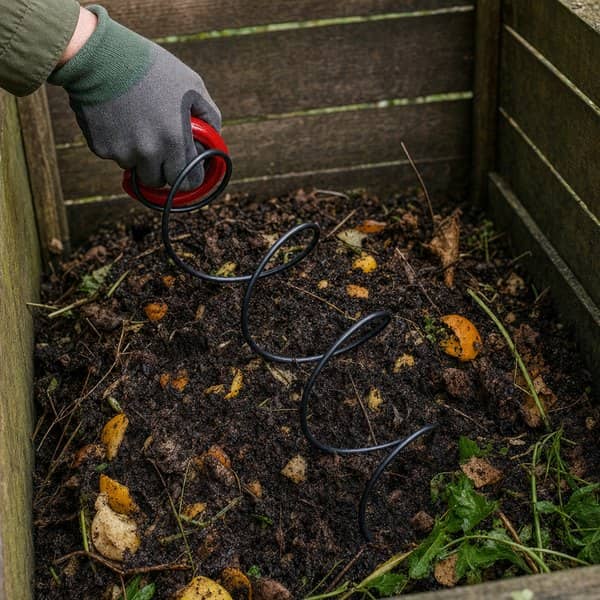
Turning a full bin with a fork is tedious and awkward, as the sides get in the way. Hence the value of aerators: a rod fitted with small wings that you push into the material, then twist and pull back up. The Brass'Compost compost aerator works on this principle: it brings material up from the bottom and lets air into the heart of the bin, without having to empty it.
For a heap, a digging fork or a manure fork remains the most effective tool. On the Maze 245L tumbler composter, which becomes heavy once well filled, the EASY-TURN handle makes rotating the drum easier.
Willy's tipUse your monthly mix to do the squeeze test in the centre of the bin, not just on the surface: the top layer dries out quickly in summer while the bottom can stay waterlogged. It is often in the centre that you discover the true state of your compost.
The compost is dusty, fibrous and has stopped working. Water it while mixing, ideally with rainwater, until it is back to the wrung-out sponge stage. Add green materials (peelings, fresh grass clippings), which bring moisture. In summer, cover the bin and place it in partial shade if possible.
The compost is sticky, compact, oozes liquid and smells bad. Add dry, coarse material (shredded prunings, leaves, torn cardboard) while mixing well, cut back on grass clippings and cover the bin if rain gets in. You can also mix in a little dry compost or soil, or spread the material out in the sun for a few hours.
If the smell persists despite these steps, our guide Smelly, too wet or too dry compost: troubleshooting reviews all the possible causes.
Compost is a living environment, rich in bacteria and fungal spores. Health risks remain rare, but a few simple precautions are a must:
 wear gloves when handling and mixing compost;
 a dust mask is advisable when turning dry compost, which raises dust;
 wash your hands after each handling, and wash fruit and vegetables from the garden before eating them.
To compare with the wormery, which hardly needs turning at all since the worms aerate the material themselves, read our guide Should you stir your wormery?
Good compost needs air and the moisture of a wrung-out sponge, which you can check with the squeeze test. Lightly mix each addition to about twenty centimetres, mix the whole lot about once a month with an aerator or a fork, and leave the heap alone in winter. Too dry: water it and add greens. Too wet: add coarse browns and mix. And remember your gloves.
Scan the code or visit mouttafarm.co.uk/guide: all our practical guides, with links to the products mentioned.



 France
 Belgium
 Switzerland
 Germany
 Austria
 Italy
 Spain
 Holland
 Portugal
 Ireland
 Sweden
 Finland
 Denmark
 Greece
 Poland
 Rumania
 Czech Republic
 USA
